

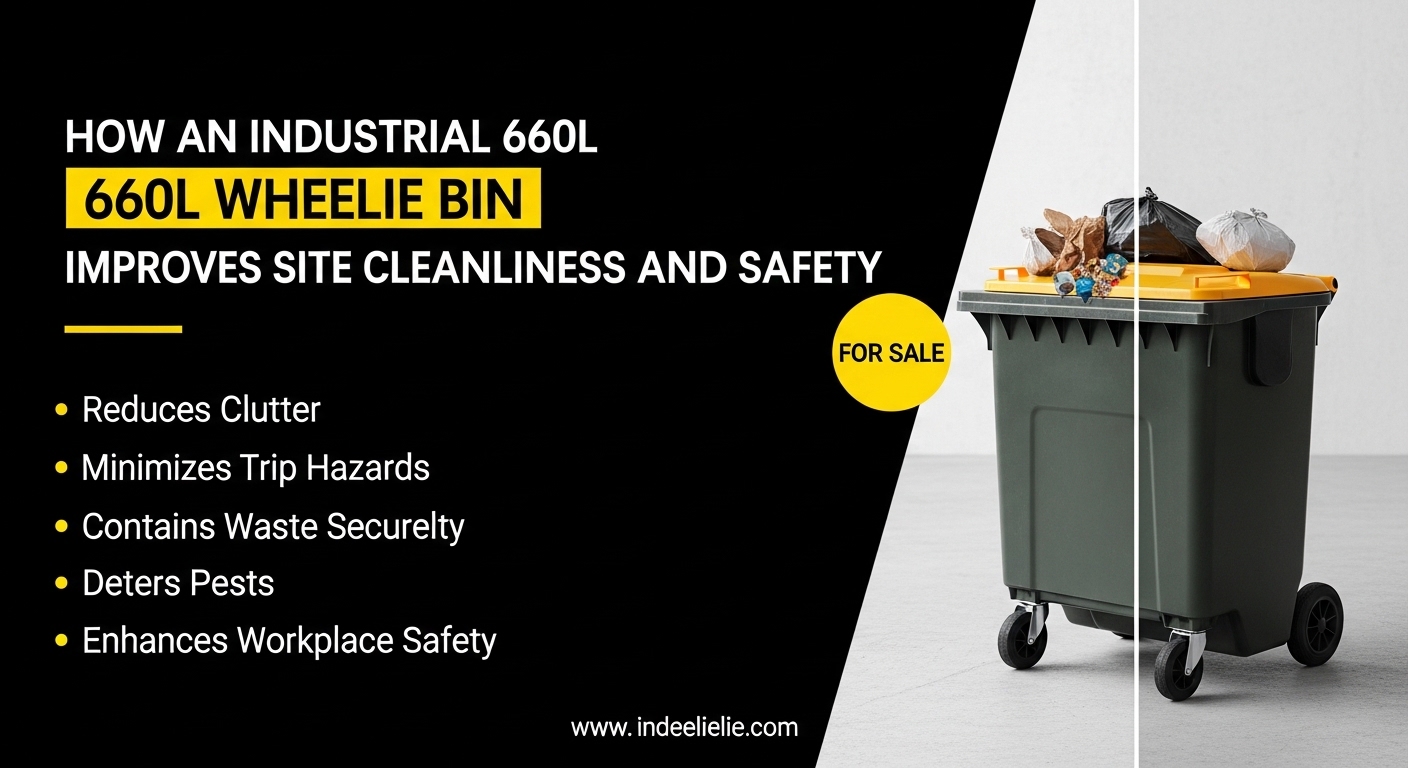

A messy site is a dangerous site. Waste left in walkways causes trips and falls. Overflowing bins attract pests. Loose debris creates fire hazards. None of that happens by accident. It happens because the waste system cannot keep up with the volume the site produces. An industrial 660L wheelie bin for sale is sized and built specifically for industrial environments. It does not just hold more waste. It holds the right kind of waste, in the right volumes, in a container tough enough to stay intact when heavy objects land in it. That combination directly improves both cleanliness and site safety outcomes.
How Does Bin Capacity Directly Affect Site Safety?
When bins are too small, they overflow. Waste sits on the ground. Workers route around it or ignore it. That is when injuries happen. Safe Work Australia data shows that slips, trips, and falls account for 22% of serious workplace injuries annually. Many of these incidents involve cluttered or poorly maintained work areas. Appropriately sized bins keep waste contained. Workers have clear pathways. Supervisors do not need to manage waste overflow as a separate daily task. The bin does the job it was designed to do.
What Types of Industrial Waste Suit a 660L Wheelie Bin?
General industrial waste including packaging, offcuts, worn tooling, and production rejects fits well in a 660L bin. Light metal scraps and fabrication waste are manageable within the weight capacity. Cardboard and paper waste from warehouses compress well and fill the volume efficiently. Food-grade industrial sites use them for pre-consumer food waste. The 660L size does not suit hazardous chemical waste, which requires specific containment vessels, or large bulky waste that needs a skip bin. For everything else, it is the standard commercial choice.
How Should 660L Bins Be Positioned on an Industrial Site?
Position them at the point of waste generation, not at a central collection point far from where work happens. If workers have to carry waste 50 metres to a bin, they will not do it every time. Waste ends up on benches, in corners, and on floors. Place bins within 10 to 15 metres of active work areas. Use colour coding to separate waste streams. Yellow for recyclables, red for general waste, green for organics. Clear labels and proximity to work areas make compliance automatic rather than effortful.
Can Industrial 660L Bins Prevent Pest and Vermin Problems?
Yes, when they have properly sealing lids. Open-top bins in industrial settings attract rats, cockroaches, and birds within days. A sealed lid with a secure closure prevents access and contains odours that draw pests. For food processing or hospitality adjacent sites, this is a compliance requirement under Australian food safety standards. Poorly managed waste bins are one of the most common reasons food businesses fail council health inspections. A well-sealed 660L bin eliminates that risk at the source.
What Role Do 660L Bins Play in Site Waste Compliance?
Australian businesses generating commercial and industrial waste are governed by state-level waste regulations. In New South Wales, the Protection of the Environment Operations Act requires waste to be stored and contained appropriately before collection. Similar legislation applies in Victoria, Queensland, and Western Australia. Bins that are cracked, overflowing, or unsecured can result in infringement notices and fines. A proper 660L industrial bin that is maintained and serviced regularly protects businesses from regulatory action that can cost thousands per incident.
How Do Industrial Sites Calculate How Many Bins They Need?
Start with daily waste volume in kilograms, then convert to litres using the average density of the waste type. Paper waste is roughly 90 kilograms per cubic metre. Food waste averages 700 kilograms per cubic metre. Mixed industrial waste typically falls between 150 and 250 kilograms per cubic metre. From there, calculate how many days between collections, multiply daily volume by collection interval, divide by 660 litres, and add a 25% buffer for peak production days. That calculation produces a reliable bin count that keeps sites clean without over-investing in capacity.