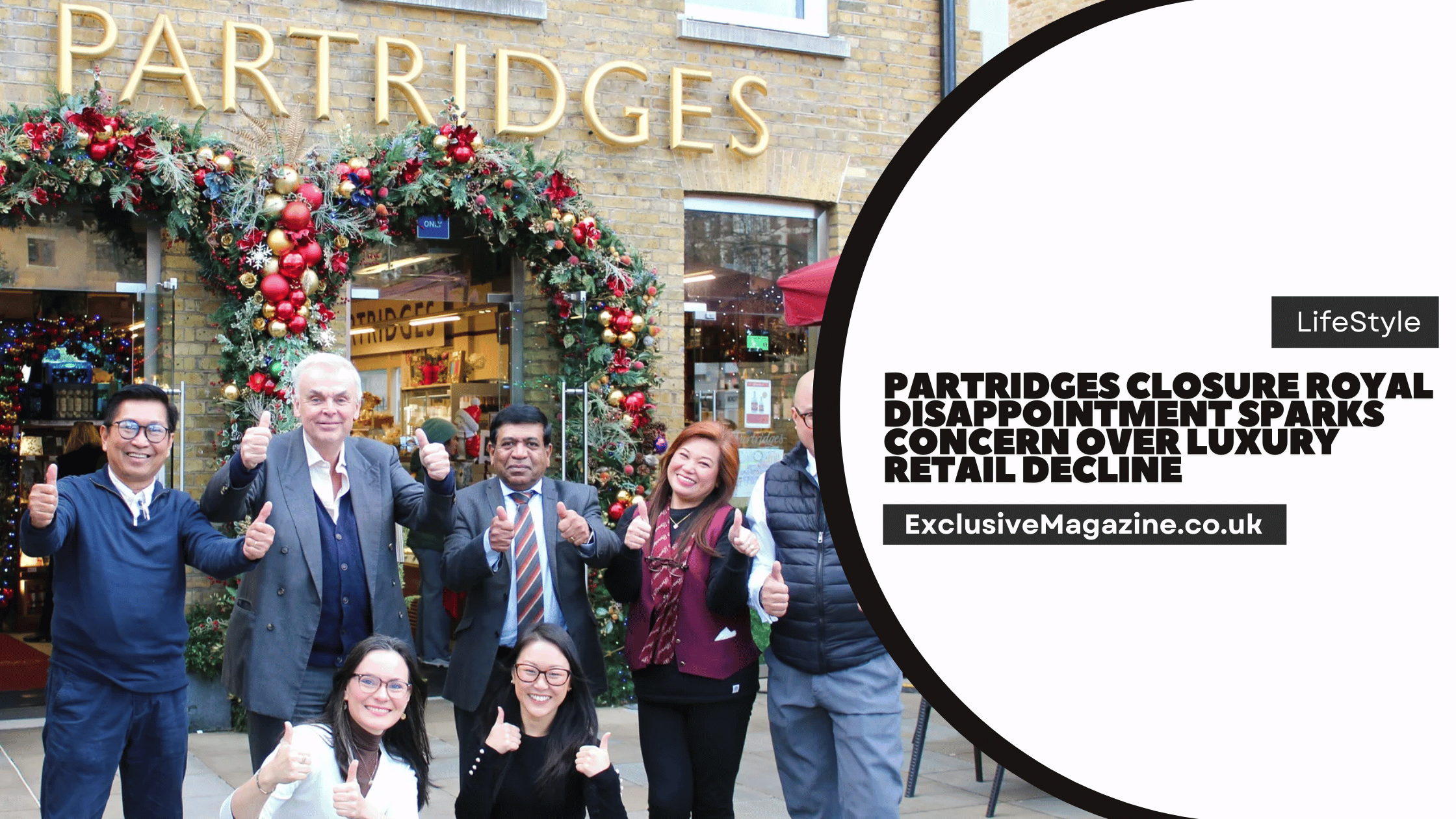

Partridges closed its Chelsea flagship on 2 February 2025, while its Kensington shop and online sales continued. The move raised concern because it showed how even a long-running royal grocer can be pushed to adapt by higher costs, softer demand, and a changing retail market.
Partridges Closure Ends a Long Chelsea Run
Partridges had traded in Chelsea for more than 50 years before closing its original store. The business began in 1972 and became a familiar name for premium food, fine wine, and specialty goods. It was first granted a Royal Warrant in 1994, and it received a new Royal Warrant as Grocers to King Charles III in December 2024.
The company said the Chelsea shop closed on 2 February 2025. The closure did not end the brand completely. Partridges said it would continue trading from its Gloucester Road shop in Kensington, while also building on its online platforms and planning smaller, more sustainable shops across London.
What Made Partridges Stand Out
Partridges was not a standard grocery store. It was an independent family business with a strong premium image and a large range of specialist products. The Royal Warrant Association says the company sells more than 9,000 speciality foods and fine wines from around the world. Partridges itself says it sells over 10,000 fine food and drink items.
Its Chelsea shop also became known as a destination rather than just a local store. The business had a long link with the Duke of York Square area, where it sold British and international food, drinks, and gifting items. Cadogan described Partridges as a cherished Chelsea institution and said the market and store legacy would continue in a new form.
That is why the closure carried more weight than the loss of a single shop. Partridges was tied to the identity of a high-end shopping district. When a store with royal links and a long local history closes, people see it as a sign that the market around it is changing, not just one business.
Why the Closure Matters for Luxury Retail
The Partridges closure matters because it fits a wider pattern in luxury retail. McKinsey said in January 2025 that the luxury industry was entering a significant slowdown after several strong years, and that 2025 was expected to create less value than the year before for the first time since 2016, apart from 2020.
Reuters has also reported pressure on luxury brands from weaker spending. In November 2023, Burberry said it had been hit by a global slowdown in luxury spending, with demand in China falling sharply. Reuters also reported in April 2026 that luxury and beauty groups were exposed to weaker demand in Europe and China and to disruption in high-margin travel channels such as airport shopping.
That wider backdrop helps explain why a premium grocer can struggle even when it has a loyal customer base. Luxury retail depends on high footfall, strong brand value, and customers who are willing to pay more for service and quality. When spending weakens, those stores can feel the pressure quickly.
High Costs Continue to Squeeze Physical Shops
Luxury retail is also dealing with the same cost pressures that affect the wider high street. Reuters reported in September 2025 that the British Retail Consortium warned up to 400 large UK stores could be at risk of closure because of a property tax hike. Reuters also reported in April 2026 that British retailers had seen the broadest year-on-year decline in sales in more than 40 years in one CBI survey reading.
These pressures matter because premium stores often have higher fixed costs. They pay for central locations, staff, stock, and a high standard of presentation. A store like Partridges must also protect its reputation, which adds even more pressure to keep standards high while controlling costs.
Retailers are also still dealing with the shift toward online shopping. Reuters reported in March 2025 that Next said the worst of the move online may be over, but it still expected store sales to fall while online sales grew. That shows how hard it is for physical shops to rely only on in-store trade, even when the brand is strong.
Another example of financial pressure in the UK retail and service sector can be seen in Sainsbury’s Bank Account Closures, where restructuring decisions have also raised concerns about long term stability in consumer focused businesses.
What Partridges Chose to Do Instead
Partridges did not leave the market. It changed the shape of its business. The company said it was moving focus toward its Kensington store, online sales, and smaller shop formats. GFF reported that John Shepherd wanted “smaller and more sustainable shops” across London, and Partridges said it would keep building on its online platforms after the Chelsea closure.
This kind of shift is common in retail when a large flagship no longer fits the business model. A smaller site can lower costs, reduce risk, and keep the brand visible in more controlled formats. For luxury and premium retailers, that can be a practical response when customer habits change and expensive premises become harder to justify.
Cadogan also said the Chelsea market would continue in a new guise, which means the site itself was not simply being abandoned. Instead, the area moved into a new phase, with the landlord taking a larger role in shaping the retail mix.
What This Says About the Luxury High Street
Partridges is a clear example of how the luxury high street is changing. Even businesses with a royal warrant, a loyal customer base, and a long history now have to rethink where and how they trade. The mix of slower luxury demand, higher operating costs, and the shift toward online shopping is reshaping the sector.
The closure also shows that heritage alone is not enough to protect a premium store. A strong brand can still survive, but not always in the same format. For many retailers, the future now depends on smaller sites, stronger online sales, and a more flexible business model that can handle a weaker physical market.
A similar trend is visible in hospitality, especially in cases like Adam Simmonds Voyage Restaurant Closure, where premium dining venues have also faced pressure from rising costs and changing customer spending habits.
Key Facts About Partridges
Partridges was founded in 1972 by Sir Richard Shepherd and has been run by John Shepherd since 1981. It was first granted a Royal Warrant in 1994 and received a new one in December 2024. Its Chelsea shop closed on 2 February 2025, but the Kensington branch remained open and the business continued online.