

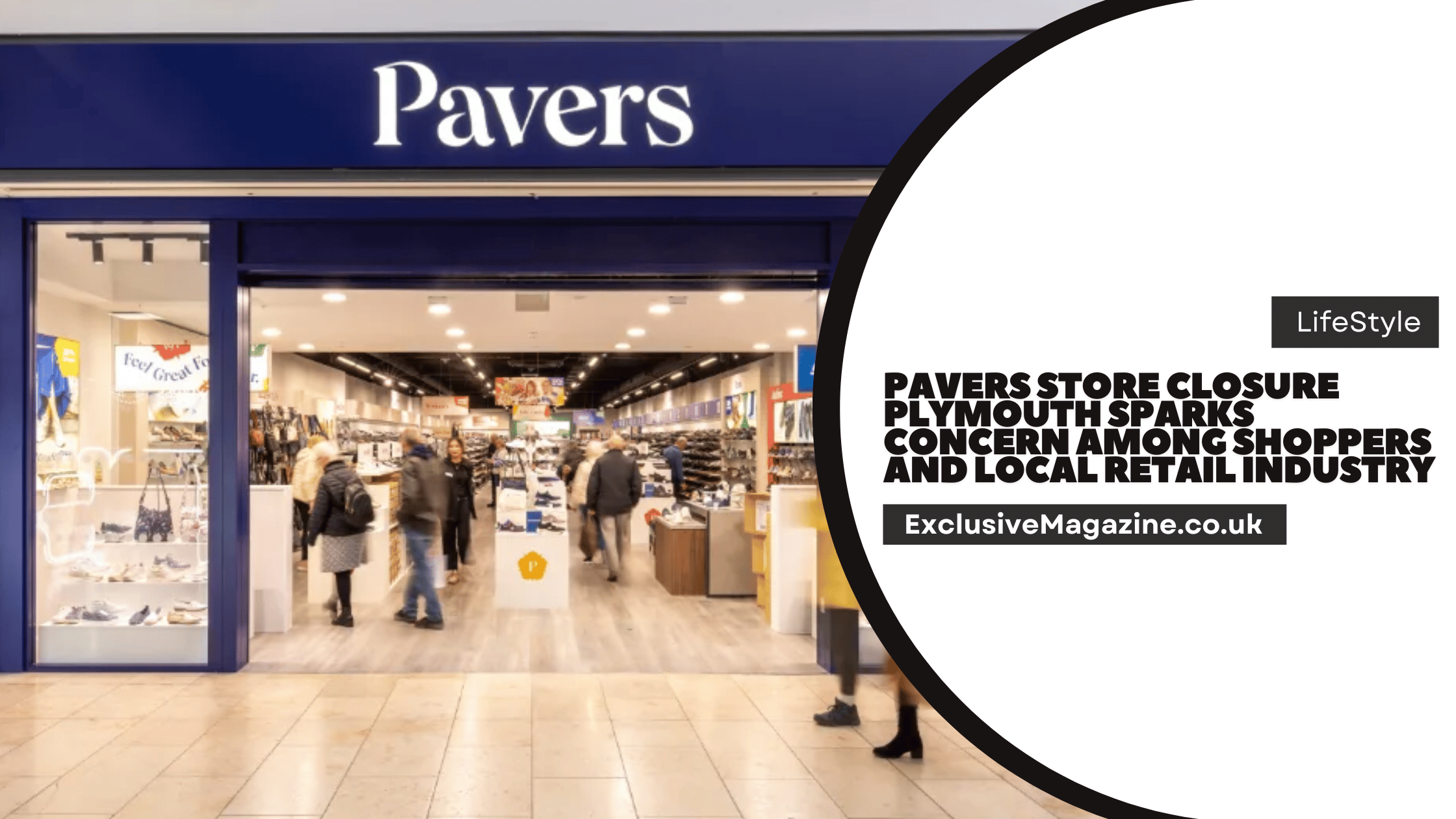

Pavers has closed its New George Street store in Plymouth, and the move has raised concern among shoppers. The closure also adds to worries about pressure on local retail and the wider high street.
What happened in Plymouth
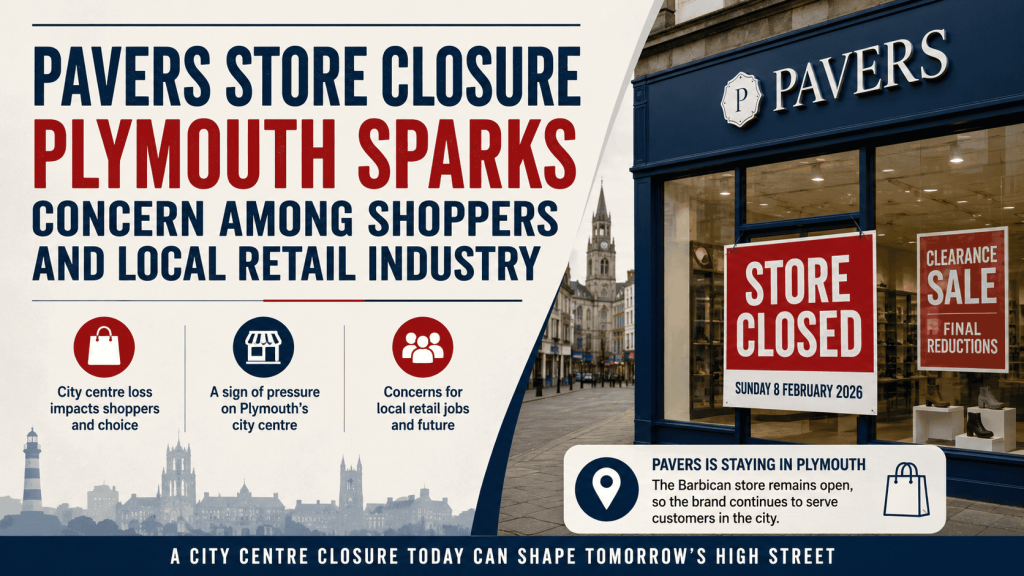
Pavers shut its Plymouth city centre branch on New George Street on Sunday, 8 February 2026. Reports from the time said the shop was holding a clearance sale before closing, and that the company did not give a detailed public explanation for the specific closure. The same reports also noted that Pavers’ Barbican store in Plymouth would stay open, which means the brand has not left the city completely.
That split matters because the New George Street branch served the city centre, where footfall and shop choice are important for everyday trade. When a familiar store closes in a central location, shoppers often see it as a sign that the area is under pressure, even when another branch remains nearby. In Plymouth’s case, the remaining Barbican shop keeps some local service in place, but it does not replace the role of a city centre unit.
Why shoppers are concerned
The concern from shoppers is not only about one shoe shop. It is also about what the closure says about the health of the local high street. A well known store can help bring steady customer traffic to nearby businesses. When that store closes, nearby retailers can lose some of that support, especially in a city centre that already depends on repeat visits and casual buying.
Reports around the closure showed that some customers viewed it as another sign of decline in the city centre. That reaction is common when long standing chain stores shut down, because shoppers often connect those closures with fewer reasons to visit the area. In simple terms, a closed shop window can feel bigger than the store itself. It can make an entire shopping street look weaker.
What Pavers is and why the brand matters
Pavers is not a small local name. The company says it was founded in 1971 by Catherine Paver in York and has grown into a family owned and run footwear retailer. Its own press and company pages describe Pavers as a brand built around comfort, value, and a wide store network across the UK.
The brand also says it has more than 170 stores nationwide. That scale matters because store closures at a business like this are watched closely by both customers and retail analysts. A single branch closure may be local in effect, but it also becomes part of the larger story about how national chains are reshaping their store networks.
The wider pressure on UK retail
Pavers’ Plymouth closure comes at a time when the retail sector is still dealing with weak footfall and higher operating pressure. The British Retail Consortium reported that total UK footfall in 2025 was down 0.8% compared with 2024. It also said footfall fell 2.2% in the three months to December and dropped 2.9% in December itself.
That matters because footfall is one of the clearest signs of how a high street is doing. If fewer people are walking through shopping areas, retailers have less chance to make sales. For city centres, the problem can grow quickly. Lower footfall can weaken nearby businesses, reduce impulse purchases, and make some locations less attractive for future investment.
The Centre for Retail Research also shows how broad the pressure has become. Its retail crisis page says 17,349 stores closed in 2025. That figure is not just about one sector or one town. It reflects a national market where many chains and independents are still adjusting to higher costs, changing habits, and tougher trading conditions.
Recent restructuring efforts by large chains, including Poundland Store Closures Restructuring Plan, highlight how major retailers are cutting physical locations to manage rising costs and weaker footfall.
Why store closures affect local retail
When a chain store closes in a city centre, the impact reaches beyond that company. Nearby cafes, banks, service shops, and smaller retailers can all feel the loss if customer traffic drops. In many towns and cities, people still combine shopping trips. They visit one store, then use the surrounding area for other purchases. A closed unit can break that pattern.
This is why shop closures often draw attention from local retail groups and business owners. They are not only looking at one vacancy. They are looking at the chain reaction that can follow. Less footfall can mean weaker sales, and weaker sales can make other stores reconsider their own future. That is one reason high street change is often discussed as a wider retail issue, not only a landlord issue.
What is known about the Plymouth Pavers branch
The main facts are clear. The New George Street branch closed on 8 February 2026. The Barbican branch remains open. Pavers has not publicly given a detailed reason for this specific Plymouth closure in the reports available, and it was also not clear from those reports whether employees were moved to other branches or affected in another way.
That uncertainty is one reason these closures create concern. Shoppers usually want to know whether a closure is part of a wider retreat, a relocation, or a simple lease change. When the explanation is limited, the public often fills the gap with broader worries about retail decline.
For customers who used the New George Street branch, the nearest Pavers option in Plymouth remains the Barbican store. Pavers’ store locator lists the Barbican branch as open and gives it an active trading status. That means local shoppers still have access to the brand, even though the city centre unit has gone.
Clearance sales and customer behaviour
Reports around the closure said the Plymouth branch was running a closing sale with heavy discounts before the final shutdown. That is a common retail pattern. Stores often use final promotions to reduce stock quickly before vacating a unit. For shoppers, it can create a short term rush for bargains, even while the long term concern about store loss remains.
This kind of sale can increase store visits in the final days, but it does not solve the bigger issue behind the closure. A discount event can clear shelves, yet it does not rebuild the foot traffic that many high streets need over time. That is why retail observers pay attention not only to the sale itself, but to what happens after the doors close.
What this means for the local retail industry
For Plymouth’s retail industry, the closure is another reminder that store networks are still being trimmed and reshaped. Even established brands are reviewing where they trade, how much space they need, and which sites still deliver enough traffic to stay worthwhile. That trend affects landlords, local centres, and neighbouring businesses as much as it affects the retailer itself.
It also shows the difference between a brand staying in a city and a brand staying in a location. Pavers still has a presence in Plymouth through the Barbican branch, but the city centre has lost one of its footwear options. For a busy shopping area, that can still be a meaningful change.
The wider market context helps explain why this gets attention. Footfall has been under pressure, many stores closed in 2025, and shoppers have become more selective about when and where they visit physical shops. In that setting, even one closure can become a signpost for larger change on the high street.
The closure of other long standing retailers, such as Partridges Closure Royal Disappointment, also shows how even established brands are under pressure in today’s retail environment.


