

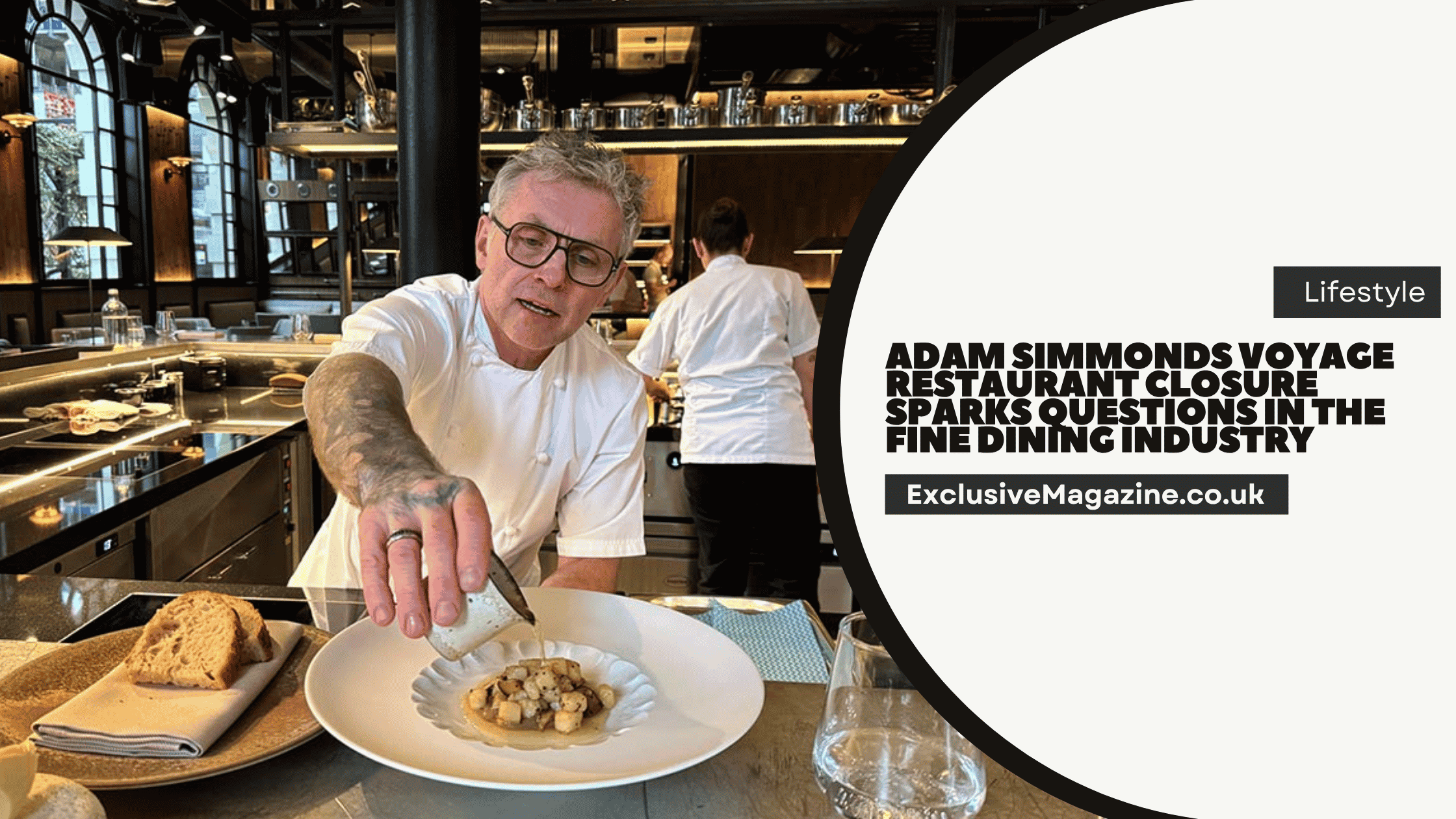

Voyage with Adam Simmonds closed at The Megaro Hotel in King’s Cross on 21 August 2025, less than a year after opening. The hotel said the restaurant had become unsustainable because of a challenging economic climate and weak trading.
Voyage Closed After a Short Run
Voyage opened in late January 2025 as a flagship restaurant at The Megaro Hotel in London. It was designed as a Scandinavian inspired fine dining room, with a menu built around seasonal produce, foraging, preserving, fermenting, and pickling. The restaurant closed with immediate effect in August 2025, which made the shutdown especially notable because it happened so soon after launch.
The closure matters because it did not come after a long decline. It came after a short trading period that was supposed to establish the restaurant as a major fine dining destination. The hotel said details about the future of the space would be announced later, but at the time of the closure the restaurant was shut immediately.
The Reason Given Was Simple
The Megaro Hotel said the decision was based on disappointing trading performance and the wider economic climate. That language points to a common problem in the restaurant market. A high end dining room can win attention, but attention does not always turn into enough bookings, repeat visits, and stable income.
Fine dining has a narrow margin for error. The business must cover premium ingredients, highly skilled staff, service standards, and a room that often has fewer covers than a casual restaurant. When sales do not meet expectations, the model can become hard to support quickly. The closure of Voyage shows how fast that risk can appear.
The Menu Showed A High Cost Offer
Voyage was not priced as an everyday dining room. The restaurant served a tasting menu at £115 for seven courses or £85 for five courses, and it also offered a separate à la carte menu with premium dishes such as carrot with buckwheat and yeast, and lobster with razor clams, caviar, and nettle. Those prices place the restaurant firmly in the upper end of the London market.
That pricing can work when demand is strong, but it requires a steady flow of guests who are willing to spend at that level. If the market softens, or if customers become more cautious, a high ticket menu can become harder to sell in enough volume. The Voyage closure suggests that the restaurant did not reach that level of stability.
Adam Simmonds Brought A Strong Background
Adam Simmonds entered Voyage with a strong résumé. Reports on his career say he worked in top kitchens and held senior roles at places including The Capital Hotel and Belmond Cadogan in London, and he was also executive chef at Danesfield House in Marlow for several years. That history gave Voyage a level of authority and expectation from the start.
His return to a flagship restaurant role made Voyage a closely watched opening. The restaurant was also described at launch as a personal project shaped by Scandinavian ideas and design. In fine dining, the chef name often matters as much as the menu. A respected chef can bring interest, but even a strong name does not remove the commercial pressure that comes with opening at the top end of the market.
The Closure Reflects Wider Pressure On Hospitality
The Voyage shutdown is part of a much wider set of pressures facing hospitality in the UK. The House of Commons Library said the hospitality sector had about 176,685 businesses in 2025 and around 2.6 million jobs in the industry, while also noting that costs of labour and materials were the main challenges affecting turnover in November 2025.
Those pressures matter more in fine dining because the cost base is higher. A restaurant at the premium end usually spends more on skilled labor, specialist ingredients, training, and service. If labour and material costs rise at the same time, the business has less room to absorb weak trading. That is one reason closures in the high end dining space often draw wider attention than closures in other parts of hospitality.
Road network disruptions such as the M6 Walsall Birmingham Lanes Closure also highlight how transport delays and regional congestion can indirectly affect food supply chains and restaurant logistics.
Consumer Costs Add More Strain
Price data from the Office for National Statistics also shows a difficult backdrop. The restaurants and hotels division rose by 3.4% in the 12 months to July 2025, and food and non alcoholic beverages inflation was 5.1% in August 2025. Those figures help explain why both restaurants and their customers face pressure at the same time.
For operators, higher prices can increase costs across the supply chain. For diners, higher bills can change how often they eat out and how much they are willing to spend on tasting menus. That combination can hit fine dining more sharply than lower priced dining because the customer is already being asked to commit to a bigger spend.
Retail sector pressure, seen in cases like the Poundland Store Closures Restructuring Plan, reflects the wider cost challenges that are also impacting consumer spending behavior in hospitality and dining.
Staffing Pressure Remains A Major Issue
Staffing is another issue that affects the sector. The House of Commons Library said that in the three months to May 2025 there were 79,000 vacancies in the food and accommodation industry in the UK, equal to 3.1 vacancies per 100 workers, which was above the economy wide average of 2.3.
Fine dining depends on stable teams. A tasting menu restaurant needs consistency in the kitchen and on the floor, because the guest experience depends on timing, detail, and service standards. High vacancy levels make that harder to achieve and can raise costs at the same time. When a restaurant is already fighting for trade, staffing pressure can make the business model even less secure.
The Location Also Carried High Expectations
Voyage operated inside The Megaro Hotel in King’s Cross, one of London’s busiest and most competitive areas for hotels, dining, and transport traffic. A high end restaurant in that setting has access to a wide audience, but it also faces strong competition from many other London restaurants that are chasing the same diners.
The location can support a premium room, but it does not guarantee regular demand. Fine dining guests usually make choices based on reputation, value, occasion, and convenience. A restaurant still has to convert interest into repeat business. The fast closure of Voyage shows that even a strong location and an experienced chef do not remove that test.
What The Closure Says About Fine Dining Now
The Voyage closure highlights how fragile a new fine dining opening can be when costs are high and trading is soft. It also shows that chef led restaurants still need a business model that can survive beyond the first wave of attention. In this case, the hotel’s own statement made clear that the operation could not continue in its current form.
For the wider industry, the main lesson is that prestige alone does not secure long term trading. A restaurant may open with a clear identity, a respected chef, and a premium menu, but it still needs enough demand to cover its cost base. The closure of Voyage with Adam Simmonds is a clear example of that pressure in the fine dining market.