

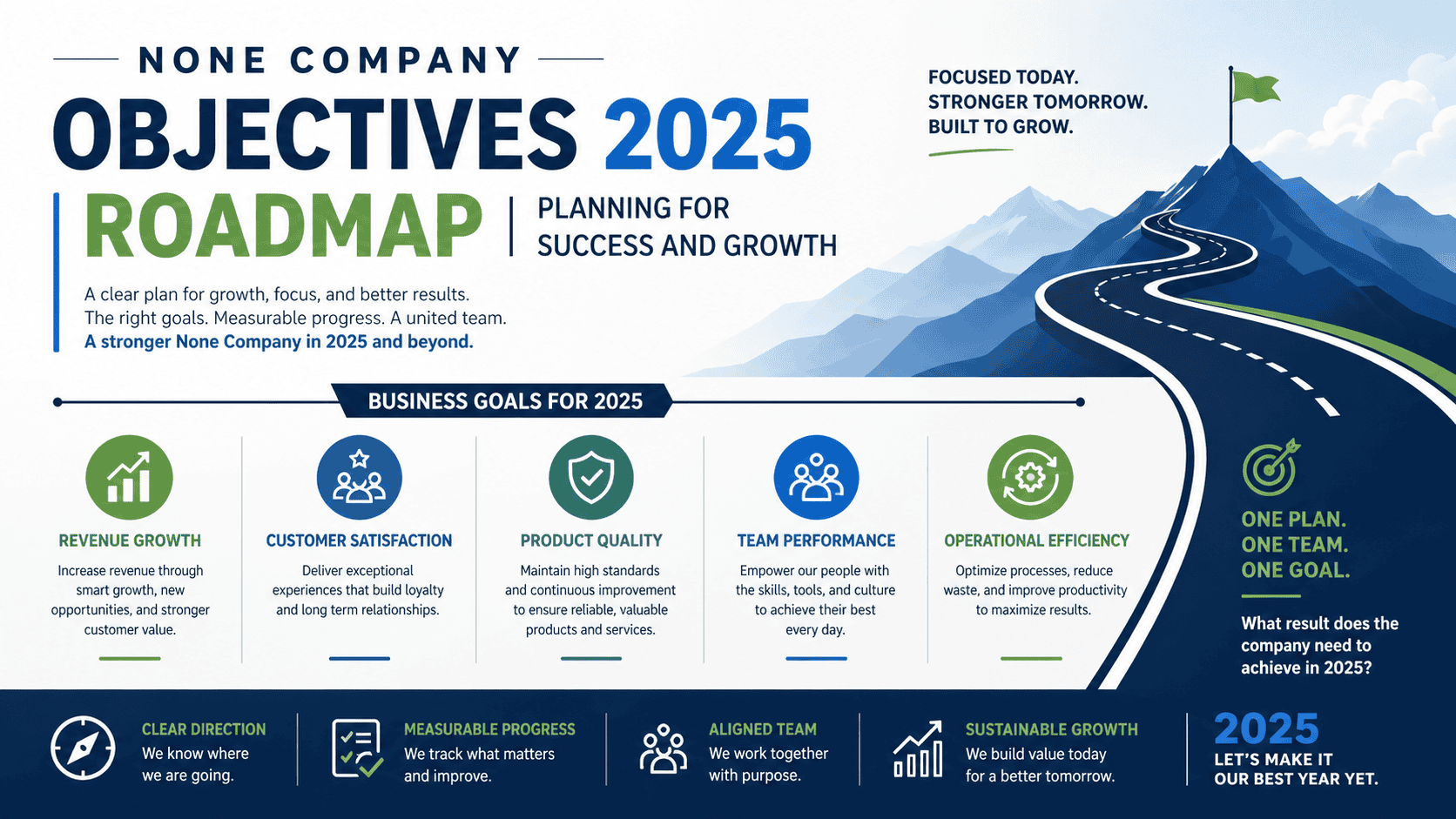

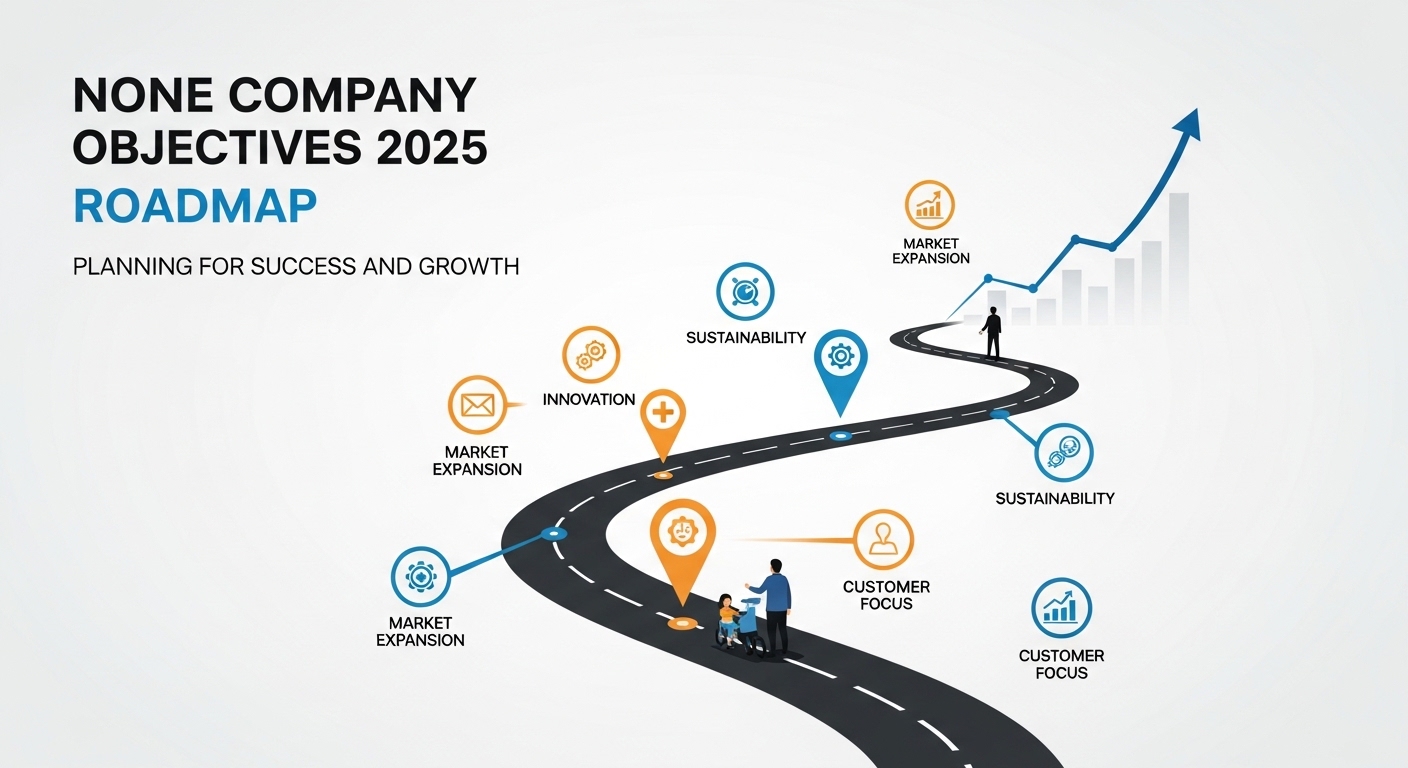
None Company Objectives 2025 Roadmap gives the business a clear plan for growth, focus, and better results. It sets the right goals, measures progress, and keeps teams aligned through the year.
Business Goals for 2025
None Company should define goals that match its size, market, and resources. The best roadmap keeps the company focused on a few important results instead of trying to do everything at once. Clear objectives help teams work with purpose and reduce wasted effort.
A strong 2025 roadmap should cover revenue growth, customer satisfaction, product quality, team performance, and operational efficiency. These areas support long term growth and help the company stay competitive.
The main business goals should be specific, realistic, and measurable. Each goal should answer one simple question. What result does the company need to achieve in 2025?
A practical set of objectives may include the following:
| Objective Area | 2025 Goal Type | Why It Matters |
|---|---|---|
| Revenue | Grow sales and improve repeat business | Supports financial stability |
| Customers | Improve satisfaction and retention | Builds trust and loyalty |
| Operations | Reduce delays and improve process speed | Saves time and cost |
| Product or Service | Raise quality and consistency | Improves market value |
| Team | Strengthen skills and accountability | Supports execution |
These areas create a balanced plan. They help the company grow without losing control of daily work.
For more details about the company structure and digital presence, visit the official reference page on Company Website Shopnaclo.
Revenue Growth Targets
Revenue growth should be one of the main objectives in the 2025 roadmap. Without growth, it becomes harder to invest in people, tools, and new opportunities. Revenue goals should be linked to real actions, not only to numbers on paper.
None Company can set revenue objectives around new customer wins, repeat orders, larger deal sizes, or better conversion rates. Each of these factors supports growth in a different way. A roadmap works best when it explains how the company will reach the target, not just what the target is.
Good revenue planning should include monthly and quarterly checkpoints. These checkpoints help leaders spot gaps early. They also make it easier to change strategy if market conditions shift.
The company should also identify which products or services have the strongest growth potential. Focusing on high value offerings usually brings better results than spreading effort too thin.
Customer Experience Objectives
Customer experience should be a major part of the 2025 plan. Strong service keeps customers loyal and improves the company’s reputation. It also reduces complaints, returns, and lost business.
None Company should set clear objectives for response time, service quality, support follow up, and customer satisfaction scores. These targets help teams stay focused on what customers value most.
A useful roadmap should connect customer experience goals with daily operations. For example, faster support response can improve satisfaction. Better product information can reduce confusion. Clear communication can improve trust.
Customer retention also matters. Keeping current customers usually costs less than finding new ones. That is why the roadmap should include repeat purchase goals and loyalty measures where relevant.
Product and Service Quality
Quality is a core business objective for any company that wants long term success. In 2025, None Company should focus on consistency, reliability, and clear standards.
Product and service quality goals should be easy to track. These may include fewer errors, fewer complaints, better delivery performance, or stronger customer feedback. Quality targets work best when teams understand what good performance looks like.
The roadmap should also include regular quality checks. These checks help catch issues before they spread. They protect the company’s name and reduce costs linked to rework or mistakes.
If None Company offers multiple products or services, it should rank them by value and performance. This helps leadership decide where to improve first.
Operational Efficiency
Operational efficiency helps the company use time, money, and staff in a better way. It is one of the most important parts of a 2025 roadmap because it supports every other goal.
None Company should review its core processes and remove slow or repeated steps. A simpler process often leads to better output and fewer mistakes. Teams should know what steps matter, who owns each task, and how work moves from one stage to another.
A good roadmap should cover planning, approval, communication, reporting, and delivery. These daily functions often create delays when they are not clear.
The company can improve efficiency by using standard work steps, better tracking systems, and clear deadlines. It should also watch for tasks that do not add value. Removing those tasks can improve speed without lowering quality.
Team Performance and Accountability
A roadmap only works when people know their responsibilities. Team performance should therefore be part of every 2025 objective plan.
None Company should define who owns each goal, how success will be measured, and when progress will be reviewed. This reduces confusion and makes it easier to act quickly.
Leaders should also set clear expectations for communication and reporting. Teams need to know what to update, how often to update it, and what issues must be raised right away.
Training is also important. If staff need new skills to support the roadmap, the company should plan for that early. Training helps improve confidence, reduce mistakes, and increase output quality.
A simple performance system can include regular reviews, short progress meetings, and written updates. These tools help keep accountability strong without creating extra complexity.
Quarterly Planning Structure
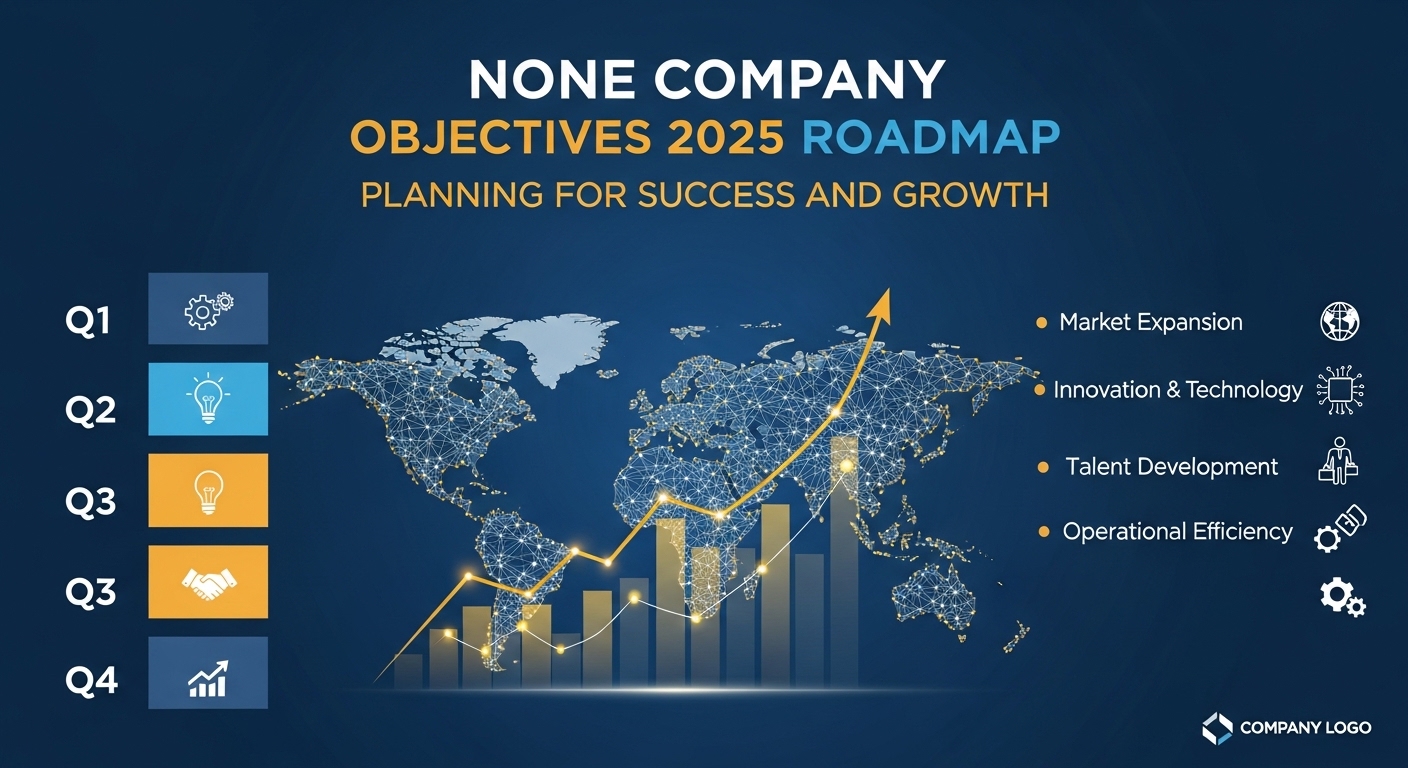
Breaking the roadmap into quarters makes the plan easier to manage. A yearly goal can feel too large if it is not divided into smaller steps. Quarterly planning keeps the team focused on near term action.
Here is a simple structure for the None Company 2025 roadmap:
| Quarter | Main Focus | Expected Result |
|---|---|---|
| Q1 | Set priorities and build internal systems | Clear direction and prepared teams |
| Q2 | Improve sales, service, and process flow | Better execution and early growth |
| Q3 | Scale the best performing activities | Stronger results from proven efforts |
| Q4 | Review outcomes and prepare next year’s plan | Better planning for 2026 |
This structure gives the company a full year view without losing control of execution. It also makes reporting easier because progress can be reviewed in smaller stages.
Risk Management and Planning Control
Every business roadmap needs risk control. Even strong plans can fail when the company ignores possible problems. None Company should identify the main risks that could affect its 2025 objectives.
These risks may include lower demand, cost increases, service delays, staffing gaps, or weak systems. The roadmap should explain how each risk will be watched and managed.
Risk planning should stay practical. The company does not need a long list of possible problems. It needs the most likely and most harmful ones. Once those are clear, leadership can prepare backup steps.
A simple control process should include regular review meetings, updated reports, and fast action when performance drops. This keeps the roadmap active and useful throughout the year.
Measurement and Reporting
A strong roadmap depends on clear measurement. None Company should use a small set of key performance indicators that match its goals. These measures should be simple enough for teams to understand and useful enough for leaders to act on.
Useful reporting areas may include sales growth, customer satisfaction, delivery time, error rates, cost control, and team output. The company should avoid too many metrics. Too much reporting can create noise and slow decision making.
Reports should be consistent. Weekly or monthly reports work well for most business goals. Quarterly reviews are useful for broader strategy changes.
The best reports show three things. What happened, why it happened, and what should happen next. This approach keeps the roadmap tied to action rather than just data.
For updated insights, reports, and planning details, check Get Any Company Objectives or News of None for the latest information and company updates.
Leadership Priorities for 2025
Leadership must guide the roadmap with clear choices. Without strong direction, teams may focus on different goals and waste effort. None Company should make leadership priorities part of the main plan.
The leadership team should focus on alignment, clear communication, fast decisions, and active review. These four areas support every objective in the roadmap.
Leaders should also protect focus. When too many goals compete for attention, progress slows down. A better approach is to select the most important priorities and push them with discipline.
Leadership should use regular check ins to keep the company on track. These meetings should be short, practical, and focused on results.
Resource Planning and Budget Use
No roadmap can succeed without proper resources. None Company should match its 2025 objectives with the budget, staff, tools, and time needed to achieve them.
Resource planning should answer one question for each goal. Does the company have enough support to reach this target? If the answer is no, the roadmap should be adjusted early.
Budget use should support the highest priority objectives first. That often means funding growth, service quality, and efficiency improvements before lower value activities.
The company should also review whether current systems are helping or slowing progress. Sometimes the best investment is not a new project. It is a better process, better software, or better staff training.
Common Mistakes to Avoid
Many company roadmaps fail because they are too broad or too vague. None Company should avoid goals that sound good but do not guide action.
The most common mistakes include setting too many objectives, not assigning ownership, missing deadlines, ignoring reporting, and failing to review progress. These problems make a roadmap weak even when the strategy looks strong.
Another common mistake is treating the roadmap as a fixed document. A good 2025 plan should be reviewed and updated when conditions change. That keeps it realistic and useful.
The company should also avoid building goals only from ambition. Every objective must fit the company’s current size, market position, and available capacity.
Final Planning Focus
None Company Objectives 2025 Roadmap should stay simple, measurable, and action focused. The best plan connects growth, customers, quality, operations, and team performance in one clear direction. It helps the company use its time and resources wisely while keeping progress visible all year.