

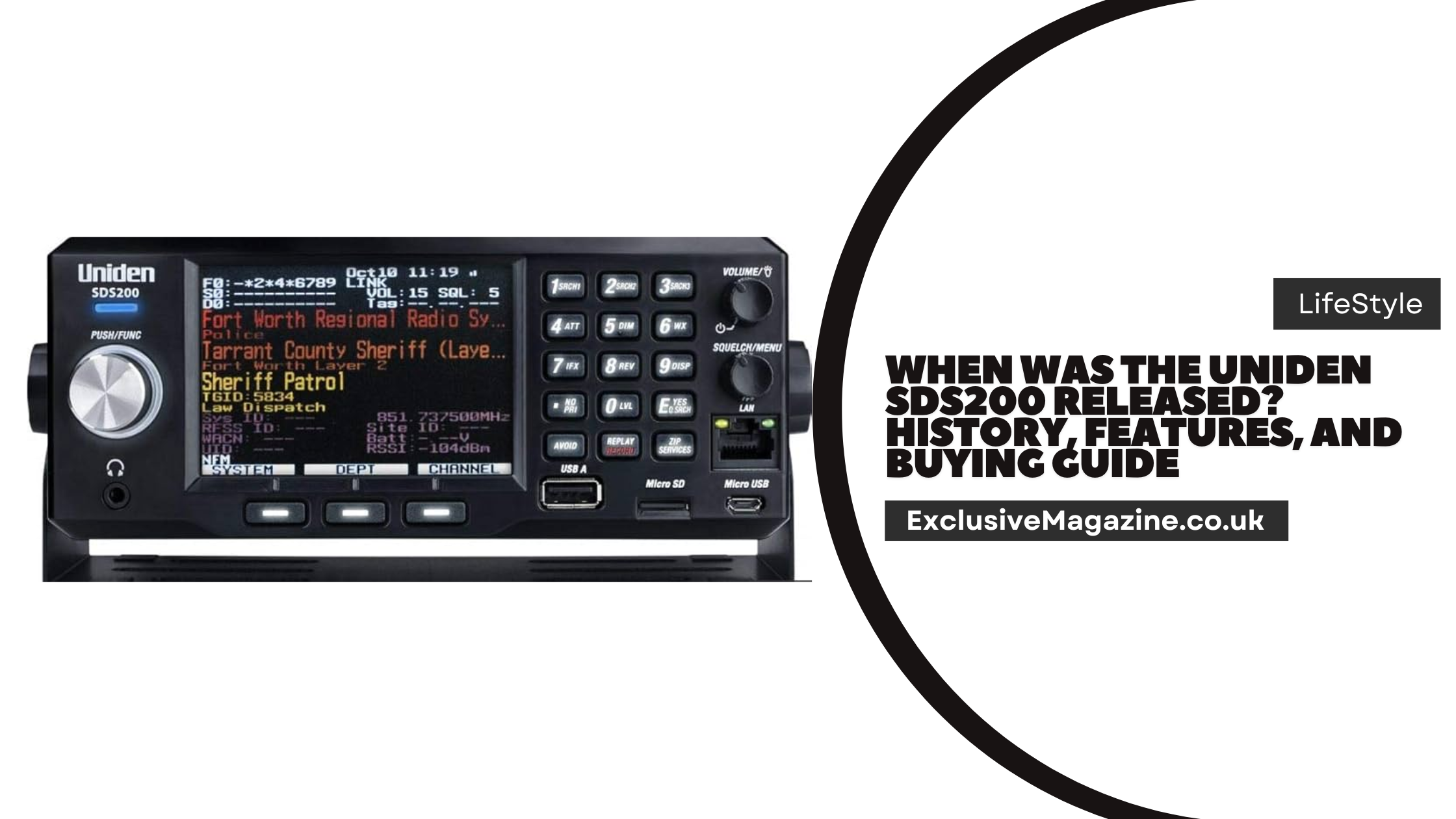

The Uniden SDS200 entered the market in 2019. It was introduced as the mobile and desktop version of the popular Uniden SDS100 handheld scanner.
Before the SDS200 arrived, many scanner users experienced reception problems when monitoring Project 25 simulcast radio systems. Traditional scanners often struggled to decode signals accurately in areas with multiple transmitter sites.
Uniden developed the SDS series to solve this issue. The SDS200 used Software Defined Scanner technology that improved signal decoding and audio quality on difficult radio systems.
The release of the SDS200 represented a major step forward in scanner radio technology.
History of the Uniden SDS200
The SDS200 was built upon the success of the SDS100 handheld scanner.
The SDS100 was introduced first and demonstrated that software defined architecture could greatly improve scanner performance on modern public safety systems.
Many users wanted the same technology in a larger desktop and vehicle-friendly design. Uniden responded by creating the SDS200.
The scanner quickly gained popularity among:
- Public safety monitoring enthusiasts
- Amateur radio operators
- Emergency preparedness users
- Railfans
- Aviation listeners
- Professional radio system observers
Its ability to handle complex digital systems made it one of the most sought-after scanners in the market.
Why the SDS200 Was Important
Public safety agencies across North America increasingly adopted digital trunked radio systems.
Many of these systems used simulcast technology. Simulcast systems transmit identical signals from multiple towers at the same time.
Traditional scanners often received multiple signals simultaneously, causing distortion and decoding errors.
The SDS200 addressed this problem through advanced digital signal processing and software defined radio architecture.
As a result, users could monitor systems that were previously difficult or impossible to hear clearly.
Uniden SDS200 Specifications
The table below highlights the main specifications of the scanner.
| Feature | Details |
|---|---|
| Model | Uniden SDS200 |
| Release Year | 2019 |
| Scanner Type | Base and Mobile Digital Scanner |
| Display | Large Color LCD |
| GPS Support | Yes |
| Recording Function | Yes |
| Trunking Support | Yes |
| Digital Modes | P25 Phase I and Phase II |
| Database Included | Full RadioReference Database |
| Favorites Lists | Yes |
| Software Defined Technology | Yes |
| USB Connectivity | Yes |
| Ethernet Support | Yes |
Key Features of the Uniden SDS200
Software Defined Scanner Technology
The most important feature is the Software Defined Scanner architecture.
Unlike many traditional scanners, the SDS200 processes radio signals differently. This helps reduce distortion and improves digital voice decoding.
Users in simulcast areas often notice a significant improvement compared to older scanner models.
Large Color Display
The SDS200 includes a large customizable color display.
The screen shows:
- Channel information
- Talkgroup details
- Frequency data
- Signal information
- System names
Different colors can be assigned to channels and systems for easier identification.
Nationwide Database
The scanner includes the RadioReference database.
This database contains radio system information from across the United States and Canada.
Users can quickly begin scanning by entering a ZIP code or connecting a GPS receiver.
This feature reduces setup time and simplifies operation.
Location-Based Scanning
GPS functionality allows automatic scanning changes based on location.
As a user travels, the scanner can automatically load nearby systems and disable distant ones.
This feature is especially useful for:
- Road trips
- Commercial drivers
- Emergency management personnel
- Scanner hobbyists who travel frequently
Recording and Replay
The SDS200 supports audio recording.
Users can save transmissions for later review.
The replay feature allows recently received communications to be played back without recording software.
Ethernet Connectivity
A notable feature of the SDS200 is Ethernet support.
Network connectivity enables remote control and monitoring functions when compatible software is used.
This feature is valuable for advanced users who manage remote monitoring stations.
Supported Radio Systems
The SDS200 supports a wide range of radio technologies.
Conventional Analog Systems
The scanner can monitor traditional analog radio communications.
Examples include:
- Local government services
- Business communications
- Utility companies
- Transportation services
Project 25 Systems
The scanner supports:
- P25 Phase I
- P25 Phase II
These are among the most common digital radio standards used by public safety agencies.
Trunked Radio Systems
The SDS200 handles many trunking formats.
This capability allows monitoring of complex radio networks that dynamically assign frequencies during communications.
SDS200 vs SDS100
Many buyers compare the SDS200 and SDS100 before making a purchase.
| Feature | SDS200 | SDS100 |
| Design | Desktop and Mobile | Handheld |
| Display Size | Larger | Smaller |
| Battery Operation | No | Yes |
| Vehicle Installation | Excellent | Limited |
| Home Monitoring | Excellent | Good |
| Ethernet Support | Yes | No |
| Portability | Low | High |
Both scanners use similar core technology and offer strong digital performance.
The best choice depends on whether portability or fixed-location monitoring is more important.
Who Should Buy the Uniden SDS200
Scanner Enthusiasts
The SDS200 is ideal for serious scanner hobbyists.
Its advanced reception capabilities help monitor systems that older scanners may struggle to receive.
Emergency Preparedness Users
People interested in emergency awareness often use scanner radios to monitor local public safety activity.
The SDS200 provides reliable access to many radio systems where monitoring remains legal.
Amateur Radio Operators
Many amateur radio operators use scanners alongside their radio equipment.
The SDS200 can complement a radio station by monitoring local services and public communications.
Transportation Monitoring Fans
Railroad enthusiasts, aviation listeners, and transportation observers benefit from the scanner’s wide coverage capabilities.
Its database-driven setup makes monitoring easier than manual frequency programming.
Advantages of the SDS200
Several benefits contribute to the scanner’s popularity.
Excellent Simulcast Performance
This remains the scanner’s biggest advantage.
Many users purchase the SDS200 specifically because it handles difficult simulcast systems better than older scanners.
Easy Database Programming
The built-in database eliminates much of the manual programming work.
New users can begin scanning quickly.
Expandable Features
The scanner supports optional upgrades for additional digital modes.
These upgrades can extend the scanner’s capabilities as needs change.
Strong Audio Quality
Clear voice decoding and strong speaker performance improve the listening experience.
The larger desktop design allows for better audio output than many handheld units.
Potential Drawbacks
No scanner is perfect.
Higher Cost
The SDS200 is more expensive than many entry-level scanners.
Its advanced technology contributes to the higher price.
Learning Curve
Although easier than older scanners, new users may still need time to understand systems, talkgroups, favorites lists, and scanning options.
Size
The scanner is designed primarily for home or vehicle use.
Users seeking portability may prefer the SDS100 handheld model.
Things to Check Before Buying
Before purchasing an SDS200, consider several factors.
Verify Local Radio Systems
Not all radio systems can be monitored.
Some agencies use encryption, which no scanner can legally decode.
Research local systems before purchasing.
Consider Your Monitoring Goals
Determine what you want to listen to.
Different users focus on:
- Police communications
- Fire departments
- Emergency medical services
- Railroads
- Aviation
- Utilities
- Amateur radio activity
Understanding your goals helps ensure the scanner meets your needs.
Budget for Accessories
Additional items may include:
- External antennas
- GPS receivers
- Mounting equipment
- Programming software
- Optional digital upgrades
These accessories can improve performance and convenience.
Is the Uniden SDS200 Still Relevant Today?
Despite being released in 2019, the SDS200 remains one of the most capable consumer scanners available.
Its software defined architecture, excellent simulcast handling, database-driven programming, and support for modern digital radio systems continue to make it a popular choice among serious radio monitoring enthusiasts.
For users who need reliable monitoring of complex public safety systems, the SDS200 remains a leading scanner in its category years after its original release.
You can read it’s also: When Was the Declaration of Independence Signed? Timeline, Dates, and Historical Significance


