

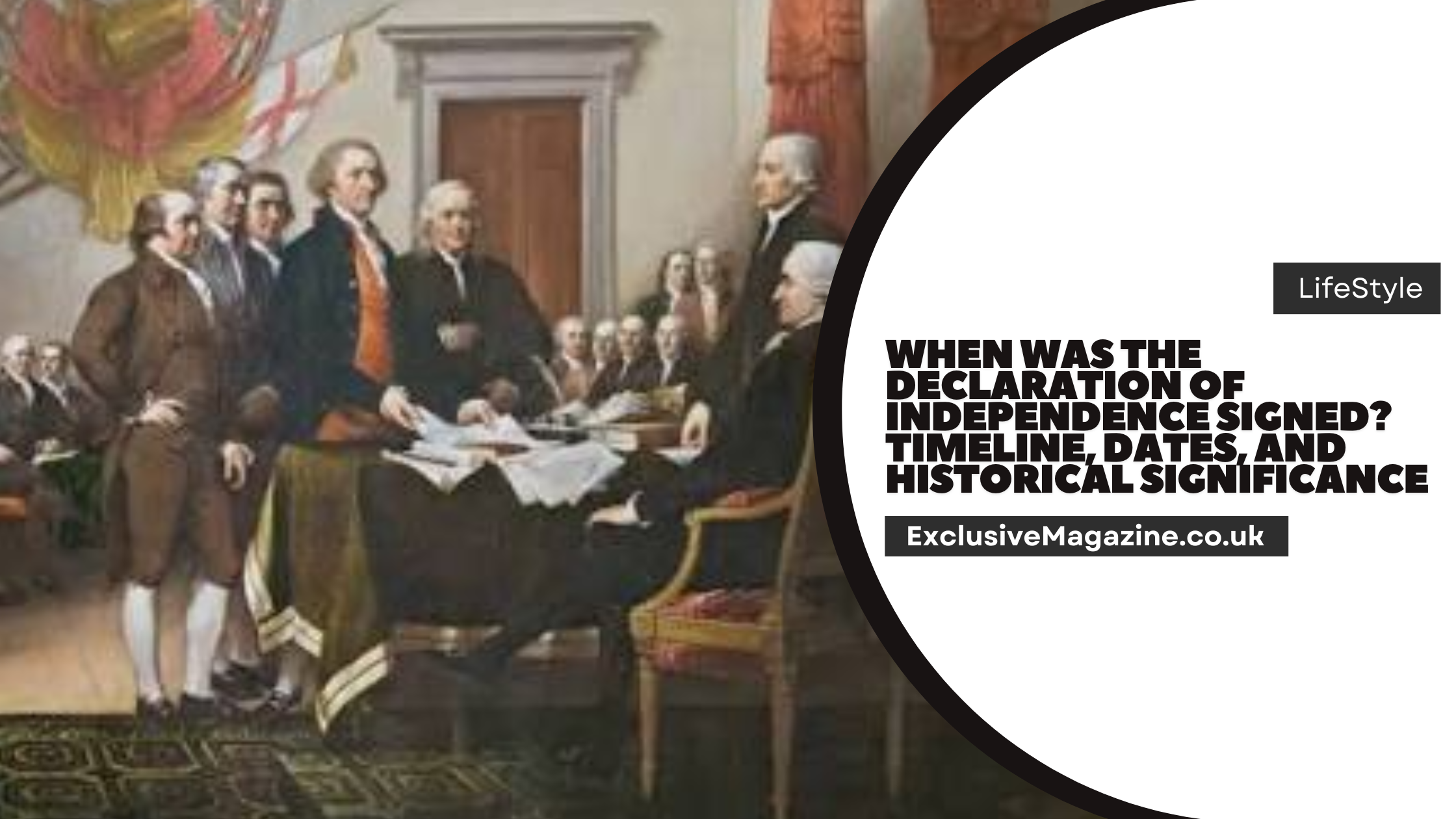

When was the Declaration of Independence signed? The Declaration of Independence was officially adopted on July 4, 1776. However, most delegates signed the document on August 2, 1776, while a few signed later.
When Was the Declaration of Independence Signed?
The signing of the Declaration of Independence remains one of the most important events in American history. Many people believe all delegates signed the document on July 4, 1776, but the actual process took place over several weeks.
Understanding the timeline helps explain how the American colonies formally separated from British rule and established themselves as independent states.
Quick Timeline of Key Dates
| Date | Event |
|---|---|
| June 7, 1776 | Resolution for independence introduced |
| July 2, 1776 | Congress voted for independence |
| July 4, 1776 | Declaration officially adopted |
| July 19, 1776 | Congress ordered an official handwritten copy |
| August 2, 1776 | Most delegates signed the Declaration |
| After August 2, 1776 | Additional delegates signed later |
Why the Declaration of Independence Was Created
By 1776, tensions between Great Britain and the thirteen American colonies had reached a breaking point.
The colonies objected to British taxation, trade restrictions, and political control. Colonial leaders argued that citizens should have representation in government and greater control over their own affairs.
As conflicts increased, many colonial representatives believed independence was the only solution.
The Continental Congress met in Philadelphia to discuss the future of the colonies. After extensive debate, delegates moved toward complete separation from Britain.
June 7, 1776: The Call for Independence
On June 7, 1776, Richard Henry Lee of Virginia presented a resolution to the Continental Congress.
The resolution declared that the colonies should become free and independent states.
Congress did not immediately approve the proposal. Delegates spent several weeks debating the issue and considering the consequences of independence.
At the same time, a committee began preparing a formal declaration that would explain the reasons for breaking away from British rule.
Who Wrote the Declaration of Independence?
A committee of five members drafted the Declaration of Independence.
The committee included:
| Member | Colony |
|---|---|
| Thomas Jefferson | Virginia |
| John Adams | Massachusetts |
| Benjamin Franklin | Pennsylvania |
| Roger Sherman | Connecticut |
| Robert R. Livingston | New York |
Thomas Jefferson wrote most of the first draft.
His document explained the colonies’ reasons for seeking independence and outlined principles about individual rights and government authority.
Congress reviewed and revised the draft before approving the final version.
July 2, 1776: Independence Approved
A major milestone occurred on July 2, 1776.
On this date, the Continental Congress voted in favor of Lee’s resolution for independence.
This vote officially declared that the colonies were no longer under British authority.
Many historians consider July 2 the day independence was legally approved.
John Adams believed Americans would celebrate July 2 as the nation’s independence day in future generations.
However, events unfolded differently.
July 4, 1776: The Declaration Was Adopted
After approving independence, Congress continued editing the Declaration.
On July 4, 1776, delegates approved the final wording of the document.
This date appears on the Declaration itself.
Because the document received official approval on July 4, that date became associated with American independence.
Today, the United States celebrates Independence Day every year on July 4.
The date represents the formal adoption of the Declaration rather than the signing by all delegates.
Was the Declaration Signed on July 4?
One of the most common historical misconceptions involves the signing date.
Many school lessons, paintings, and popular accounts suggest that delegates gathered on July 4 and signed the document immediately.
Historical evidence shows this did not happen.
Although some officials may have signed preliminary versions around that time, the majority of delegates did not sign the famous parchment copy on July 4.
The signing process occurred later.
July 19, 1776: Congress Orders an Official Copy
After adopting the Declaration, Congress wanted an official version suitable for signatures.
On July 19, 1776, Congress ordered the creation of an engrossed copy.
An engrossed document is a carefully handwritten version prepared on parchment.
This official copy would become the version displayed and preserved for future generations.
The task required time because the document needed to be written clearly and accurately.
Once completed, delegates could sign it.
August 2, 1776: The Main Signing Date
August 2, 1776, marks the most important signing date in the history of the Declaration.
On this day, most members of the Continental Congress signed the engrossed parchment copy.
This event created the document recognized today as the signed Declaration of Independence.
Fifty six delegates eventually signed the Declaration.
Many of the most famous signatures were added during the August 2 session.
These included:
| Signer | Colony |
|---|---|
| John Hancock | Massachusetts |
| Samuel Adams | Massachusetts |
| Benjamin Franklin | Pennsylvania |
| Thomas Jefferson | Virginia |
| Richard Henry Lee | Virginia |
John Hancock, as president of the Continental Congress, placed his signature prominently on the document.
His large signature became one of the most recognizable signatures in American history.
Why Some Delegates Signed Later
Not every delegate was present on August 2.
Travel difficulties, political changes, and attendance issues prevented some representatives from signing on the main signing date.
Several delegates added their signatures in later weeks and months.
As a result, the signing process extended beyond August 2, 1776.
This fact further supports the conclusion that the Declaration was not signed all at once.
How Many People Signed the Declaration?
A total of 56 delegates signed the Declaration of Independence.
These individuals represented the thirteen colonies.
The signers came from different backgrounds, including lawyers, merchants, farmers, physicians, and political leaders.
Their signatures demonstrated support for independence and commitment to the new nation.
Signing the Declaration carried serious risks.
The signers could have faced charges of treason if Britain had defeated the colonial rebellion.
The Role of John Hancock
John Hancock served as president of the Continental Congress.
Because of his position, he signed the document first.
His signature stands out because of its size and placement.
Over time, the phrase “put your John Hancock” became a common expression meaning to sign a document.
Hancock’s signature symbolizes courage and leadership during the American Revolution.
Historical Importance of the Declaration
The Declaration of Independence served several important purposes.
First, it officially announced the colonies’ separation from Great Britain.
Second, it explained the reasons behind that decision.
Third, it presented political principles that influenced future democratic governments.
The document states that all people possess certain rights and that governments derive their authority from the consent of the governed.
These ideas became foundational principles in American political thought.
How the Declaration Influenced the World
The Declaration’s influence extended far beyond the thirteen colonies.
Its statements about liberty, equality, and self government inspired political movements across the world.
Many nations and reform movements later used similar ideas when seeking independence or democratic reforms.
The document remains one of the most studied political texts in modern history.
Its language continues to shape discussions about rights, freedom, and government responsibility.
Common Myths About the Signing
Several myths continue to circulate regarding the Declaration of Independence.
Myth 1: Everyone Signed on July 4
Most delegates signed on August 2, not July 4.
Myth 2: Independence Began on July 4
Congress actually voted for independence on July 2.
July 4 marks the adoption of the Declaration’s final text.
Myth 3: Thomas Jefferson Signed First
John Hancock signed first because he served as president of the Continental Congress.
Myth 4: The Declaration Created a New Government
The Declaration announced independence.
The later Articles of Confederation and the United States Constitution established governmental structures.
Key Facts at a Glance
| Question | Answer |
|---|---|
| When was independence approved? | July 2, 1776 |
| When was the Declaration adopted? | July 4, 1776 |
| When did most delegates sign it? | August 2, 1776 |
| How many signers were there? | 56 |
| Who wrote most of the document? | Thomas Jefferson |
| Who signed first? | John Hancock |
| Why is July 4 celebrated? | It marks adoption of the final Declaration |
Understanding the Difference Between Adoption and Signing
The confusion surrounding the Declaration often comes from mixing two separate events.
The first event was the adoption of the Declaration on July 4, 1776. Congress approved the final text and officially announced independence.
The second event was the signing of the engrossed parchment copy. Most delegates completed this step on August 2, 1776.
Both dates remain historically significant.
July 4 represents the official approval of the Declaration, while August 2 represents the primary signing ceremony that produced the historic document preserved today.


