

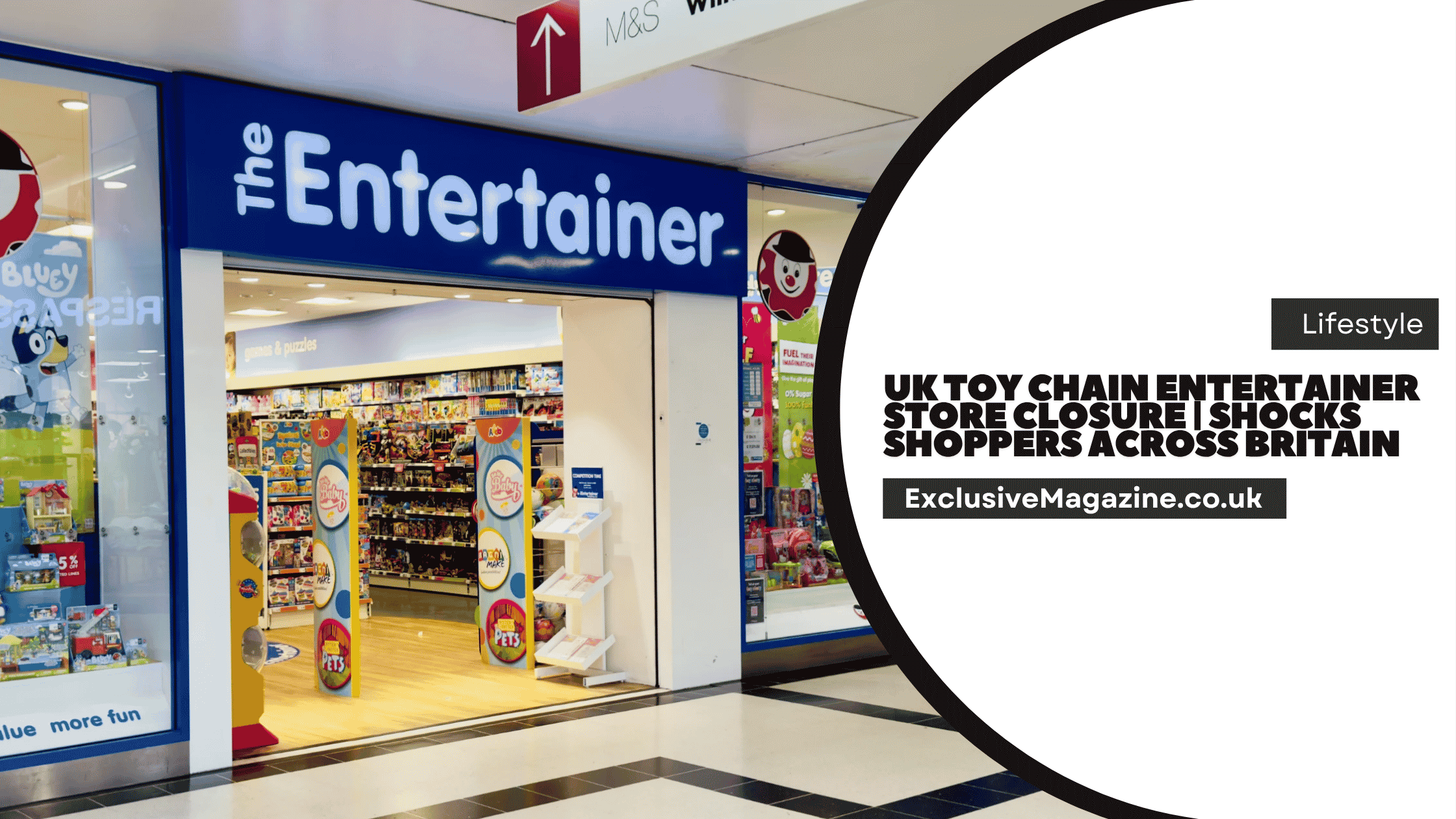

The Entertainer has closed selected UK stores, and that has shocked shoppers in several towns across Britain. The chain is still trading nationwide, with more than 160 UK stores, over 1,000 concessions, and about 1,900 employees.
Which Entertainer stores have closed
Recent reports have linked closures to branches in Barrow-in-Furness, Dundee, Wrexham, and Preston. The Barrow store shut on 3 May 2025 after being described as no longer profitable. Dundee’s Wellgate branch was reported to be closing because renewing the lease was not commercially viable. Wrexham was also reported as unviable for lease renewal, and Preston was said to be closing on the same commercial basis.
These closures matter because The Entertainer is a well known British toy chain with a strong town centre presence. When one branch closes, families often lose a familiar local shop, and nearby shopping centres can lose another reason for visitors to come in person. That is why the news has felt bigger than a normal retail change in the towns affected.
Why the closures are happening
The main reason reported for the closures is simple commercial pressure. In the Dundee case, the chain said it was not commercially viable to renew the lease. In Wrexham, the same wording was used in reports about the store. In Barrow, the branch was reported to have closed because it was not profitable enough to keep open. These are common retail reasons, but they still hit shoppers hard when the shop is a long standing local fixture.
The wider retail climate also helps explain why these decisions are happening. Reuters reported that the British Retail Consortium warned up to 400 large UK stores could be at risk if business rates rise, because retail margins are thin and higher costs can force stores to raise prices, cut jobs, or close. That pressure does not affect only one chain. It shapes decisions across the high street.
Why shoppers feel the impact
Toy shops are not only places to buy gifts. They are also part of routine family shopping, birthday planning, and Christmas spending. When a branch shuts, shoppers often have to travel farther, use online ordering more often, or switch to supermarket concessions. For parents with young children, that can change how and where they shop. The impact is especially clear in towns where the store was one of the few specialist toy shops left.
Local reporting around the Dundee closure showed how personal these changes can feel. The Courier said the Wellgate store had served customers for about a decade before its closure, which helps explain why the news drew such a strong reaction. In town centres, a toy shop can feel like part of the community rather than just another unit on a lease.
Readers following major retail shutdowns may also want to read about the Harley-Davidson West Virginia Dealership Closure, which raised similar concerns about store losses and local customer impact.
The Entertainer is still trading
The closure news does not mean the chain itself is shutting down. Reuters reported in August 2025 that The Entertainer remained a business with more than 160 shops and over 1,000 concessions, while Sky said it had about 1,900 employees. The company’s own website still promotes click and collect, delivery options, clearance lines, and a broad age based range of toys.
That trading model matters. A toy retailer can reduce its exposure to weak high street sites by leaning more on concessions, e commerce, and stronger locations. Reuters and Sky both noted that The Entertainer sells through retailers such as Tesco, M&S, and Matalan, which gives it a wider reach than a chain that depends only on standalone shops.
Ownership change and business direction
The Entertainer also changed ownership in 2025. Reuters reported that the Grant family handed control of the business to workers through an employee ownership trust, while Sky said the move gave employees a share in future profits and more influence over policy. That change did not stop individual closures, but it shows that the company is trying to reshape its long term structure rather than exit the market.
This ownership shift is important for understanding the chain’s direction. Employee ownership often aims to keep a business independent and stable, especially when retail costs are rising. In The Entertainer’s case, the company kept trading, kept expanding its concession model, and kept adjusting store decisions based on local performance. That is why closure reports should be read as branch level decisions, not as a sign that the full brand is disappearing.
What the closure trend says about the high street
The Entertainer story fits a wider pattern on the UK high street. Retailers are still facing higher operating costs, uneven footfall, and stronger online competition. Reuters’ report on business rates pressure showed how quickly these issues can turn into closure risk for physical stores. For toy retail in particular, the challenge is clear. Customers can still buy online, but shops need enough walk in trade to justify their rents and staffing costs.
This is why the shock around The Entertainer closures has spread beyond one town. Families see a familiar brand leaving a local centre, then learn that the company still has a large national footprint. That mix can look confusing at first, but it is common in modern retail. A chain can stay healthy overall while still closing weaker branches one by one.
Traffic and access concerns linked to A228 Boyle Way Closed also show how closures and disruptions can quickly affect daily routines for local residents and businesses.
What shoppers can expect next
The most likely next step is continued selective change rather than a total withdrawal from Britain. The Entertainer still has a large store base, a strong concession network, and an active online shop. That gives it room to keep serving shoppers in different ways, even when some town centre branches no longer make commercial sense. For customers, that means the brand is still present, but not every local store can be assumed to stay open.