


Startup booted financial modeling is a way to predict the money side of your business when you grow without taking outside investment. It shows future revenue, costs, cash flow, and how long you can keep running on your own funds.
What Startup Booted Financial Modeling Means
A bootstrapped startup is a business built with founder savings and early customer revenue, not venture capital or big external funding. Booted financial modeling is the practice of creating financial forecasts and projections specifically for this kind of self‑funded company.
This type of model is not about impressing investors. It is about understanding your business finances, managing cash, and planning decisions based on realistic numbers.
Why It Matters for Entrepreneurs
Financial modeling matters more when you do not have external capital as a safety net. It helps you:
- Track cash flow and runway – know how long you can operate before running out of money.
- Plan spending with discipline – each expense must be justified by real revenue or a clear return.
- Set realistic growth expectations – avoid overestimating how fast you will grow.
- Make informed decisions about hiring, pricing, product development, and marketing.
A bootstrapped model becomes a decision tool, not just a spreadsheet. It guides practical financial choices every week, not just when you seek funding.
Accurate financial modeling can also improve decision-making in daily operations, linking directly to best practices in workplace management.
Key Components of a Booted Financial Model
A clear financial model includes several essential parts that show how money flows in your business.
Revenue Forecast
This predicts how much money you expect to earn from customers. You base it on:
- Number of customers
- Price per product or service
- Expected growth in sales
Use conservative numbers based on real demand. Avoid assuming rapid, unrealistic growth without evidence.
Example Revenue Forecast
| Month | Customers | Price | Revenue |
|---|---|---|---|
| January | 40 | $100 | $4,000 |
| February | 55 | $100 | $5,500 |
| March | 70 | $100 | $7,000 |
Cost Overview
Identify all costs needed to run the business. These fall into two groups:
- Fixed costs – remain the same each month (software subscriptions, rent).
- Variable costs – change with activity (advertising, delivery costs).
List small recurring expenses too. These can add up and affect cash flow significantly.
Cash Flow Projection
Cash flow shows how money enters and leaves your business each month. It includes:
- Starting cash balance
- Cash received from customers
- Cash spent on costs
- Ending cash balance
This shows when you may run short of cash and helps plan actions ahead of time.
Runway Calculation
Runway measures how many months you can keep operating before you run out of cash.
Runway Formula
Runway = Current cash ÷ Monthly cash burn
Example
| Current cash | Monthly loss | Runway |
|---|---|---|
| $12,000 | $2,000 | 6 months |
Runway is one of the most critical numbers in a bootstrapped startup.
Unit Economics
Unit economics show the profitability of each customer or transaction. The two main metrics are:
- Customer Acquisition Cost (CAC) – cost to gain one customer
- Lifetime Value (LTV) – revenue expected from a customer over time
A healthy relationship is LTV > CAC. This means each customer brings more revenue than it costs to acquire them.
Step‑by‑Step Booted Financial Modeling
Building a model does not require advanced skills or software. A simple spreadsheet is enough.
1. Define Revenue Streams
Identify how your business earns money. Common examples include:
- Product sales
- Subscription fees
- Service charges
Clear revenue streams make your forecast more accurate.
2. Estimate Customer Growth
Predict how many customers you will acquire each month. Use conservative estimates grounded in market research or early sales.
3. List All Costs
Record every expense, even small ones. Include both fixed and variable costs. This gives you a full view of where your cash goes.
4. Build a Cash Flow Schedule
Create a monthly projection for at least 12 months. Track starting cash, revenues, expenses, and ending cash. This shows how cash evolves over time.
5. Calculate Break‑Even Point
Determine when your revenue covers your costs. Reaching break‑even means you no longer lose money.
6. Update Regularly
Update the model with actual results each month. Real data improves accuracy and helps you adjust plans quickly.
Common Mistakes to Avoid
Even experienced founders make errors in financial modeling. Watch out for these:
- Overestimating revenue – assuming rapid growth without real evidence.
- Ignoring small costs – forgetting minor expenses that add up.
- Confusing profit with cash – profit on paper is not the same as money in the bank.
- Failing to update the model – outdated numbers lead to poor decisions.
Financial Metrics Entrepreneurs Must Track
Understanding and tracking the right metrics helps you steer your business.
Key Metrics Table
| Metric | What It Shows |
|---|---|
| Cash Runway | Months the business can operate |
| Monthly Cash Burn | How much cash you spend each month |
| Customer Acquisition Cost | Cost to get one customer |
| Lifetime Value | Revenue expected from one customer |
| Break‑Even Month | When costs are covered by revenue |
Monitoring metrics like cash runway and break-even points is crucial for financial health and aligns with broader financial insights available in Newslikeyou Finance.
Tools for Booted Financial Modeling
You do not need complex software when starting out. Common tools include:
- Microsoft Excel
- Google Sheets
- Simple financial planning apps
Spreadsheets remain popular because they are flexible and easy to customize.
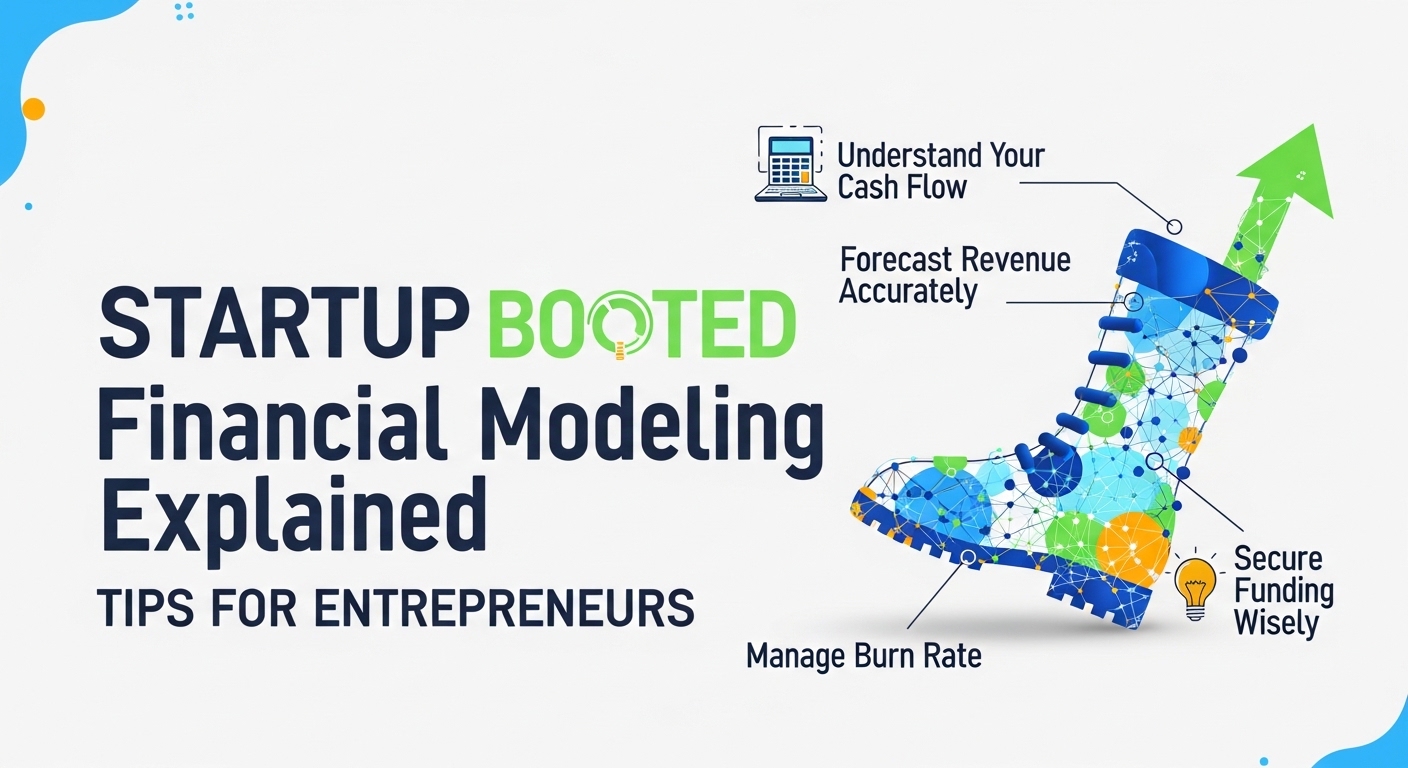
When to Evolve Your Model
Once you have consistent revenue, your financial model becomes more strategic. You can add scenario planning such as:
- Base case projection
- Worst case projection
- Best case projection
Scenario planning shows how changes in growth, churn, or pricing affect your cash and runway.
Entrepreneurs who model multiple possibilities make decisions with better context and fewer surprises.