



Your car battery is one of those components you rarely think about, until the moment it lets you down. A flat battery is more than just inconvenient, it can leave you stranded in a car park, late for work, or worse, stuck on a dark roadside. Understanding the warning signs early can save you from these frustrating scenarios and potentially expensive repairs down the line.
Most drivers in Aldershot and across the UK don’t realise their battery is failing until it’s too late. Modern vehicles rely heavily on electrical systems, from engine management to infotainment, and a weak battery affects them all. Whether you’re due for an MOT in Aldershot or simply maintaining your vehicle between services, recognising battery problems early is essential. Regular car servicing can catch these issues before they escalate, but knowing what to look for yourself puts you one step ahead.
How Long Should a Car Battery Last?
A typical car battery lasts between three to five years, though this varies significantly based on driving habits, climate, and vehicle type. Short journeys around Farnborough or Fleet don’t give the alternator enough time to fully recharge the battery, which shortens its lifespan considerably. Similarly, extreme temperatures, both hot and cold, accelerate chemical degradation inside the battery cells.
If your battery is approaching the four-year mark, it’s worth having it tested during routine maintenance. Many drivers assume batteries fail suddenly, but the truth is more gradual. Performance declines slowly over months, with subtle hints appearing long before complete failure. Paying attention to these early warnings can prevent being caught off guard.
1. Slow Engine Crank
One of the earliest and most obvious signs is a sluggish engine crank when you turn the key or press the start button. Instead of the engine firing up quickly, you’ll notice it turns over more slowly, almost hesitantly, before starting. This happens because the battery no longer has enough charge to deliver the powerful burst needed to turn the starter motor effectively.
On cold mornings, this symptom becomes even more pronounced. If you find yourself waiting a few extra seconds for the engine to catch, especially in winter months around Ash Vale or Tongham, your battery is likely struggling. Don’t ignore this, it’s your car’s way of asking for attention before it stops starting altogether.
2. Dimming Headlights and Interior Lights
Your car’s lighting system is directly powered by the battery when the engine isn’t running, and partially supported by it when idling. If you notice your headlights seem weaker than usual, particularly when stationary or at low speeds through North Camp, it’s a clear indicator of declining battery health.
Interior lights may also appear dimmer when you open the door, or the dashboard illumination might flicker slightly. These symptoms worsen as the battery degrades further. Once the engine is running and the alternator takes over, lights might return to normal brightness, masking the underlying problem temporarily.
3. Warning Light on the Dashboard
Most modern vehicles feature a battery-shaped warning light on the dashboard. When this illuminates, it typically indicates a charging system fault, which could be the battery itself, the alternator, or related wiring. While it doesn’t always mean immediate battery failure, it should never be ignored.
Sometimes this light appears intermittently, flashing briefly before disappearing. Even occasional warnings deserve investigation. The electrical system is trying to communicate that something isn’t functioning as it should, and early diagnosis prevents more serious breakdowns later.
4. Electrical Issues and Malfunctions
A failing battery struggles to power all the electrical components your car depends on. You might notice the radio cutting out unexpectedly, power windows moving slower than usual, or the central locking becoming unreliable. These aren’t isolated faults, they’re symptoms of insufficient electrical supply.
In areas like Guildford where traffic can be heavy, you rely on functioning electronics for safety and convenience. Air conditioning may blow weaker, the sat nav might reset randomly, or USB charging ports could stop working. When multiple electrical gremlins appear simultaneously, the battery is often the common denominator.
5. Swollen or Bloated Battery Case
Physical changes to the battery casing are serious warning signs. Excessive heat causes the battery case to swell or bloat, indicating internal damage from overcharging or extreme temperatures. If you pop the bonnet and notice the battery looks bigger than it should, or the sides appear rounded rather than flat, replacement is urgent.
A swollen battery can leak acid, which is corrosive and dangerous. Never attempt to handle a visibly damaged battery yourself. This kind of deterioration doesn’t improve, it only worsens, and the risk of complete failure or damage to surrounding components increases daily.
6. Corroded Battery Terminals
Check the battery terminals regularly for white, blue, or greenish crusty deposits. This corrosion forms when battery acid leaks from around the terminal connections, creating a poor electrical contact. While cleaning terminals can temporarily improve connectivity, heavy corrosion usually indicates a battery nearing the end of its life.
Corroded terminals also make it harder for the charging system to work efficiently. Even if the battery still holds some charge, corrosion prevents proper power delivery to the starter motor and other electrical components. Addressing corrosion during regular servicing around Ash or Farnham helps maintain battery performance, but won’t reverse underlying degradation.
7. Strange Smell
A failing battery can emit a distinct rotten egg smell, caused by leaking sulphuric acid. This odour becomes noticeable when you open the bonnet, and it’s a sign the battery is overheating or damaged internally. Breathing in battery fumes isn’t safe, so if you detect this smell, seek professional help immediately.
Leaking acid can also damage other engine components, paintwork, and metal surfaces nearby. The longer a leaking battery remains in place, the more harm it causes. This symptom should trigger immediate action rather than a wait-and-see approach.
8. Frequent Jump Starts
If you’ve needed to jump-start your car more than once in recent weeks, the battery is clearly failing. While a single jump-start might be excusable after leaving lights on overnight, repeated occurrences point to a battery that can no longer hold charge effectively.
Jump-starting puts strain on both the failing battery and your vehicle’s electrical system. It’s a temporary fix, not a solution. Continuing to rely on jump-starts risks damaging the alternator, which works overtime trying to recharge a battery that won’t accept charge properly. Understanding how to test a car battery can help you assess whether replacement is necessary or if another issue exists.
9. Old Age
Sometimes there’s no dramatic symptom, just the simple fact that your battery has reached the end of its natural lifespan. Even if it still starts the car most days, a battery over four years old is living on borrowed time. Proactive replacement before failure prevents the inconvenience and potential safety risks of breaking down.
Keep a record of when your battery was last replaced. Many batteries have a date code stamped on them, usually a letter and number combination indicating month and year of manufacture. If you’re unsure of its age, a technician can check during routine maintenance.
10. Engine Misfires or Rough Idling
While less commonly associated with battery problems, a weak battery can cause engine misfires or rough idling. Modern engines rely on precise electronic signals to manage fuel injection and ignition timing. Insufficient voltage from a dying battery disrupts these signals, leading to poor engine performance.
This symptom often gets misdiagnosed as a fuel system or ignition problem. Before expensive investigations into other systems, it’s worth checking battery voltage and health. A simple battery test can rule out or confirm the root cause, saving time and money on unnecessary repairs.
What Causes Premature Battery Failure?
Several factors accelerate battery wear beyond normal aging. Short trips don’t allow the alternator sufficient time to recharge the battery fully, leaving it in a constant state of partial discharge. Vehicles used primarily for school runs or local errands around Aldershot suffer this particularly.
Extreme weather takes its toll too. Cold temperatures reduce the battery’s ability to deliver power, while heat accelerates internal chemical breakdown. Leaving electrical accessories running while the engine is off, like phone chargers or heated seats, drains the battery unnecessarily. Poor maintenance of the charging system, such as a failing alternator or loose connections, also shortens battery life. Even issues with the car suspension system can sometimes create vibrations that loosen battery connections over time.
How to Test Your Battery at Home
While professional testing provides the most accurate assessment, you can perform basic checks at home. A multimeter is an inexpensive tool available from most automotive shops. With the engine off and all electrical accessories switched off, connect the multimeter to the battery terminals. A healthy battery should read around 12.6 volts.
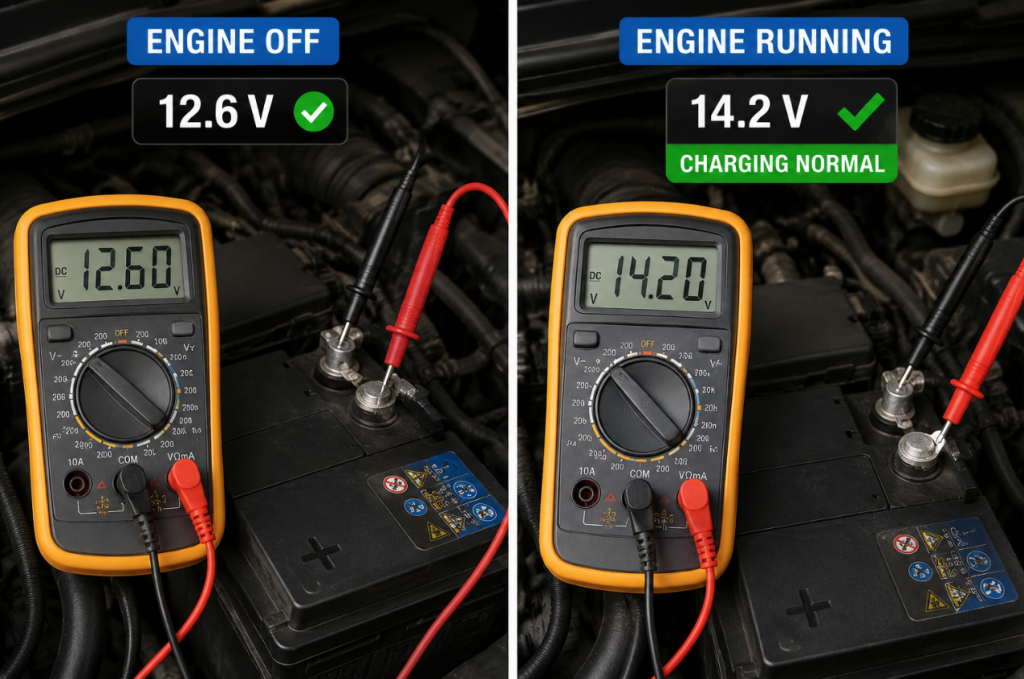
Start the engine and check again. The reading should increase to between 13.7 and 14.7 volts, indicating the alternator is charging correctly. If the voltage drops below 12 volts with the engine off, or doesn’t rise when running, the battery or charging system needs attention. These simple tests take minutes but provide valuable insight into battery health.
When to Replace Your Battery
Don’t wait until complete failure forces the decision. If you’ve noticed several symptoms from this list, particularly slow cranking combined with electrical issues or visible damage, replacement is the sensible choice. Similarly, any battery over four years old showing even minor symptoms should be replaced preemptively.
Timing matters too. Replacing a battery before winter ensures you won’t face a breakdown during the coldest months when failure rates peak. Planning replacement around scheduled servicing or MOT appointments makes practical sense, allowing technicians to install and dispose of the old battery safely while performing other maintenance tasks.
Choosing the Right Replacement Battery
Not all batteries are created equal. Your vehicle requires a specific battery type, size, and power rating. Check your owner’s manual or consult a technician to ensure you select the correct specification. The wrong battery won’t fit properly or may not provide adequate power for your vehicle’s electrical demands.
Consider quality over price. Cheaper batteries might save money initially but often fail sooner, costing more in the long run through reduced lifespan and reliability. Look for batteries with good warranty coverage, typically three to five years, as this reflects manufacturer confidence in durability. In areas with harsh weather conditions, premium batteries with enhanced cold cranking amps or heat resistance prove worthwhile investments.
Maintaining Your New Battery
Once you’ve installed a fresh battery, simple maintenance extends its life significantly. Keep terminals clean and tight, checking them every few months for corrosion. Ensure the battery is securely mounted, as excessive vibration damages internal components. If your vehicle sits unused for extended periods, consider a trickle charger to maintain charge levels.
Regular longer journeys help too. A weekly drive of at least 20 minutes at higher speeds allows the alternator to fully recharge the battery, preventing the gradual decline associated with constant short trips. During routine servicing, ask technicians to test the charging system to confirm the alternator and voltage regulator are functioning correctly.
Conclusion
Recognising the signs your car battery needs replacing empowers you to act before you’re left stranded. From slow cranking and dimming lights to dashboard warnings and electrical faults, your car communicates its needs clearly if you know what to look for. A battery is a wear item, not a lifetime component, and proactive replacement saves the hassle and expense of unexpected breakdowns.
Whether you’re maintaining a family car in Farnborough or a work vehicle covering miles around Surrey and Hampshire, battery health deserves regular attention. Don’t let a failing battery disrupt your day when the warning signs are this clear. Stay ahead of the problem, and your car will reward you with reliable starts every single time.
Frequently Asked Questions
Can a car battery die without warning?
While batteries can fail suddenly, most give warning signs weeks or even months beforehand. Slow cranking, electrical issues, and dashboard warnings typically precede complete failure, giving you time to replace the battery proactively.
How often should I replace my car battery?
Most car batteries last three to five years, depending on usage patterns, climate, and maintenance. Have your battery tested annually once it reaches three years old, and consider replacement if it’s over four years regardless of apparent condition.
Will a new battery improve my car’s performance?
A healthy battery ensures consistent voltage delivery, which helps the engine management system function optimally. You may notice smoother starts, more reliable electronics, and better overall electrical system performance with a fresh battery.
Can I replace a car battery myself?
While possible for those with mechanical knowledge, professional installation ensures correct fitment, proper disposal of the old battery, and confirmation that the charging system is working correctly. Many issues mistaken for battery failure are actually alternator or wiring problems.
Does cold weather really drain batteries faster?
Yes, cold temperatures significantly reduce a battery’s ability to deliver power while simultaneously increasing the power required to start the engine. This is why battery failures spike during winter months across the UK.
Read Also: The Techno Tricks: Complete Guide to Social Media Growth, APK and Tech Tips