

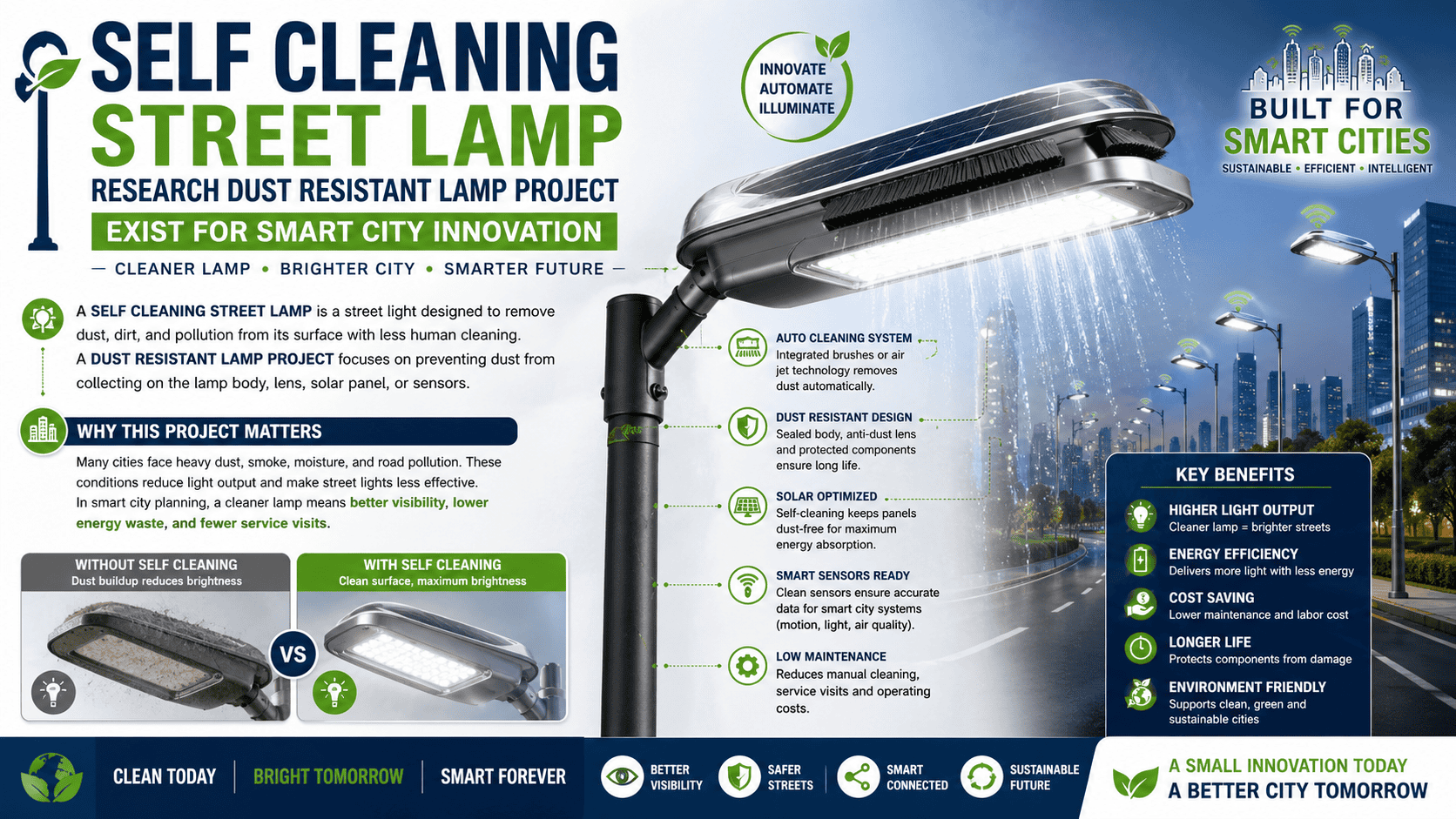

Yes, self cleaning street lamp research and dust resistant lamp projects do exist as part of smart city innovation. These systems aim to reduce dust buildup, lower maintenance work, and keep street lighting efficient in busy urban areas.
What the project means
A self cleaning street lamp is a street light designed to remove dust, dirt, and pollution from its surface with less human cleaning. A dust resistant lamp project focuses on preventing dust from collecting on the lamp body, lens, solar panel, or sensors.
This kind of project matters because many cities face heavy dust, smoke, moisture, and road pollution. These conditions reduce light output and make street lights less effective. In smart city planning, a cleaner lamp means better visibility, lower energy waste, and fewer service visits.
Why smart cities need this type of lamp
Smart cities depend on systems that save time, reduce cost, and work with less manual effort. Street lighting is one of the most important public services in any city. When lamps get dirty, they give less light and may use more energy to deliver the same result.
Dust buildup can also damage parts over time. It can cover sensors, reduce solar charging, and block light from spreading properly. In areas with traffic, construction, dry weather, or industrial activity, this problem becomes even more serious. A self cleaning street lamp helps solve these issues before they become costly.
You can compare how unmanaged waste like the case of Rubbish Pile Outside Property Crawley also affects urban cleanliness and street infrastructure, especially in public service zones.
Main goals of the project
The project usually has a few clear goals.
| Goal | Purpose |
|---|---|
| Reduce dust buildup | Keep the lamp surface cleaner for longer |
| Improve lighting output | Allow more light to pass through the lens or cover |
| Lower maintenance cost | Reduce the need for frequent manual cleaning |
| Support smart city systems | Work with automated and connected city networks |
| Increase service life | Protect lamp parts from dust related wear |
These goals make the project useful for roads, highways, parks, industrial zones, and coastal cities.
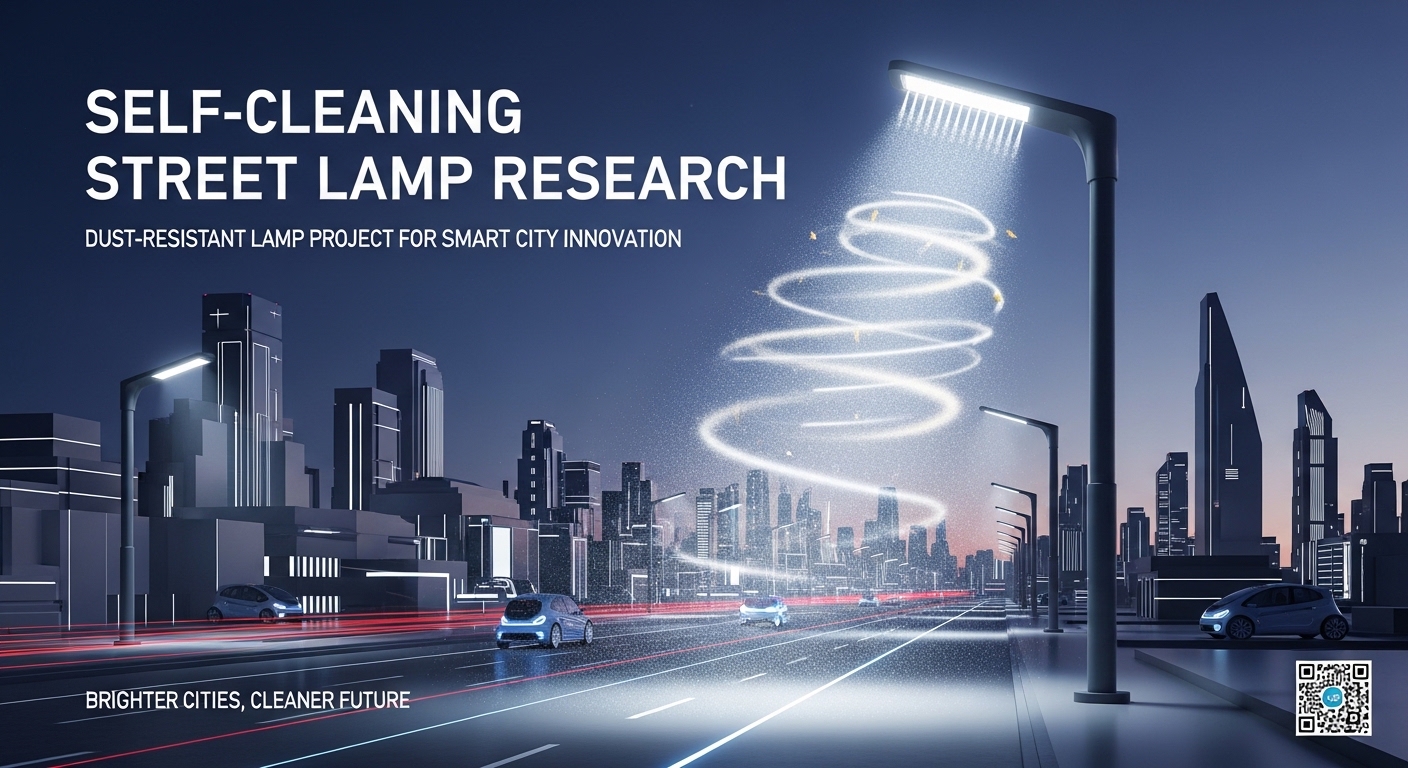
How self cleaning street lamps work
Different designs use different methods. Some use mechanical cleaning. Others use coatings, airflow, vibration, or water based systems.
1. Surface coating
One common method uses a special coating on the lamp cover or solar panel. This coating helps dust slide off more easily. Some coatings also reduce water spots and make rain cleaning more effective.
2. Vibration system
Some lamps use small vibrations to shake loose dust. The vibration can happen at fixed times or after the sensor detects dirt buildup. This method works well for light dust on smooth surfaces.
3. Air blowing system
A small air cleaning unit can blow dust away from the lamp face or solar panel. This method can be useful in dry, dusty places where simple wiping is not enough.
4. Water cleaning system
Some research projects use a tiny spray system. It uses very little water to clean the lamp cover. This is useful only where water use is practical and safe.
5. Angle and shape design
A smart design can also help the lamp stay cleaner without active cleaning. A curved or sloped shape allows dust and rainwater to move away more easily. This design choice is simple but effective.
Dust resistant design features
A dust resistant lamp project often includes more than just cleaning. It also uses design features that stop dust from entering or sticking.
Sealed housing
A sealed body helps protect the electrical parts inside the lamp. This reduces damage from dust, humidity, and insects.
Smooth outer surface
A smooth surface holds less dirt than a rough one. It also makes cleaning easier when the lamp does need maintenance.
Protective lens material
Strong transparent materials can help keep the light clear. They also resist scratches, which helps the lamp stay effective for a longer time.
Filtered vents
If the lamp needs airflow for cooling, filtered vents can stop dust from entering the inside area.
Corrosion resistant parts
Metal parts should resist rust and weather damage. This is important in humid, rainy, or coastal areas.
Use in smart city systems
Self cleaning street lamp research fits well into smart city networks. Modern street lights are often connected to control systems that manage brightness, energy use, fault detection, and maintenance alerts.
A smart lamp can work with sensors that measure light levels, dust levels, temperature, motion, and power use. The city can then decide when the lamp should clean itself or send a maintenance alert.
This creates a more efficient public lighting system. It also supports remote monitoring, which saves time for city workers.
Innovations in sustainable city systems are also influenced by thinkers like Sonam Wangchuk’s Contributions to Social Causes, especially in the areas of clean energy, education, and environmental protection.
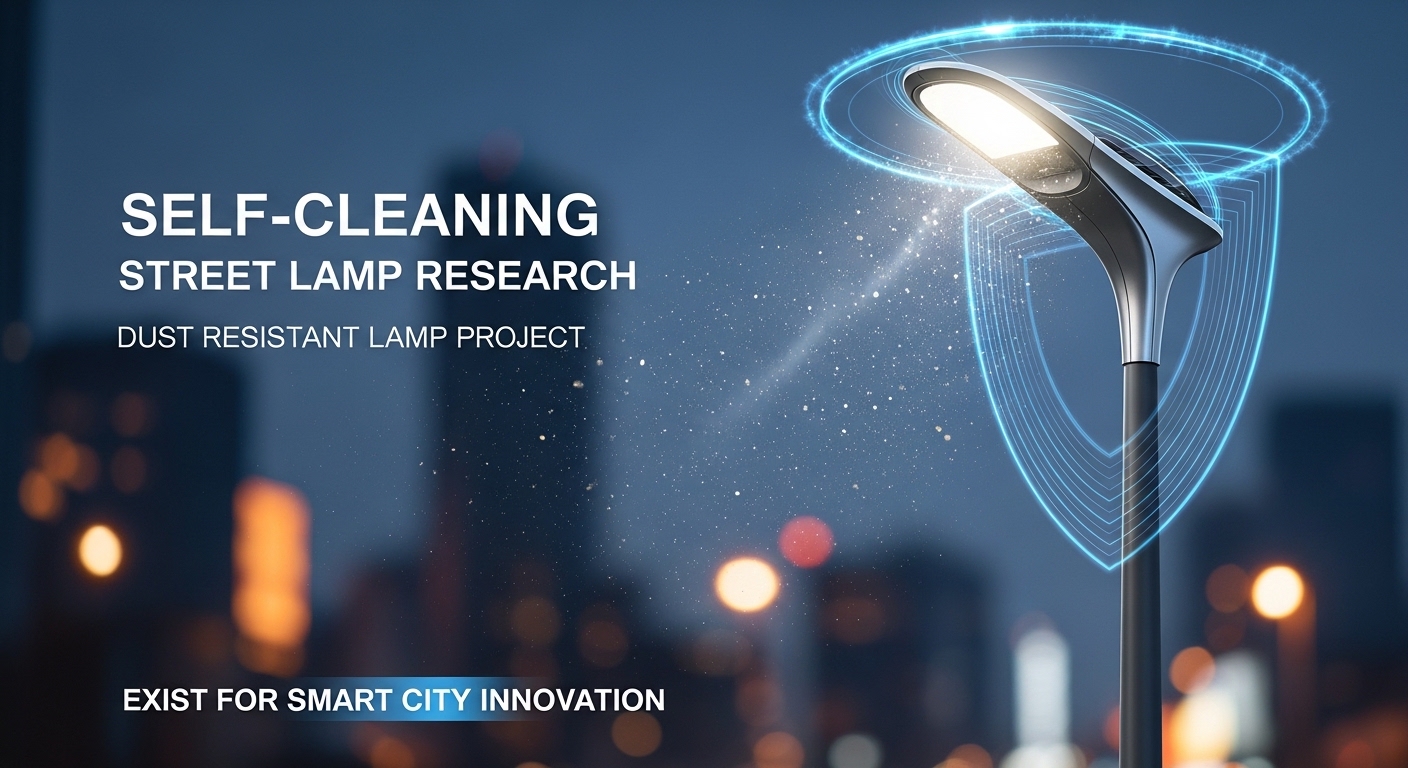
Benefits for city maintenance
One of the biggest benefits is lower manual cleaning. In many cities, crews must travel often to clean lamps, especially in dusty areas. This takes time, fuel, labor, and planning.
A self cleaning street lamp can reduce these visits. That means lower cost and fewer service delays. It can also help workers focus on more serious repair tasks instead of routine cleaning.
Better cleanliness also improves safety. A dirty lamp may not light the road well enough. Clear lighting helps drivers, cyclists, and pedestrians see more clearly at night.
Energy performance
Dust does not only affect appearance. It also affects power performance. When light output drops, the lamp may no longer provide the same brightness. In solar street lamps, dust on the panel can lower charging efficiency.
A self cleaning system helps maintain performance. This can support longer operating times at night and more stable light quality. In large city networks, even a small improvement across many lamps can create a meaningful energy benefit.
Common research areas
Researchers often study several key areas when developing this type of lamp.
Cleaning method efficiency
They test how well the lamp removes dust and how often it needs cleaning.
Power use
They check whether the cleaning system uses too much electricity.
Weather resistance
They study how the lamp performs in heat, rain, humidity, wind, and dry dust.
Material durability
They test whether the coating, motor, sensor, or spray system lasts a long time.
Maintenance need
They check how easy it is to service the lamp when parts wear out.
Simple comparison of cleaning approaches
| Cleaning approach | Main advantage | Main limit |
|---|---|---|
| Coating based | Low cost and simple | May wear out over time |
| Vibration based | No water needed | May not remove heavy dirt |
| Air blowing | Useful for dry dust | Needs power and parts |
| Water spray | Can clean well | Uses water and plumbing |
| Shape based design | Passive and low maintenance | Works best with light dust |
This comparison shows that no single method fits every city. The best design depends on local weather, budget, and road conditions.
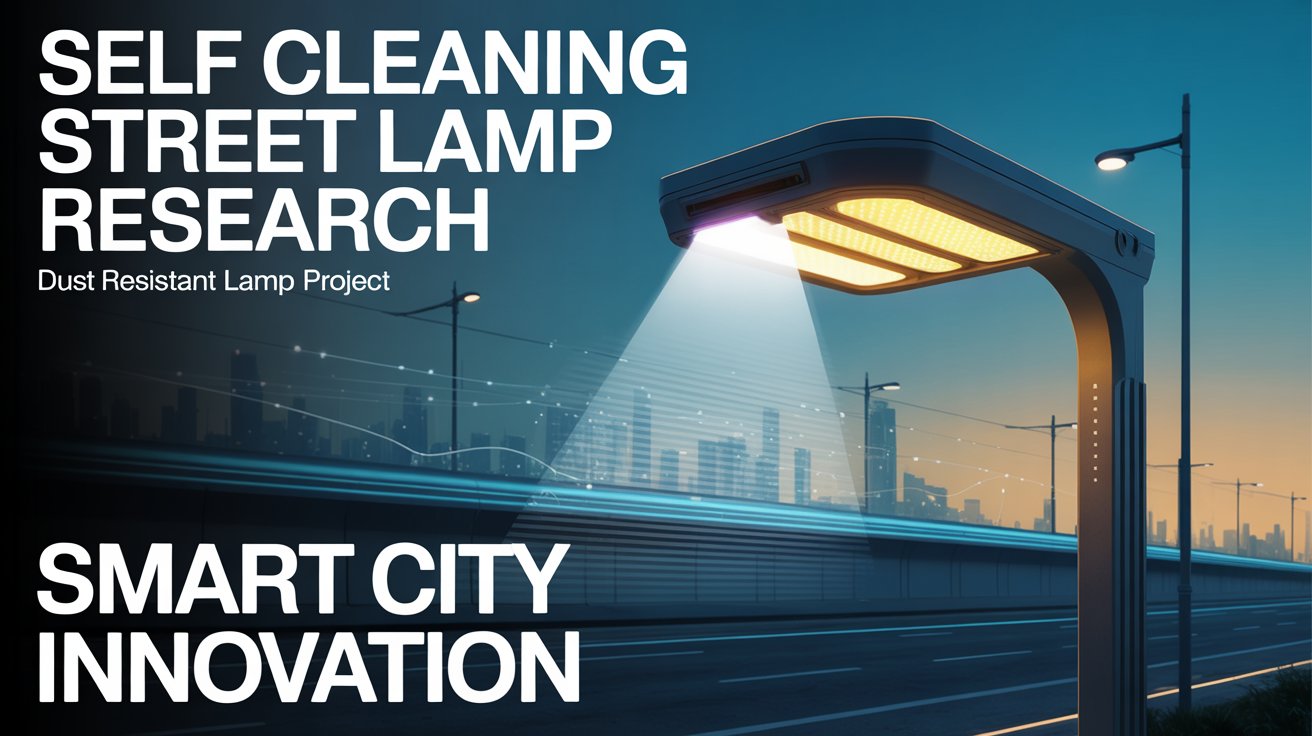
Best places to use it
This type of lamp is useful in places where dust builds up quickly.
Roads near construction sites often need it. So do desert cities, industrial zones, highways, and busy streets with heavy traffic. Coastal areas may also benefit because salt and dust can both affect lamp surfaces.
Parks and public spaces can use it too, especially where the city wants lower maintenance and steady lighting.
Technical parts of the project
A typical self cleaning street lamp may include these parts.
| Part | Function |
|---|---|
| Lamp body | Holds the light and internal system |
| Transparent cover | Protects the light source |
| Dust sensor | Detects buildup on the surface |
| Cleaning unit | Removes dust by vibration, air, or spray |
| Controller | Manages cleaning timing |
| Power system | Supplies electricity to the lamp |
| Communication module | Sends status data to city systems |
Each part must work together for the lamp to be reliable in real use.
Problems that researchers must solve
The project is useful, but it also has challenges.
The cleaning system must not consume too much power. It must also stay quiet, safe, and durable. If the lamp uses moving parts, those parts can wear out. If it uses water, the system must avoid leaks and waste.
Another challenge is cost. A smart self cleaning lamp should save money in the long run, but the first setup may be more expensive than a standard lamp. Cities usually look at both upfront cost and lifetime cost before choosing a design.
Weather can also affect performance. A system that works in dry dust may not work the same way in muddy rain or salty air.
What makes the project suitable for long term use
A long lasting street lamp project needs strong materials, simple design, and easy servicing. It should not rely on one fragile part. It should also fit into existing city lighting plans.
The best projects usually focus on practical design. They use low power cleaning methods, weather resistant housing, and clear maintenance alerts. This helps the lamp work well in real city conditions, not just in a lab.
How cities can evaluate the project
City planners often check a few main points before adopting this technology.
They look at cleaning frequency. They measure light output before and after dust buildup. They study maintenance cost. They check energy savings. They also test how the lamp behaves in real weather over time.
If the system performs well in all these areas, it becomes a stronger choice for smart city use.
Future direction of the technology
Research in this area often moves toward better automation, lower power use, and stronger protection from environmental damage. New materials may make lamp surfaces cleaner for longer. Better sensors may detect dust more accurately. Smarter controllers may clean only when needed.
That kind of progress supports cleaner streets, better lighting, and more efficient city services.