

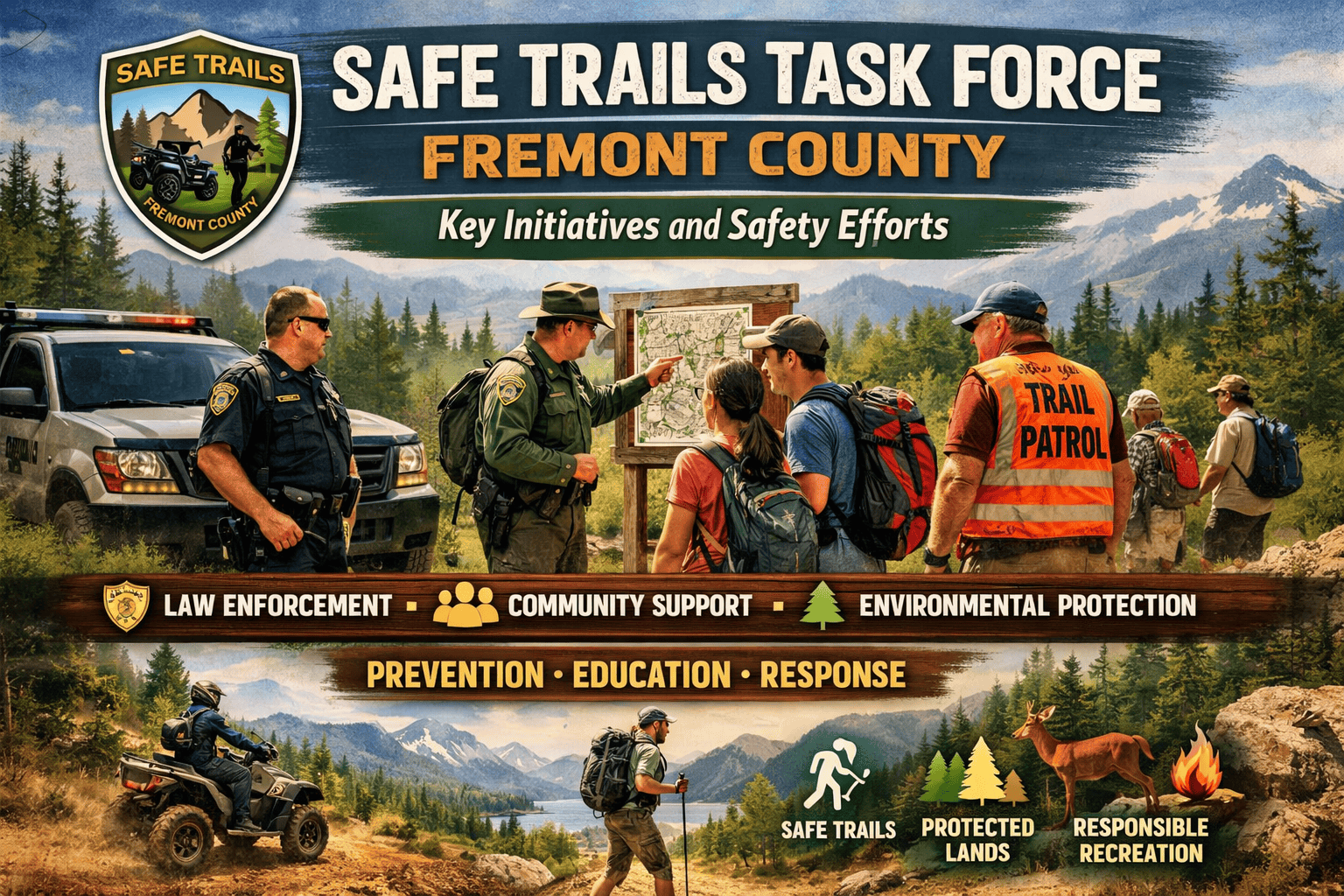

The Safe Trails Task Force Fremont County improves safety by combining law enforcement, community support, and environmental protection. It focuses on prevention, education, and coordinated response across public trails and lands.
What is Safe Trails Task Force Fremont County
The Safe Trails Task Force Fremont County is a joint initiative created to manage and protect public trails and outdoor spaces. It brings together law enforcement agencies, land managers, and local organizations to handle safety risks and environmental concerns.
The task force works across different types of land, including public trails, forests, and recreation areas. Its main goal is to keep these spaces safe, accessible, and sustainable for all users.
Core Objectives of the Task Force
The task force follows clear and measurable objectives that guide all operations.
Main Objectives
| Objective | Description |
|---|---|
| Public Safety | Reduce accidents, injuries, and illegal activities |
| Environmental Protection | Prevent damage to natural habitats and ecosystems |
| Responsible Use | Promote proper trail behavior and compliance |
| Emergency Response | Improve reaction time during incidents |
| Community Awareness | Educate residents and visitors |
These objectives help maintain a balanced approach between access and protection.
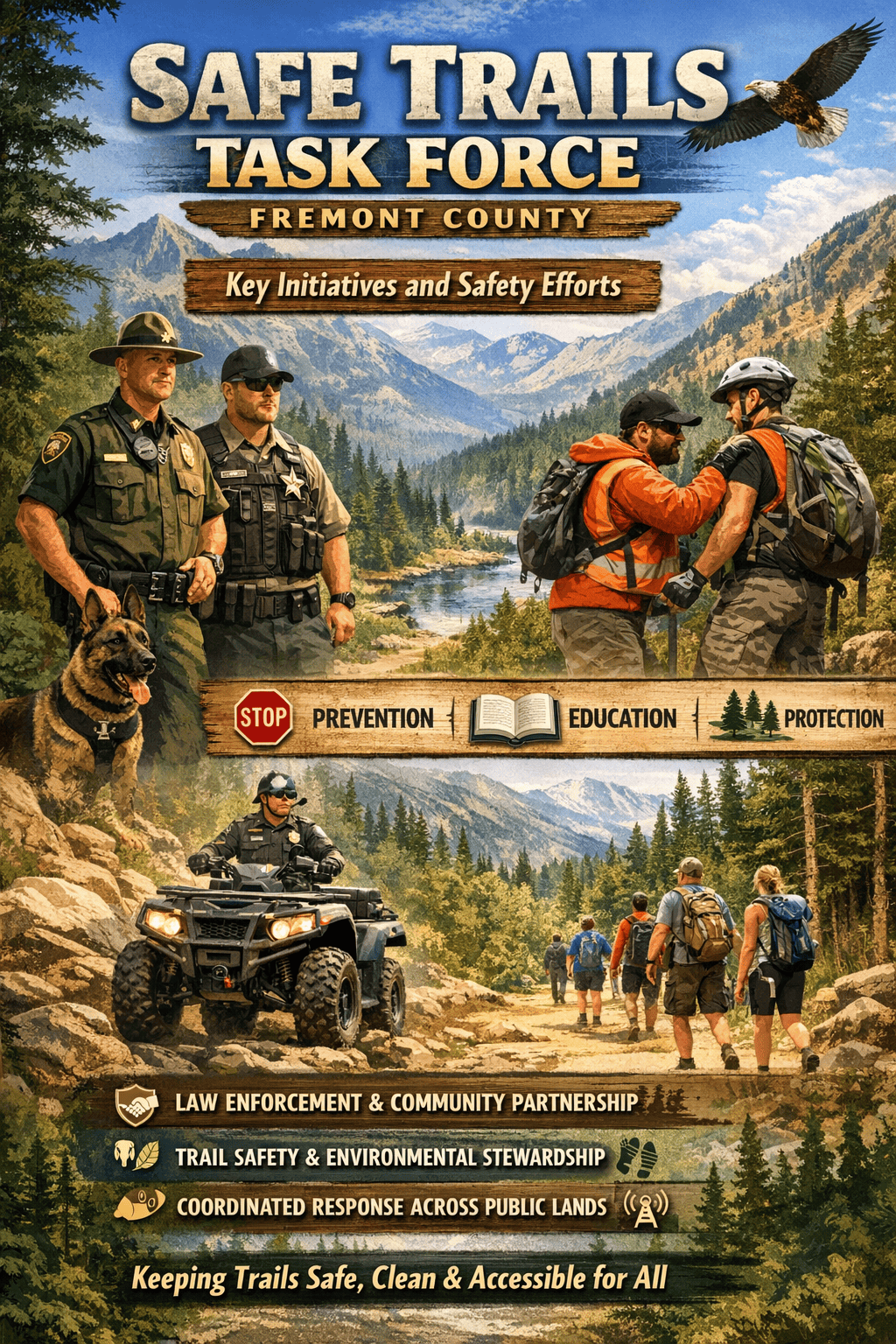
Key Initiatives and Safety Efforts
The Safe Trails Task Force Fremont County operates through several structured initiatives.
Trail Monitoring and Patrols
Regular patrols ensure that trails remain safe and properly used. Officers and trained volunteers monitor activity, identify risks, and respond to violations.
Patrols focus on:
- Illegal off-road vehicle use
- Unsafe trail behavior
- Suspicious activities
- Environmental damage
This active presence helps prevent incidents before they occur.
Safety Inspections and Risk Assessment
The task force conducts routine inspections of trails to detect hazards early.
Common risks identified include:
- Erosion and unstable paths
- Poor signage
- Blocked or damaged routes
- Dangerous intersections between users
These inspections guide improvements and maintenance planning.
Infrastructure Improvements
Improving physical trail conditions is a key safety effort.
Key upgrades include:
- Clear directional signage
- Marked trails and boundaries
- Safer crossings and access points
- Maintenance of high-risk areas
These changes reduce confusion and lower accident rates.
Law Enforcement Collaboration
The task force integrates multiple agencies into one coordinated system.
Key Partners
| Partner Type | Role |
|---|---|
| Sheriff’s Office | Enforcement and investigations |
| Local Police | Patrol and response |
| Federal Land Agencies | Land management and regulation |
| Community Groups | Reporting and volunteer support |
This shared approach improves efficiency and expands coverage.
Environmental Protection Measures
Environmental safety is a core part of the task force strategy.
Main Environmental Actions
- Prevent illegal dumping
- Control off-trail vehicle damage
- Reduce soil erosion
- Protect wildlife habitats
The task force works closely with land management agencies to protect natural resources while allowing public access.
Community Education Programs
Education plays a central role in preventing safety issues.
Key Education Topics
- Trail etiquette
- Fire prevention rules
- Wildlife awareness
- Emergency preparedness
Workshops and outreach programs help users understand how to stay safe and protect the environment.
For users planning travel to outdoor destinations, saving on flights matters, and this detailed guide on TTweakAirline Discount Code from TravelTweaks explains how to reduce travel costs effectively.
Emergency Response and Incident Management
The task force improves response systems for emergencies on trails.
Emergency Support Includes
- Search and rescue coordination
- Medical incident response
- Lost person assistance
- Hazard reporting systems
Quick response reduces risk and improves survival outcomes in remote areas.
Role of Technology in Safety
Technology supports modern trail safety operations.
Tools Used
| Technology | Purpose |
|---|---|
| GPS Tracking | Locate incidents and monitor trails |
| Mobile Reporting Systems | Allow users to report hazards |
| Digital Alerts | Share real-time updates |
| Data Analysis | Identify high-risk areas |
These tools help the task force act faster and more accurately.
Community Involvement and Volunteer Support
Community participation strengthens the task force.
Volunteer Contributions
- Trail maintenance
- Safety patrol assistance
- Cleanup drives
- Public awareness campaigns
Local involvement increases monitoring capacity and builds trust between authorities and residents.
Families who visit trails can also explore creative ideas in Activities Brought to You by LookWhatMomFound LWMFCrafts to keep children engaged in safe and educational outdoor activities.
Addressing Common Safety Challenges
The task force deals with several ongoing challenges.
Major Challenges
| Challenge | Impact |
|---|---|
| Increased Trail Use | Higher risk of accidents |
| Mixed User Groups | Conflicts between hikers, bikers, and vehicles |
| Limited Resources | Strain on patrol and maintenance |
| Environmental Damage | Long-term ecosystem harm |
The task force uses planning and coordination to manage these issues.
Reporting Issues and Public Responsibility
Public reporting plays a key role in maintaining safety.
What to Report
- Illegal activities
- Trail hazards
- Environmental damage
- Suspicious behavior
Providing accurate details such as location and time helps authorities respond quickly.
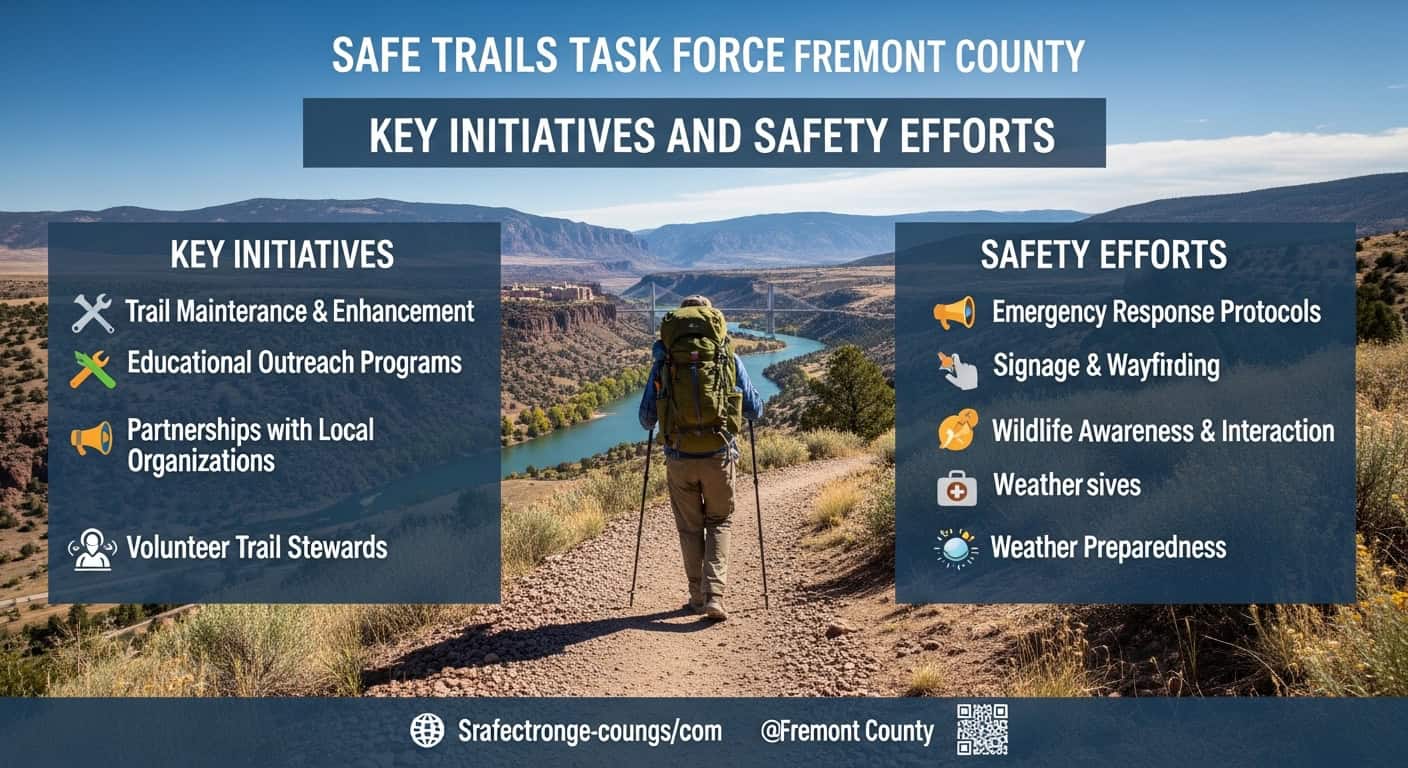
Long Term Safety Strategy
The Safe Trails Task Force Fremont County focuses on long-term sustainability.
Strategic Priorities
- Continuous safety assessments
- Expansion of education programs
- Improved infrastructure planning
- Stronger inter-agency coordination
These strategies ensure that trails remain safe as usage continues to grow.
Impact on Public Safety and Recreation
The task force has a measurable effect on safety and usability.
Key Outcomes
| Area | Result |
|---|---|
| Safety | Fewer accidents and violations |
| Accessibility | Better trail access for all users |
| Environment | Reduced ecological damage |
| Community Trust | Stronger public cooperation |
This structured approach supports both safety and recreation across Fremont County.