


There is one number on your car that quietly affects how safely it stops, how much you spend on fuel, and how long your tyres last. Most drivers in Aldershot and beyond barely give it a second thought, until something goes wrong.
That number is tyre pressure.Getting it right costs nothing. Getting it wrong costs more than most people realise.
Why Most Drivers Overlook Tyre Pressure
It is easy to assume that if a tyre looks inflated, it probably is. But a tyre can lose up to 10 PSI before it visibly appears flat, and at that point, it has already been working against you for miles.
Modern cars fitted with a Tyre Pressure Monitoring System (TPMS) offer some protection, but the warning light typically only triggers when pressure has dropped significantly. By then, the damage to safety, fuel efficiency, and tyre condition is already underway. Drivers in Farnborough, Fleet, and across Hampshire are often surprised to learn just how much a few PSI can change things.
How Tyre Pressure Affects Your Safety
This is where incorrect pressure does its most serious harm. Both under-inflation and over-inflation create genuine risks, just in different ways.
Under-Inflation: The Hidden Blowout Risk
When a tyre runs below the recommended pressure, its sidewalls flex excessively. This generates heat, and heat is a tyre’s worst enemy. Over time, and sometimes very quickly on a motorway, that heat buildup can lead to a sudden blowout.
According to the National Highway Traffic Safety Administration, tyre blowouts contribute to thousands of road incidents every year, with under-inflation identified as a leading cause. Under-inflated tyres also reduce a vehicle’s ability to respond to steering input, which matters most when you need to react quickly.
Over-Inflation: Less Grip, More Risk
An over-inflated tyre is harder and more rigid. Less of the tyre surface makes contact with the road, which reduces grip, particularly on wet roads where drivers in Farnham and Ash Vale know conditions can change fast.
The result is a longer stopping distance and a higher risk of aquaplaning, where the tyre rides on a film of water rather than gripping the surface beneath it.
The Numbers on Stopping Distance
Research shows that a tyre operating at 25% below its recommended pressure can increase stopping distances by several metres, enough to be the difference between a near miss and a collision. Regular inspections also help identify these issues early, and booking an MOT in Aldershot ensures your tyres meet legal safety requirements and roadworthy standards.
How Tyre Pressure Drains Your Fuel Economy
Under-inflated tyres create more rolling resistance. The engine has to work harder to move the car forward, which means it burns more fuel to cover the same distance.
Here is what the data shows:
- A tyre that is just 10 PSI under-inflated increases rolling resistance by roughly 10%.
- The U.S. Department of Energy estimates that for every 1 PSI drop across all four tyres, fuel economy falls by approximately 0.2%.
- Running four tyres at 10 PSI below the correct pressure could reduce your MPG by around 2–3%, adding up to meaningful cost over thousands of miles.
For drivers doing regular commutes between North Camp, Tongham, and surrounding areas, that inefficiency accumulates quickly. Correct tyre pressure is one of the easiest free fuel-saving habits available.
What Wrong Pressure Does to Your Tyres Over Time
Tyre wear is one of the clearest indicators of a pressure problem, if you know what to look for.
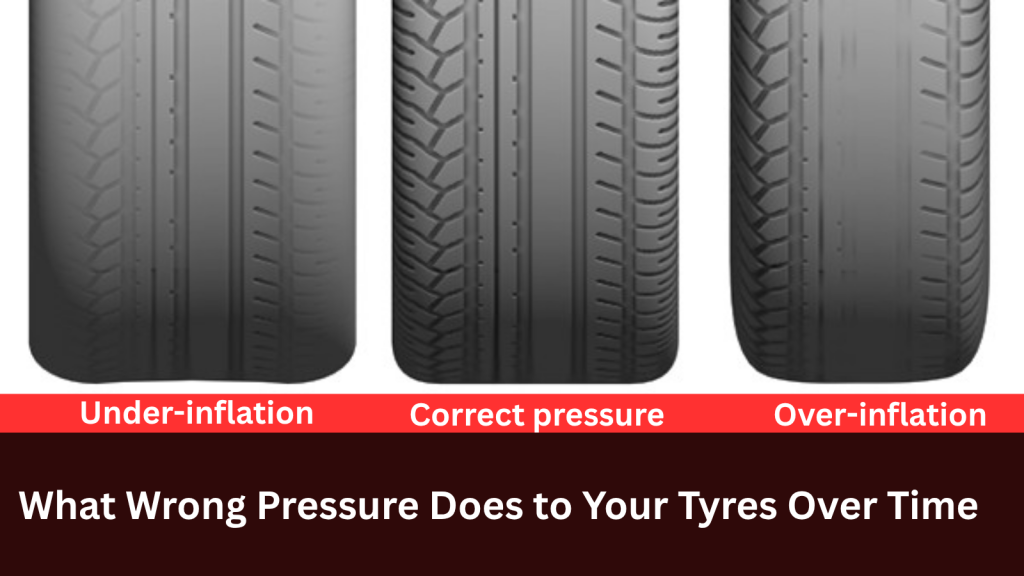
- Under-inflation causes the outer edges (shoulders) of the tyre to wear faster than the centre, because the tyre bows outward and puts more load on the edges.
- Over-inflation does the opposite, the centre of the tread carries most of the load and wears down prematurely, leaving the shoulders relatively intact.
- Correct pressure distributes load evenly, giving the tyre the best chance of reaching its full service life.
Uneven wear is not just a cost issue, it is a safety issue. A tyre worn unevenly in Ash or anywhere else in Hampshire will not perform as designed, and may fall below the legal 1.6mm tread depth limit sooner than expected. Understanding how long tyres last on UK roads and what accelerates their wear is worth knowing before your next check.
How to Check and Set the Right Tyre Pressure
Checking pressure takes under five minutes and costs nothing if you do it at home with a quality gauge.
Four things to get right every time:
- Check tyres when cold: tyre pressure rises as the tyre warms up during driving. Always check before a long journey or after the car has been stationary for at least two hours.
- Find the correct PSI for your car: this is printed on a sticker inside the driver’s door frame or in the owner’s manual. Front and rear tyres often require different pressures.
- Include the spare: a flat spare at the side of a road in Fleet or Farnborough is not a useful spare.
- Check monthly, not just when something feels wrong: tyres naturally lose 1–2 PSI per month even without a puncture.
Petrol station gauges can be unreliable. A dedicated digital gauge bought once will pay for itself quickly in the fuel savings alone.
When to Get a Professional Eye on Your Tyres
Some pressure issues are symptoms of deeper problems, a slow puncture, a faulty valve, or damage that isn’t visible from the outside. If a tyre keeps losing pressure between checks, or if you notice any bulging, cracking, or uneven wear, it is worth having the tyres inspected properly.
It is also worth knowing the legal position on worn tyres in the UK, driving on tyres below the legal limit carries a fine of up to £2,500 per tyre and three penalty points.
If you are unsure about the condition of your tyres or notice uneven wear, getting your tyres in Aldershot checked by a professional can help identify issues early and keep your vehicle safe on the road.
Final Word
Tyre pressure is one of the smallest checks on a driver’s to-do list and one of the most impactful. It takes minutes, costs nothing, and directly affects how safely your car handles, how efficiently it uses fuel, and how long your tyres last before they need replacing.
Whether you drive around Ash Vale, commute into Farnborough, or cover long stretches across Hampshire, the principle is the same, correct pressure keeps you safer, saves you money, and protects your investment in your tyres.
Check it monthly. Do not rely on the TPMS as your only warning. And if something does not look or feel right, get it looked at before it becomes a bigger problem.
Frequently Asked Questions
What is the correct tyre pressure for my car? It varies by make and model. Check the sticker inside your driver’s door frame or your owner’s manual. Front and rear tyres may require different pressures.
How does low tyre pressure affect fuel consumption? Under-inflated tyres increase rolling resistance, forcing the engine to work harder. A drop of just 1 PSI across all four tyres can reduce fuel economy by around 0.2%.
Can over-inflated tyres cause a blowout? Over-inflation makes tyres rigid and more vulnerable to impact damage from potholes or kerbs, which can lead to sudden failure. It also reduces grip significantly.
How often should I check tyre pressure? Once a month is the recommended minimum, plus before any long journey. Always check when the tyres are cold for an accurate reading.
Does tyre pressure affect stopping distance? Yes. A tyre running 25% below its recommended pressure can extend stopping distances by several metres, a significant margin in an emergency.
What does the TPMS warning light mean? It signals that one or more tyres has dropped significantly below the recommended pressure. It is a last resort warning, not a routine monitoring tool, do not wait for it to appear before checking.