


Fascisterne is the Danish word for “the fascists.” It refers to people and movements linked to fascist ideology and authoritarian politics.
What Fascisterne Means
In Danish, fascist means a supporter of fascism, and the form fascisterne refers to a specific group of fascists. In English, the word points to people who support fascist ideas or systems of rule. The term is not only about a political label. It also carries a strong historical meaning because fascism was tied to dictatorship, violence, and the rejection of democracy.
Where Fascism Began
Modern fascism began in Italy under Benito Mussolini. Britannica and Lex both place its rise in the years after World War I, with Mussolini founding the movement in Milan in 1919. The early fascist groups were nationalist, anti socialist, and anti democratic. They also used violence as a political tool. These facts matter because fascism did not begin as a broad idea with many versions. It started as a real political movement with a clear leader, a clear method, and a clear goal of power.
Core Ideas Behind Fascisterne
Fascist ideology usually centers on extreme nationalism, strong central authority, and loyalty to a powerful leader. It rejects liberal democracy, open political disagreement, and equal political rights for all groups. Britannica describes fascism as a movement that glorifies authority and the nation, while also using force to silence opposition. Merriam Webster defines it as a way of organizing society under a dictator who controls public life and allows no dissent.
Nationalism and the State
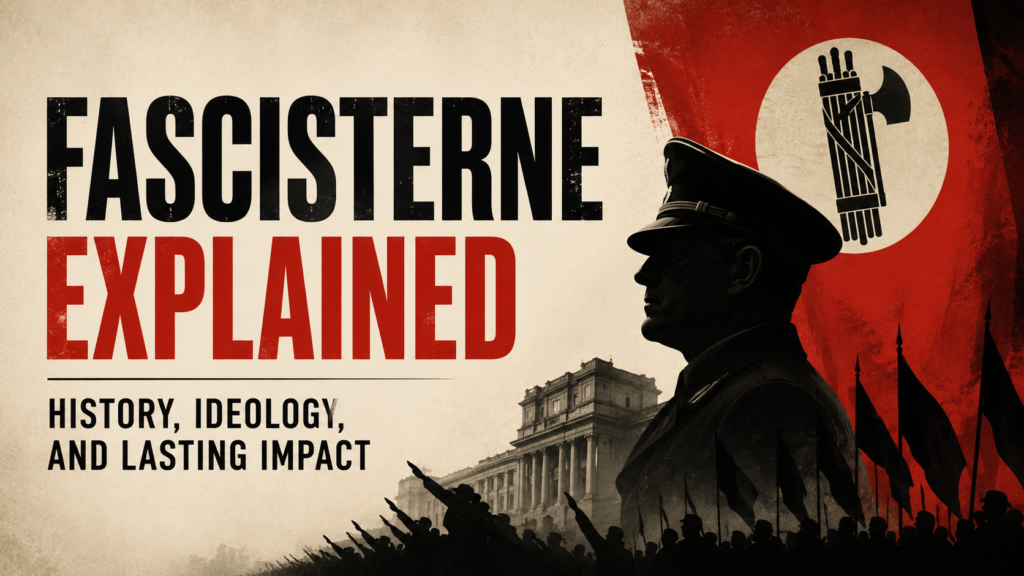
A fascist movement puts the nation above the individual. It treats the state as the main force that should shape society, law, culture, and public behavior. Fascists often argue that national strength needs unity, obedience, and discipline. They usually reject pluralism, which means they do not accept a society with many political views, independent groups, or strong personal freedoms. This is one of the main reasons fascism is seen as anti democratic.
Violence and Control
Violence has always been part of fascist politics. Early fascist groups used street force, intimidation, and organized attacks to gain influence. Once in power, fascist regimes used police power, censorship, arrests, and propaganda to control society. Britannica notes that fascist governments relied on force and suppression of opposition. That pattern is important because fascism does not only describe a set of ideas. It also describes a method of rule that depends on fear and control.
The Nazi Example
Nazi Germany is the most famous example of a fascist regime, although Nazism also added a deep racial ideology of its own. Britannica says the Nazi state used militaristic nationalism and blamed marginalized groups, especially Jews, for social problems. Under Adolf Hitler, Germany became a dictatorship, expanded aggressively, and carried out genocide during World War II. This makes the Nazi period central to the history of fascism, because it shows how fascist rule can turn into mass violence on an enormous scale.
Why Fascism Spread
Fascism grew in a time of crisis. After World War I, many countries faced political chaos, economic weakness, and fear of social conflict. Britannica explains that fascism rose in the 1920s and 1930s partly because many people feared the growing power of workers and left wing movements. The Great Depression made that fear stronger. In such conditions, fascist leaders promised order, strength, and national recovery. That message appealed to people who wanted simple answers to difficult problems.
Fascist Rule in Europe and Beyond
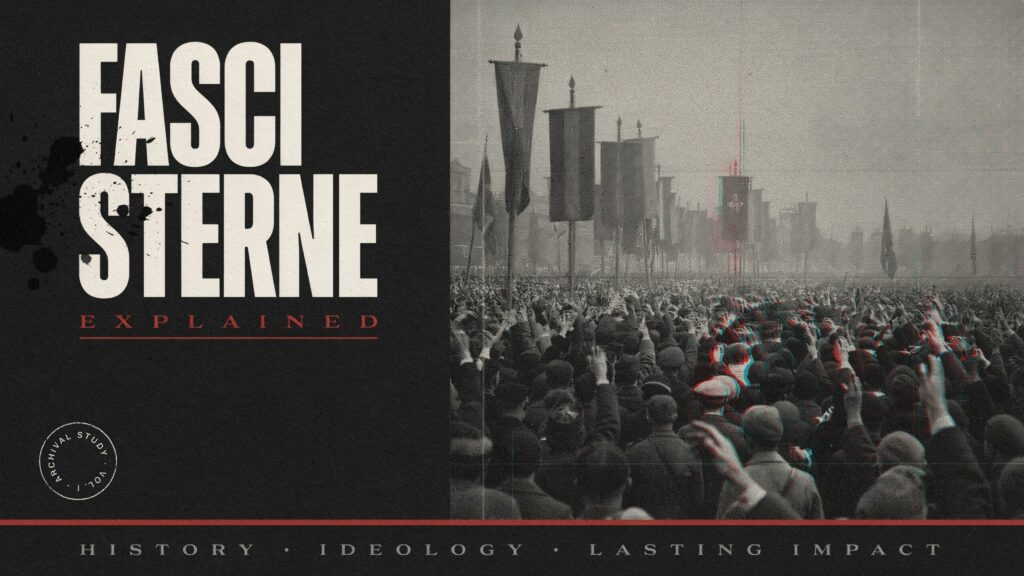
Fascism was not limited to Italy and Germany. Britannica identifies fascist governments in Italy, Germany, Spain, and Japan during the first half of the 20th century. Each case had local differences, but the pattern was similar. These regimes praised the state, limited freedom, attacked opponents, and used nationalism to justify power. That wider spread is one reason fascism is studied as an international political force, not just a single country’s history.
Social Impact
The social impact of fascism was severe. Fascist systems weakened free speech, weakened independent courts, and reduced the space for opposition parties, unions, newspapers, and civic groups. They also pushed society toward division by defining some people as enemies of the nation. In Nazi Germany, that logic became racial persecution and extermination. In other fascist settings, it often led to censorship, political terror, and the destruction of trust in public life. Britannica’s historical summaries make clear that fascism did not stay at the level of theory. It changed everyday life in direct and harmful ways.
Language, Symbols, and Propaganda
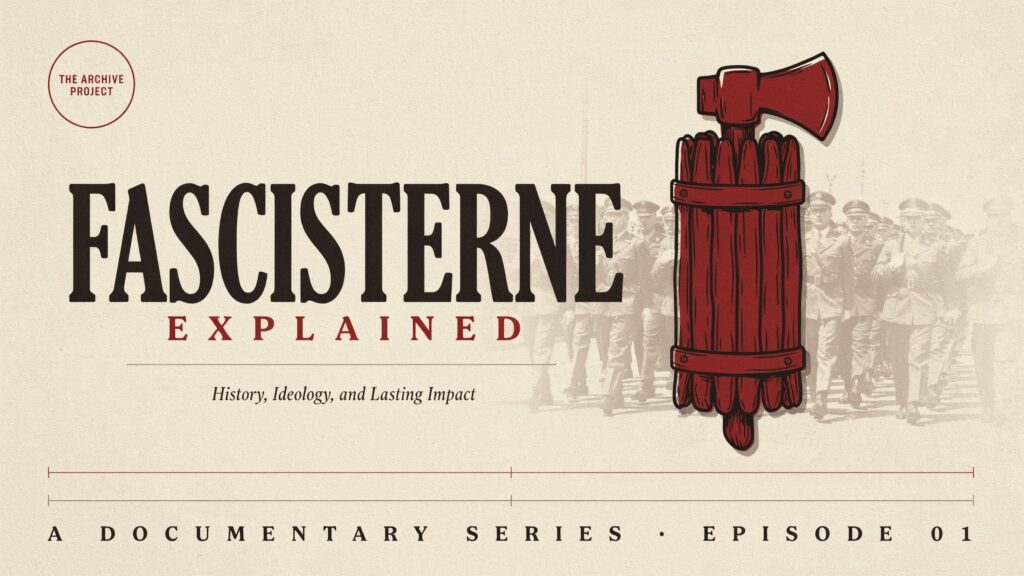
Fascist movements also relied on symbols, slogans, and mass propaganda. The word itself comes from the Italian fascio, linked to the idea of a bundle, which stood for unity and collective strength. Merriam Webster explains that the word entered English through Mussolini’s movement. Fascist regimes used flags, marches, uniforms, and public ceremonies to create loyalty and to show power. These symbols were never just decorative. They helped build an image of discipline, national pride, and obedience to the leader.
The Lasting Impact After World War II
After 1945, fascism became widely discredited because of war crimes, genocide, and the collapse of the Axis powers. Even so, the idea did not disappear. Britannica notes that the term later appeared in discussions of neo fascism and post fascism, meaning newer movements that share some old traits. Today, the word is still used in history, politics, and journalism to describe authoritarian nationalism, political violence, and attacks on democratic rule. Because the term is so tied to the past, it carries strong weight whenever it is used.
If you are looking for technology support resources, you can also check our article on Contact Number Durostech, which covers customer support options and important contact information.
Fascisterne in Modern Discussion
In modern use, fascisterne may appear in discussions about historical fascist groups, far right movements, or political language in Denmark and other European settings. The term still matters because it connects language to a major chapter of world history. It reminds readers of how fascist movements began, how they gained support, and how they used state power once they rose. For that reason, the word remains important in serious writing about democracy, extremism, and political memory.
For readers interested in how modern online platforms build communities and share content, our detailed guide on Snigdhasnack explains its features, user experience, and growing popularity.


