

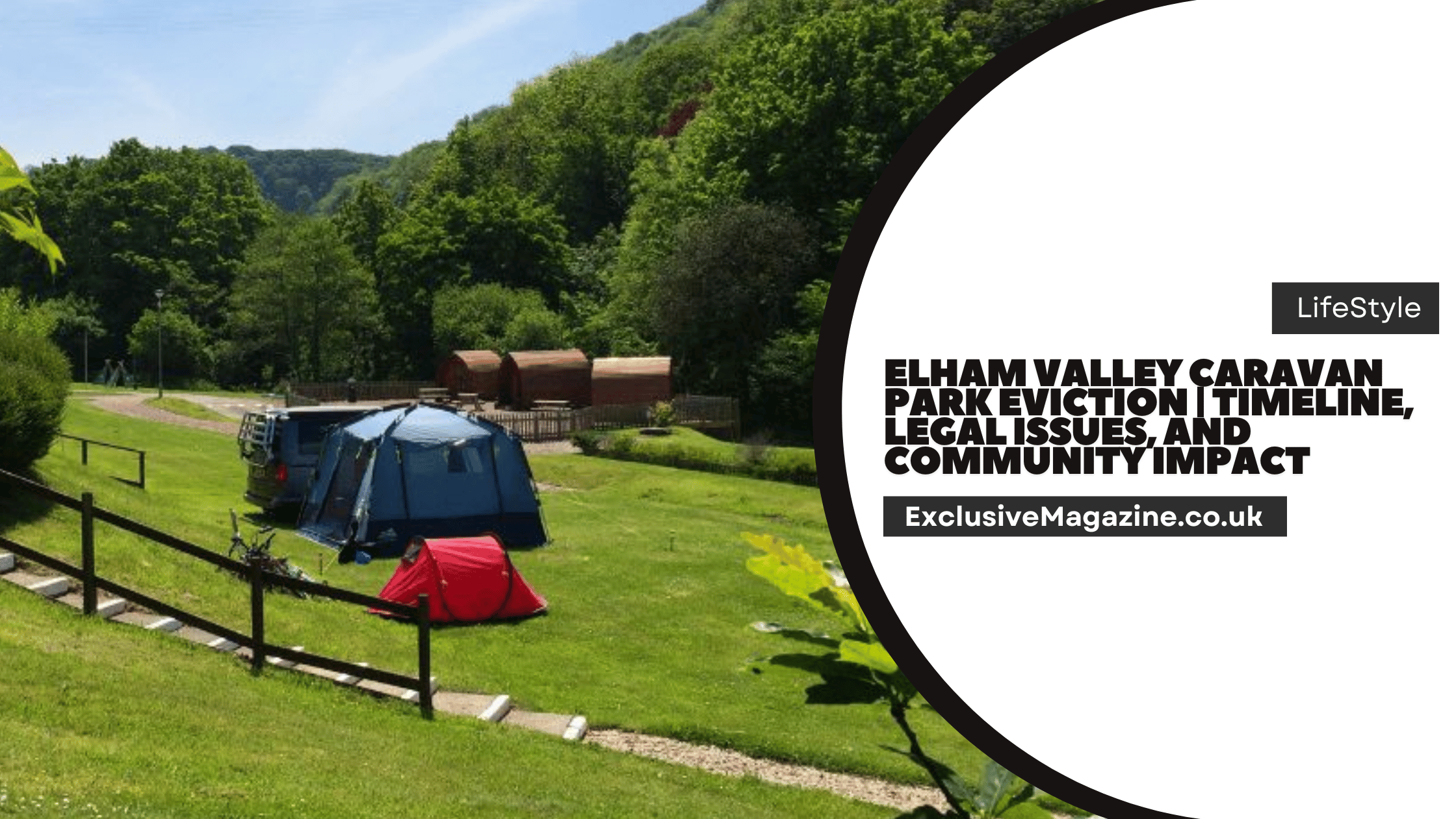

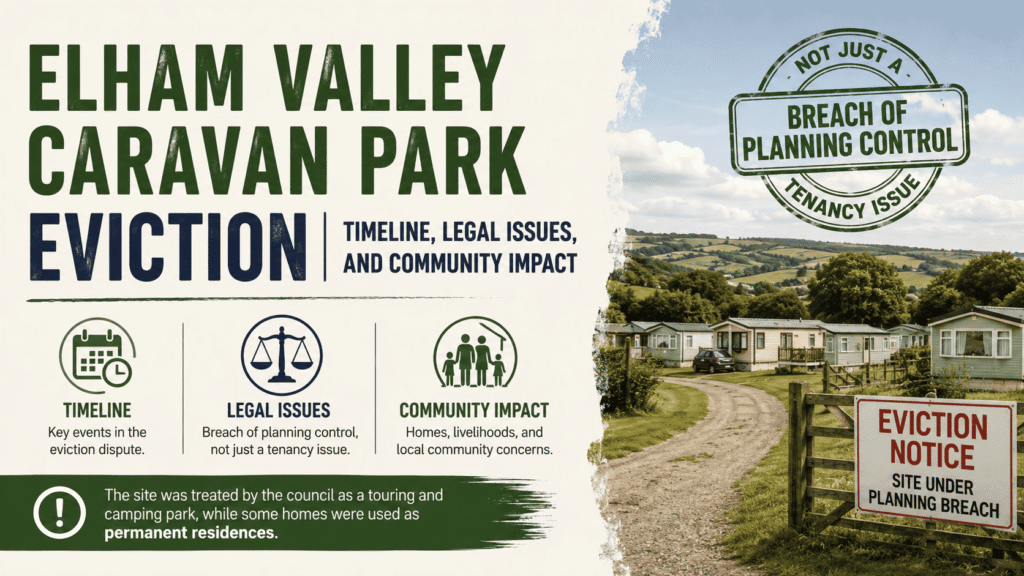
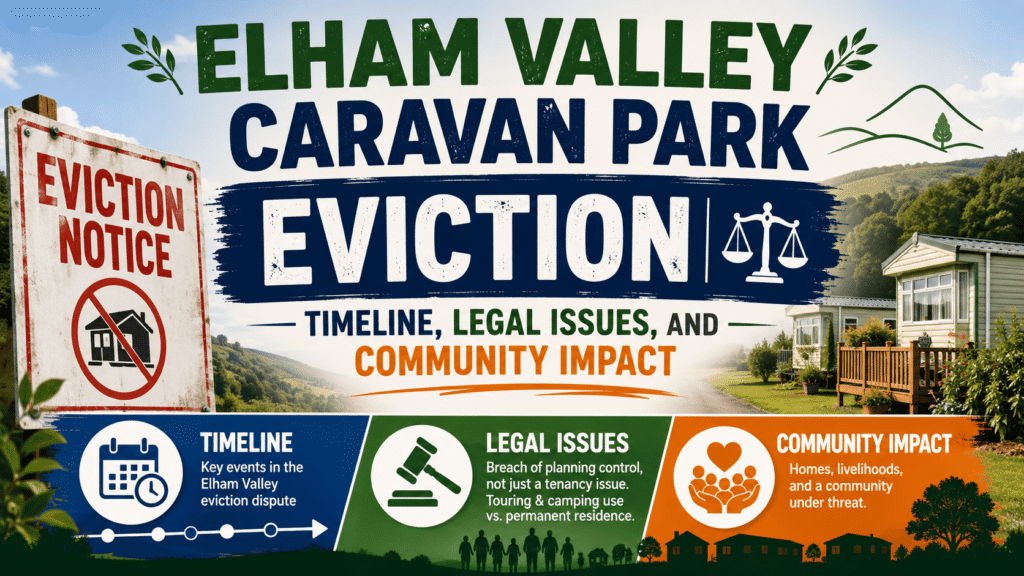
The eviction dispute at Elham Valley Caravan Park came from a breach of planning control, not just a simple tenancy issue. The site was treated by the council as a touring and camping park, while some homes were being used as permanent residences.
The key problem was that residential use had no clear planning approval, so residents and the operator were pulled into a dispute over land use, licensing, and enforcement.
Planning Background
Elham Valley Holiday Park, also known as Goldpark Leisure Caravan and Camping Site, has long been described in council papers as a lawful touring caravan and camping site on Canterbury Road in the Elham Valley. In the council’s 2021 report, officers said the site had a lawful camping and touring use, not a general residential use.
The same report said the site had a legal history that included a 2007 certificate of lawful use for camping and touring caravans. It also said a 2016 application for a static caravan for a warden was refused because residential use in that countryside location was considered inappropriate, visually harmful, and exposed to flood risk.
The council also pointed to the site’s location in the Kent Downs Area of Outstanding Natural Beauty and in Flood Zone 3. Officers said permanent residential caravans were a highly vulnerable use and that long term residential occupation could increase risk and harm the rural character of the area.
Timeline of the Dispute
In May 2015, then Shepway District Council issued a Temporary Stop Notice at Elham Valley Holiday Park after development works were reported on the site. Parish council minutes from June 2015 say the council then worked with the owners and their legal representative to resolve the issues, while local people made strong representations about the site.
On 3 June 2015, the council issued a replacement site licence that allowed a 45 pitch camping and touring caravan site in line with the revised licence and site plan. The parish minutes say the council would monitor the works closely and take action if the licence conditions were breached.
By 2021, Folkestone and Hythe District Council said planning permission had been refused, an appeal had been dismissed, and a Certificate of Lawful Development for permanent residential caravans had also been refused. The committee then agreed that an Enforcement Notice should be served to require the residential use to stop and the caravans and associated items to be removed.
The 2021 report also set a 12 month compliance period and authorised legal steps if needed to secure compliance. That matters because it shows the council was not treating the issue as a minor breach. It viewed the case as a formal planning enforcement matter.
In August 2025, local coverage reported that residents at Elham Valley Caravan Park had been given 14 days to leave after eviction notices were posted on homes. The same report said the park had around 19 caravans and that some occupants had lived there for about 10 years.
By November 2025, a property specialist said the sale of Elham Valley Caravan Park had been completed on behalf of receivers. The firm described the site as a 45 pitch touring park with grass pitches, electric hook up points, and an amenity building.
Why the Legal Issue Became So Serious
The core legal issue is the gap between holiday use and residential use. Parliament’s briefing on mobile and park homes says that if a site has planning permission for holiday use only, year round living may breach planning permission. It also says local planning authorities can take enforcement action when planning conditions are breached.
Government guidance also says a privately owned caravan site must have a licence from the local council, and the park owner must display it. The GOV.UK guidance says people can be forced to leave if they live on a site without planning permission for residential use.
The law also links site licensing to planning permission. GOV.UK guidance on the Mobile Homes Act 2013 says it is an offence to run a park home site without a licence, and the Commons Library briefing says a site licence for residential use is usually only relevant where planning permission and the licence match the actual use of the site.
That is why the distinction mattered so much at Elham Valley. If a park is licensed and planned as a touring or holiday site, residents do not automatically gain the right to live there permanently. If permanent homes are then placed there, the council can view the situation as unauthorised development.
What an Enforcement Notice Means
An enforcement notice is a formal planning order. GOV.UK says it must tell each recipient what the council thinks the breach is and what must be done to fix it. The notice must also include appeal information and an explanatory note.
Under section 174 of the Town and Country Planning Act 1990, a person with an interest in the land or a relevant occupier may appeal against an enforcement notice. GOV.UK guidance also explains that the local authority decides whether enforcement is expedient, based on the development plan and other material factors.
For Elham Valley, that means the legal route was not just about asking people to move. It involved whether the site could lawfully support permanent residential occupation at all, and whether the council’s enforcement action was justified under planning law.
Community Impact
The council’s 2021 report said the residential use had changed the character of the site from a transient touring park to a more permanent domestic setting. Officers said this affected the rural character of the area and created a stronger visual presence through caravans, vehicles, and domestic items.
Local parish minutes from 2015 also show that the site had already caused strong local feeling. They say the parish council and residents made extensive representations, and that Elham Parish Council remained wary about whether the site could be enforced properly.
By 2025, the issue was no longer only a planning file. Local coverage said residents feared being left on the streets, and that some had lived on the park for around a decade. That kind of eviction can destabilise housing, schooling, work, and access to support, especially when residents believed the site was their long term home.
The wider community impact also includes pressure on housing services and local support networks. When a site closes or residents are removed quickly, people may need emergency accommodation, legal advice, and time to move belongings and vehicles. The Commons Library notes that disputes over mobile home sites often move into the tribunal or county court system, while planning enforcement runs in parallel.
The impact of large property closures can also be seen in other cases such as the Whitgift Centre Croydon Shopping Mall Closure, where long term uncertainty affected both businesses and local planning decisions.
Current Position
The public record shows a long running clash between a holiday park use and a claimed residential reality. The council’s position, set out clearly in 2021, was that residential occupation on the site was unauthorised and should stop. Later reporting in 2025 showed that residents were still facing removal, and the site was then sold on behalf of receivers later that year.
The Elham Valley case is a clear example of how caravan park disputes turn on planning status, site licensing, and the legal difference between holiday accommodation and permanent homes.
Similar commercial closures, such as the Slug and Lettuce Bournemouth Closure, show how legal, financial, and operational pressures can lead to sudden shutdowns that affect workers and local economies.


