

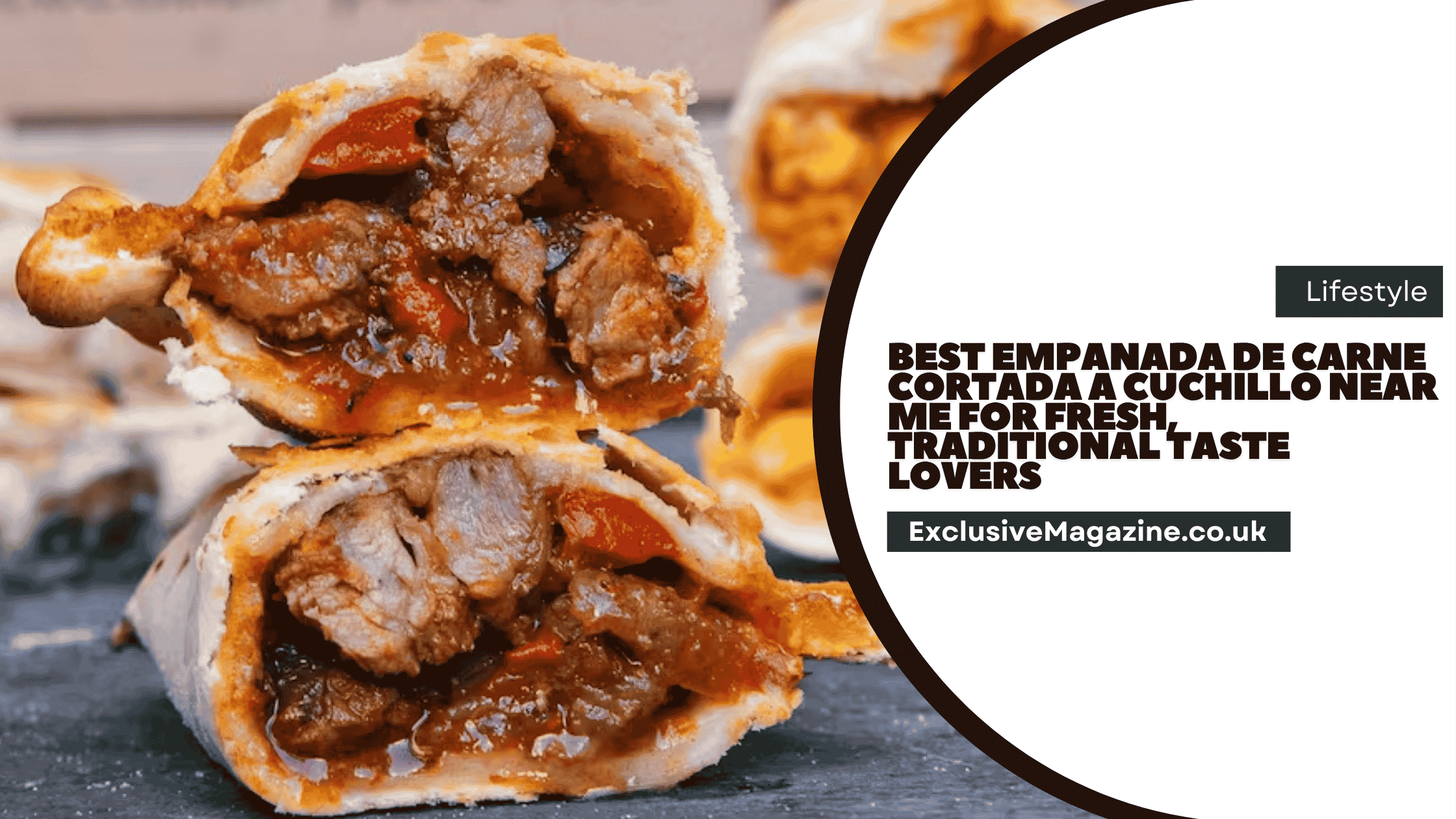

Best empanada de carne cortada a cuchillo near me means fresh beef, proper seasoning, and a dough that cooks cleanly and stays crisp. The best choice is the one made with hand cut meat, served hot, and balanced with onions, spice, and a good seal.
What a Good Empanada de Carne Cortada a Cuchillo Should Offer
An empanada is a filled pastry that can be baked or fried, and Argentina has turned it into a strong regional food with many local styles. In Argentina, there is no single fixed recipe, because each region adapts the filling to local taste and ingredients. That is why the search for the best empanada de carne cortada a cuchillo near me should start with the basics, not with branding. Look for clear meat flavor, a neat fold, and a fresh finish.
You can compare different Latin American empanada styles in guides like Best Empanadas Colombianas Near Me, which focuses on Colombian versions with corn dough and richer fillings.
Why Hand Cut Beef Matters
The phrase carne cortada a cuchillo means the meat is cut by hand instead of ground. That method gives a firmer texture and a more visible beef bite. Official Argentine tourism sources describe this style as a key feature of several classic empanadas, including salteñas, tucumanas, and santiagueñas. In plain terms, this is what separates a rustic, traditional empanada from one that tastes like ordinary minced meat pastry.
Hand cut beef also helps the filling hold its shape better. A good empanada should feel juicy, but not watery. The meat should stay distinct inside the pastry, and it should work well with onion, egg, and spice. When the filling is built around chopped meat instead of a soft paste, the final bite usually feels more traditional and more satisfying.
What the Best Filling Usually Includes
Traditional Argentine sources show a clear pattern. Salteña empanadas are known for juicy filling with hand cut beef, potato, egg, and spices. Tucumana empanadas are linked with matambre cut by knife, onion, hard boiled egg, and green onion. Santiagueña empanadas are also made with meat cut a cuchillo. These regional versions all point to the same standard. Good filling should taste of beef first, then onion, then spice.
Common flavor builders include onion, paprika, cumin, salt, pepper, and sometimes olives or egg. These ingredients appear often in Argentine recipes and in official recipe guidance. They do not cover the meat. They support it. That balance matters a lot in the best empanada de carne cortada a cuchillo near me, because a heavy spice mix can hide weak meat, while too little spice can make the filling flat.
If you also enjoy hearty meat-based street food, guides like Best Philly Cheesesteak Near Me highlight another popular option focused on sliced beef, melted cheese, and soft rolls.
How the Dough Should Feel
A proper empanada depends on the pastry as much as the filling. Britannica describes empanadas as folded dough pockets that may be baked or fried. In the Argentine style, the dough should seal well, hold the filling, and deliver a clean bite without breaking apart too early. A good crust should not feel thick and doughy. It should feel complete, light enough to eat easily, but strong enough to keep the juices inside.
Different regions use different finishes. Some empanadas are baked in a clay or brick oven, while others are cooked in standard ovens or fried. The traditional Argentine approach often values baking, especially in provincial styles like Tucumán and Salta. That is one reason these empanadas are so popular in cultural food settings and folk gatherings. The dough should support the filling, not hide it.
Signs of Freshness at a Nearby Shop
A good nearby place should make the filling in a way that looks and tastes fresh. The empanada should smell like cooked beef and onion, not like old oil. The pastry should look evenly browned, with a neat seal and no leaks. When a shop sells empanadas de carne cortada a cuchillo, the meat should be visible in the filling, not mashed into a soft mass. That visual cue is one of the easiest ways to judge quality before the first bite.
Temperature also matters. A fresh empanada should arrive hot enough to feel just made, but not so hot that the inside has turned greasy or dry. If a place keeps the empanadas under heat for too long, the crust loses texture and the filling can tighten. The best nearby choice is usually the one that turns orders quickly and keeps the product moving. That is a practical sign of freshness, even when the menu is simple.
What to Ask Before You Order
A smart buyer does not need a long menu. A few direct questions are enough. Ask whether the meat is cut by hand. Ask whether the empanadas are baked fresh during the day. Ask which regional style the shop follows. In Argentina, regional identity matters a lot, and different provinces use different meat cuts, spices, and dough styles. Knowing the style helps you compare one place with another in a fair way.
If a place cannot explain its filling, that is a warning sign. A serious empanada shop should know whether it makes a Salta style, a Tucumán style, a Santiago style, or a mixed house version. It should also know whether the dough is baked or fried. These are not fancy details. They are the basic markers of a traditional empanada and they make the difference between a generic snack and a proper regional food.
Quick Checklist for Comparing Nearby Options
| Check point | What good looks like | Why it matters |
|---|---|---|
| Meat texture | Hand cut pieces, not a smooth paste | Gives the empanada a traditional bite |
| Filling balance | Beef, onion, spice, and some moisture | Keeps the taste clear and rich |
| Dough quality | Sealed, even, and lightly crisp | Protects the filling and improves texture |
| Aroma | Beef and onion, not old oil | Shows freshness |
| Finish | Clean edges, little or no leakage | Helps the empanada hold together |
This checklist follows the traditional traits described in Argentine tourism and recipe sources, where knife cut meat, onion, egg, and spice are central features of the dish. Use it as a quick filter when comparing the best empanada de carne cortada a cuchillo near me across different shops.
Food Safety Should Stay Part of the Decision
Good taste is not enough. Safe handling matters too. Argentine food safety guidance says raw meat must be handled carefully, with separate tools for raw meat and vegetables that will not be cooked, and with strong attention to hand washing and clean surfaces. The same guidance also warns against contamination from shared boards and knives. A reliable empanada maker should keep these basics in place behind the counter.
This is important because the filling is handled before baking or frying. Clean preparation protects flavor and trust at the same time. A good empanada shop should keep raw ingredients cold, prep in clean batches, and serve cooked product without delay. That is part of what makes a nearby empanada place worth returning to.
Traditional Styles That Help You Choose
Argentina’s own tourism material shows that empanadas are not one fixed recipe. Salta is known for smaller, spiced empanadas with juicy hand cut beef, potato, egg, and spices. Tucumán is known for a distinct style with matambre cut by knife and a strong regional identity. Santiagueña empanadas also use meat cut a cuchillo. When a shop respects one of these styles clearly, it is usually easier to trust the result.
That regional identity is also what makes the dish valuable for long term search intent. People who search for best empanada de carne cortada a cuchillo near me usually want something authentic, not random. The best match is the place that keeps the filling simple, the meat visible, the dough well made, and the cooking fresh. Those are the traits that define a traditional empanada across Argentina.