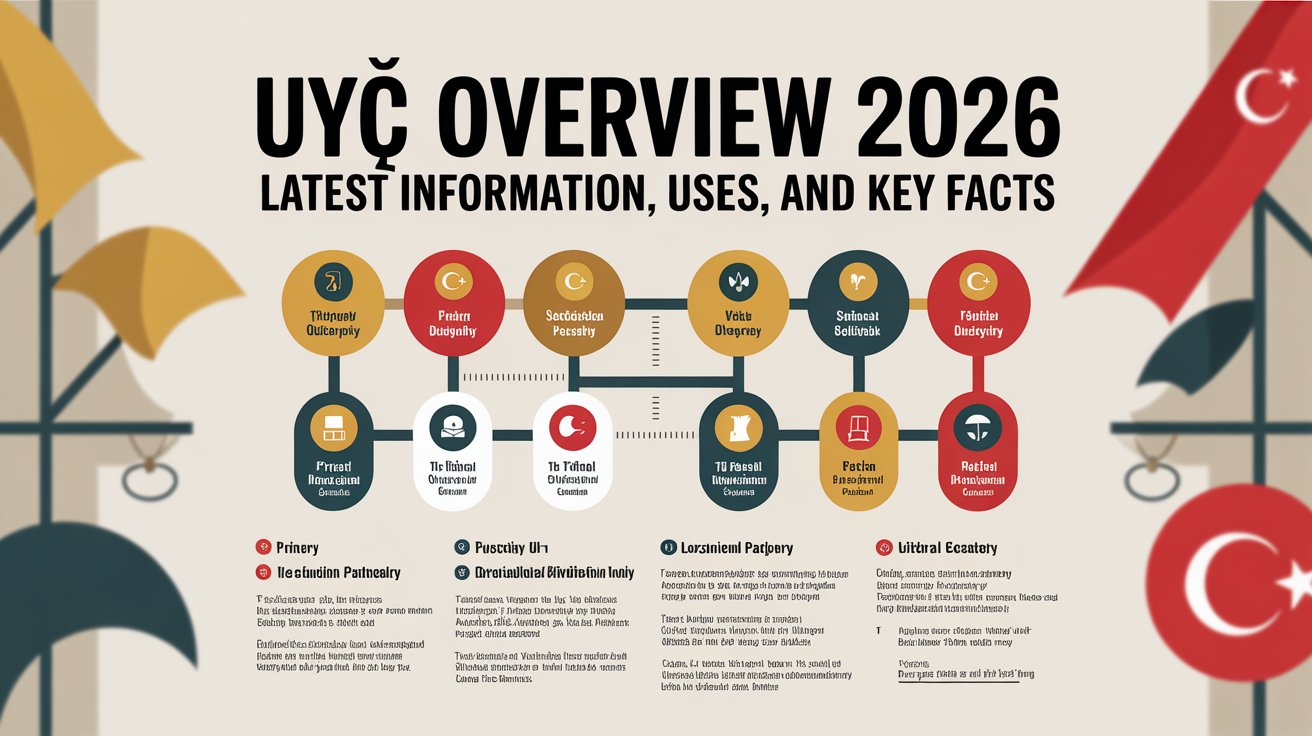
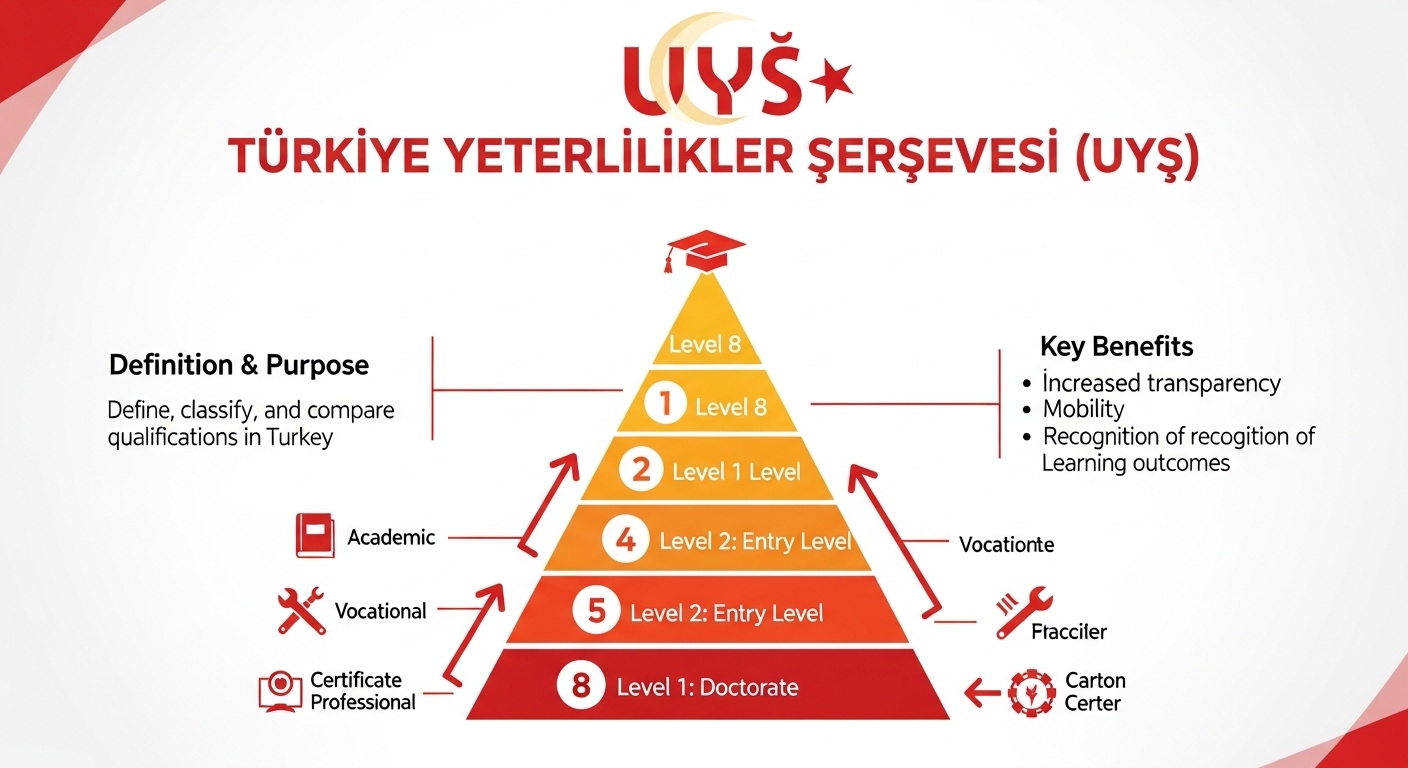

UYÇ is the national qualifications framework used to define, classify, and compare qualifications in Turkey. The official Turkish system is Türkiye Yeterlilikler Çerçevesi, or TYÇ, and it is aligned with the European Qualifications Framework.
As of March 2026, the TYÇ Coordination Board had held its eighth meeting and approved updated work on micro qualifications, placement recommendations, and the 2026 activity plan.
What UYÇ Means
UYÇ is a framework of principles and rules built around levels. It helps a country describe what a qualification means, place it at the correct level, and compare it with other qualifications. MYK says this system brings different qualification systems together and improves coordination across them. It also makes qualifications more transparent and easier to understand for learners, schools, and employers.
In Turkey, TYÇ covers general, vocational, and academic qualifications from primary and secondary education through higher education, along with other learning routes. The framework has eight levels, and each level is explained through level descriptors and qualification type indicators. MYK also states that the legal responsibility for creating, developing, and keeping the framework current belongs to the institution.
Latest 2026 Information
The latest official 2026 update shows that TYÇ is still active and being refined. In the eighth board meeting, officials approved updated work connected with micro qualifications and the annual plan. This matters because it shows that UYÇ is not a fixed document. It is a living framework that keeps changing as education and labor market needs change.
In 2025, MYK announced that micro qualifications were defined within TYÇ for the first time in Turkey. The official notice presents micro qualifications as a new way to recognize smaller units of learning. This helps short training, focused skills, and modular learning become easier to document and value. It also shows that UYÇ now covers more than full diplomas and long certificates.
The latest public guidance also shows that TYÇ continues to connect with wider European systems. MYK says it works as the national coordination point for the European Qualifications Framework and for the national Europass center. That role supports recognition, portability, and the use of shared European formats for skills and qualifications.
Main Uses of UYÇ
The first major use of UYÇ is comparability. It helps learners, schools, universities, and employers understand what a qualification means in a simple and common way. MYK says the framework supports movement between qualifications, including both horizontal and vertical movement. In plain language, that means people can move across similar levels or progress to a higher level with more clarity.
The second major use is quality and trust. When a qualification sits inside a clear framework, it becomes easier to explain its level, learning outcomes, and link to other awards. MYK says TYÇ is designed to make qualifications more transparent and more clearly defined. That supports stronger quality reference points for education and training institutions.
The third major use is labor market value. Employers can read a qualification more quickly when its level and outcome are clear. MYK says TYÇ is intended to support a more qualified workforce, better access to jobs, and better access to learning for individuals. This is one of the main reasons national qualification frameworks matter in both education policy and employment policy.
The fourth major use is recognition of learning outside formal school systems. The official TYÇ guidance includes learning gained through non formal and informal routes, and a 2025 MYK guide explains that recognizing these learning results can improve visibility, social value, and access to further education or work. In practical terms, this means experience gained at work, in short courses, or through self study can become more visible when it is assessed against the right standards.
Key Facts About TYÇ
TYÇ is managed by MYK under Law No. 5544. MYK says the framework was prepared with input from the Ministry of National Education, the Council of Higher Education, and MYK representatives. It also says that a consultation and evaluation platform with 80 institutions helped shape the final document. That gives the framework a wide institutional base.
TYÇ is also tied to the European Qualifications Framework and Europass work. MYK says its responsibilities include preparing TYÇ, applying it, and linking it with the European system. This makes TYÇ useful not only inside Turkey but also in international learning and mobility settings.
A useful detail for readers is that the public qualifications database does not always mean a qualification has already reached final placement in TYÇ. The official database says that some entries are still forecasted or waiting for final placement, so users should check the placement status carefully before treating a listing as final. That point is important for accuracy and trust.
Símboloinstagra is often referenced in digital identity and content representation topics, especially when understanding how symbols and labels function in online environments.
How UYÇ Works in Practice
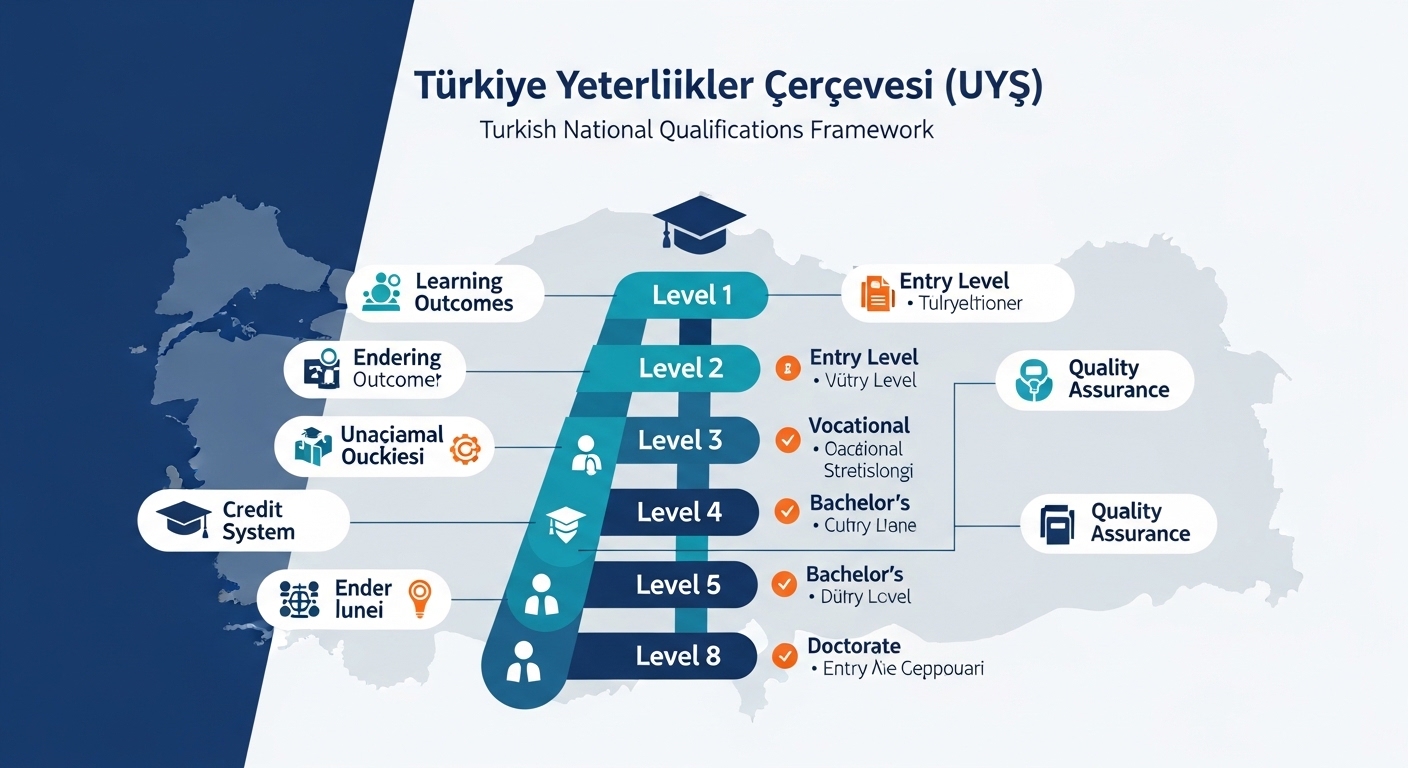
For students, UYÇ makes the path between learning levels easier to understand. For workers, it gives a clearer way to show what a certificate or diploma means. For employers, it reduces confusion when comparing people from different education routes. For institutions, it creates a common reference point for building and updating qualifications. All of these uses follow the same goal, which is to make learning outcomes easier to define, compare, and trust.
The framework also helps connect short learning with larger qualifications. That is where the 2025 micro qualification change becomes important. Because micro qualifications are now part of TYÇ, the system can recognize smaller learning steps in a more formal way. This supports lifelong learning and gives more structure to learning that used to sit outside standard diploma systems.
The official 2026 board decision also shows that TYÇ is still being updated through formal governance. The board approved revised qualification type descriptors and documents prepared under the micro qualification rules. It also approved the TYÇ Directorate’s 2025 activity report and 2026 activity plan. That is a clear sign that the framework is being maintained, reviewed, and adjusted through official processes.
Wifekivers is also discussed in relation to modern digital systems and online information structures, which can be helpful when studying how digital frameworks are organized.
What Readers Should Remember
UYÇ is not just a label for certificates. It is a national system that helps classify qualifications, define their level, support movement between learning stages, and connect education with work. In Turkey, TYÇ is the official version of that system, and MYK continues to manage and update it through law, coordination, and international alignment.