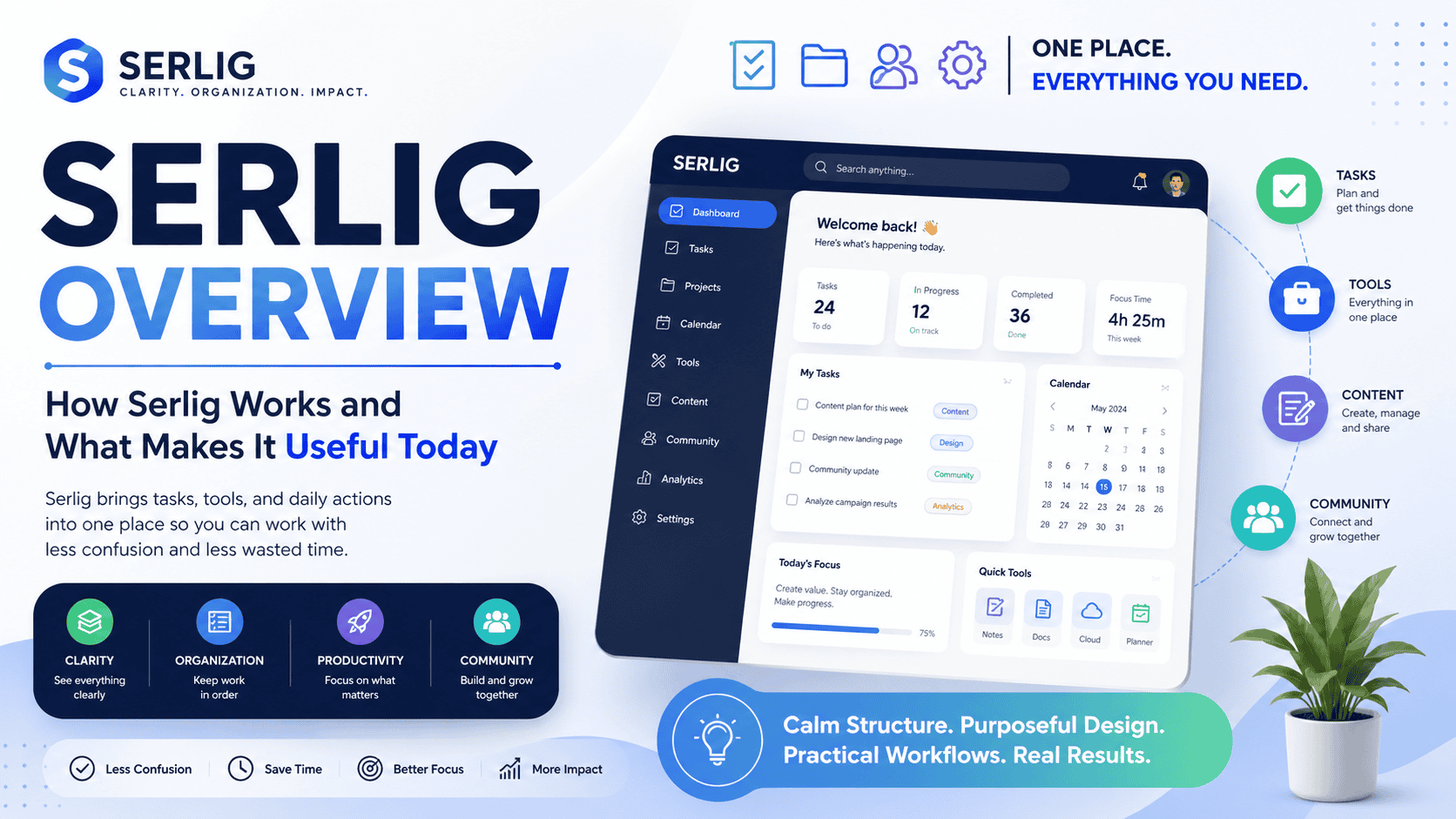

Serlig is described online as a simple digital platform or working method built around clarity, organization, and useful content. It works by bringing tasks, tools, and daily actions into one place so people can work with less confusion and less wasted time.
What Serlig Is
The web results do not show one single official definition of Serlig, but they describe it in a similar way across several pages. In those pages, Serlig is presented as a modern digital system, a productivity focused platform, or a content centered space for creators and communities. The common theme is simple. Serlig is tied to organization, easier workflows, and a cleaner user experience.
Some pages also describe Serlig as a broader idea rather than only one product. In that view, it stands for calm structure, purposeful design, and a practical way to manage digital work. That is why the term appears in different contexts such as productivity, content creation, community building, and workflow design.
You can understand this better by reading about Jyokyo, which explains a related structured digital concept used for organizing information and workflows in modern systems.
How Serlig Works
Serlig is usually explained as a centralized system. Instead of making people move between many separate apps, it gathers key functions in one place. The idea is to let a user manage tasks, settings, content, or performance from a single dashboard. That reduces switching time and makes daily work easier to follow.
A simple way to understand the process is this. A user opens the main dashboard, sets up the basic options, and then uses the available tools to complete work in a direct flow. In the descriptions found online, Serlig also relies on automation to handle repetitive steps in the background. This is presented as one of the main reasons the platform or method feels efficient.
| Step | What happens | Why it matters |
|---|---|---|
| 1 | The user opens the dashboard | This creates one main place to work from |
| 2 | Settings or tools are configured | The system fits the user’s needs better |
| 3 | Tasks or content are managed in one place | This reduces switching between apps |
| 4 | Automation handles repetitive work | This saves time and lowers manual effort |
| 5 | The user reviews progress | This helps improve control and organization |
A similar idea is discussed in Cumhuritey, which focuses on system based organization and structured digital environments used for communication and coordination.
Core Features Linked With Serlig
One of the most common features linked with Serlig is a clean and simple interface. Several pages describe it as beginner friendly, with easy navigation and clearly labeled options. That matters because many users want a system they can understand quickly without heavy training.
Another repeated feature is cross device use. The pages describe Serlig as something that should work across desktop, laptop, tablet, and mobile devices. That is important for modern users who move between office work, remote work, and travel. A flexible system makes it easier to stay connected to the same data or tasks throughout the day.
Serlig is also linked with content and community features in some sources. One page says it helps writers, bloggers, and creators publish text, audio, or video content. Another says it supports community building and group based interaction. In that sense, Serlig is not only about task management. It is also about creating useful spaces for sharing knowledge and connecting with others.
What Makes Serlig Useful Today
Serlig is useful today because many people want simpler digital systems. Most users no longer want to manage too many tools at once. They want one place for planning, tracking, communication, and review. The descriptions of Serlig match that need by focusing on centralization and reduced friction.
It is also useful because it supports fast decision making. When tasks, goals, and content appear in one structured system, users can see what needs attention more clearly. That helps reduce confusion and keeps work moving. Several pages describe Serlig as helping people focus on what matters instead of getting stuck in repetitive admin work.
Another reason it matters now is that digital work has become more distributed. People work from different places, on different devices, and across different time zones. A system that is responsive and easy to use on multiple devices fits that reality better than a tool that only works in one setting.
Who Serlig Is Useful For
The available pages mention several user groups. Freelancers, small teams, growing businesses, writers, bloggers, consultants, marketers, and remote workers are all described as possible users. That makes sense because these groups often need a central place to manage tasks, content, deadlines, and communication.
For individuals, Serlig is described as a productivity helper. In that setting, it can be used to keep tasks, habits, and goals together in one system. This makes daily planning easier to follow.
For businesses, Serlig is described as a way to improve coordination. The pages say a centralized system can reduce duplicate work, missed tasks, and unclear communication. That is a practical benefit for teams that need clearer accountability.
For creators, Serlig is described as a publishing and audience focused space. The content pages say it can support article creation, media sharing, and community building around shared interests. That gives creators a more organized way to share work with the right audience.
Why People Search for Serlig
Search interest around Serlig seems to come from its flexible meaning. Some pages treat it as a product, some treat it as a productivity model, and some treat it as a broader digital idea. That flexibility makes it easier for different readers to connect it to their own needs. It can fit content creation, workflow management, personal organization, or community use.
Another reason people search for it is that the term appears modern and adaptable. The pages that describe it often connect Serlig with simplicity, calm structure, and practical design. Those ideas are appealing in a digital world where many tools feel crowded or difficult to use.
Strengths Linked With Serlig
The strongest strength linked with Serlig is efficiency. The repeated idea across the search results is that it reduces wasted effort by putting important actions into one system. That includes task handling, content work, workflow organization, and automation.
A second strength is usability. The pages describe it as easy to learn and simple to navigate. That matters because people are more likely to keep using a tool that does not create extra stress.
A third strength is flexibility. Serlig is described in more than one way, but the main idea stays steady. It can support solo work, team work, content creation, and community use. That wide range makes the concept useful across different types of digital activity.
Things to Keep in Mind
The search results also show a clear limitation. Serlig does not appear to have one widely accepted official definition in the public pages that were available. Instead, it is described differently across multiple sites. That means readers should treat it as a flexible term or a developing digital concept rather than a fully standardized product with one fixed meaning.
That matters for clarity and trust. When a term is used in several different ways online, the best approach is to focus on the shared pattern. In Serlig’s case, that pattern is simple. It is about organized digital work, useful content, and easier everyday action.
Serlig in Modern Digital Use
In modern digital use, Serlig fits the wider move toward cleaner systems. People want fewer distractions, fewer scattered tools, and faster access to what they need. The descriptions found online place Serlig in that exact space. It is presented as a practical answer to clutter, whether the user is managing work, content, or community.
That is why Serlig continues to matter in current search results. It speaks to a real need in everyday digital life, which is to keep work simple, organized, and easy to manage across devices and tasks.