
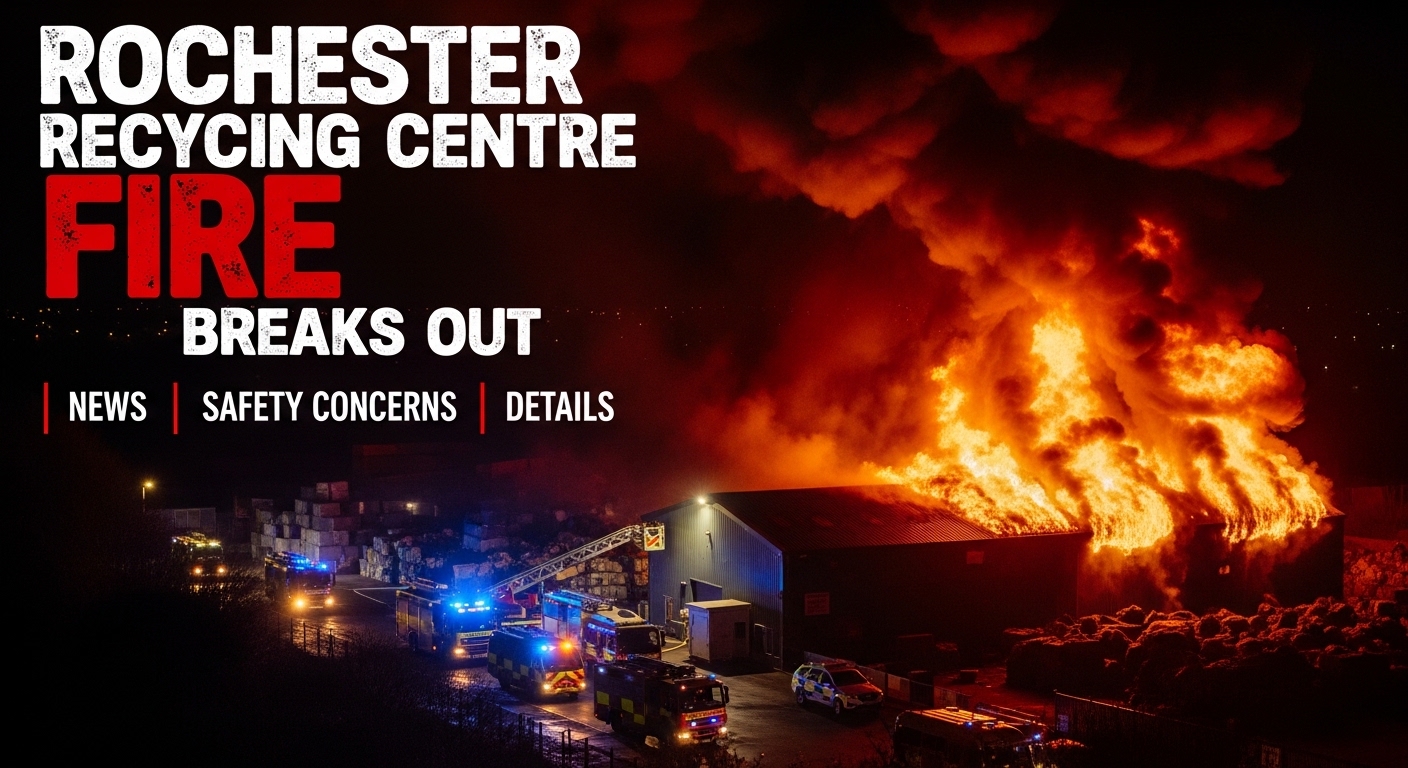

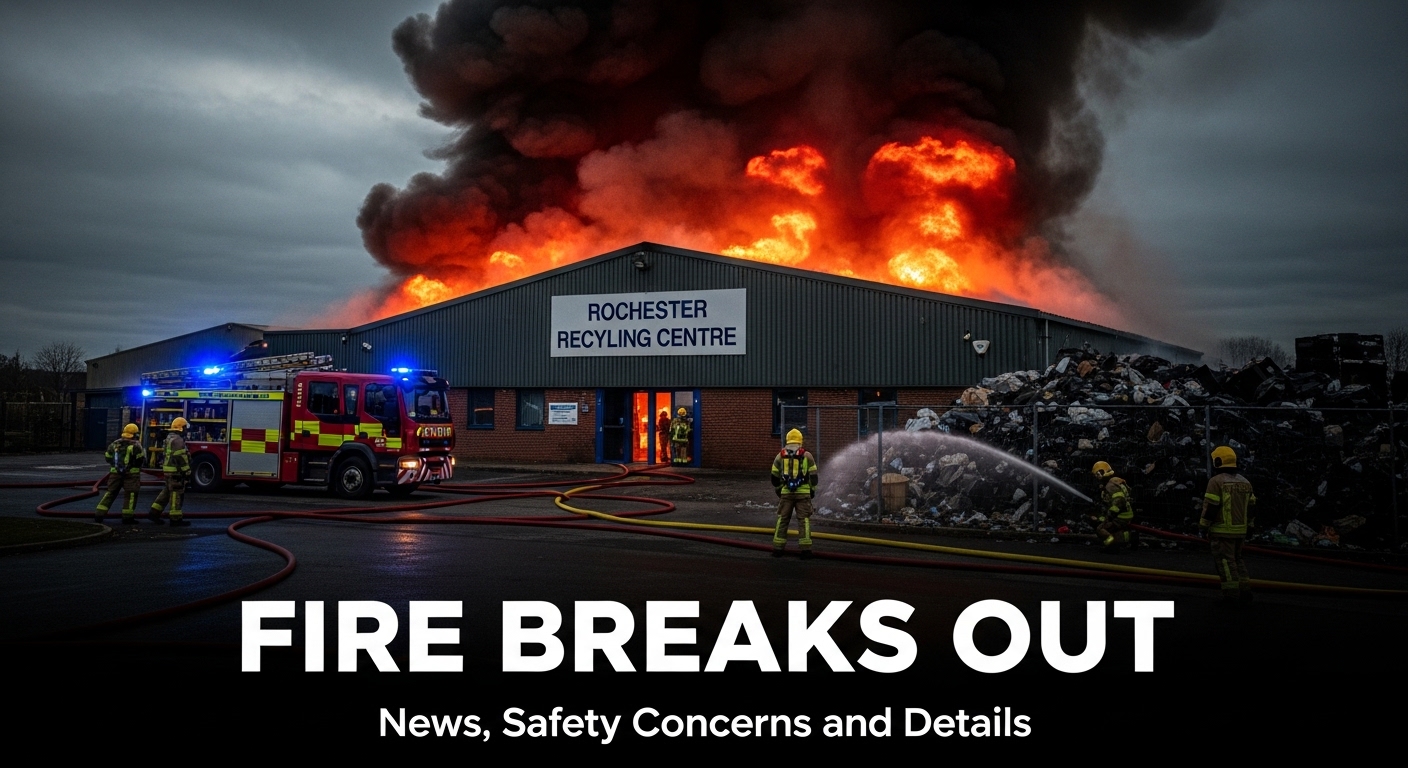
Rochester Recycling Centre experienced a fire incident that raised immediate safety concerns and disrupted waste processing operations. The fire involved waste materials stored at the facility and required emergency response from local fire services.
Fire Incident Overview at Rochester Recycling Centre
The fire started in a designated waste storage area within the recycling facility. Early reports indicate that mixed recyclable materials and general waste were involved in the initial blaze.
Smoke was visible from a wide distance, which led to rapid emergency reporting. The fire spread across multiple waste piles before containment efforts began.
The recycling centre handles a high volume of household and commercial waste. This type of environment can increase fire risks due to the presence of flammable materials such as plastics, paper, batteries, and chemicals.
Fire crews arrived quickly to control the situation and prevent further spread to nearby structures or equipment. Initial containment focused on isolating the most active fire zones.
Emergency Response and Fire Control Actions
Emergency teams deployed multiple fire engines and specialized equipment to manage the situation. Water jets and foam suppression systems were used to reduce fire intensity.
Firefighters also worked on separating waste piles to stop the fire from spreading deeper into compacted materials. This process required heavy machinery support from site operators.
Key emergency response actions included:
- Rapid evacuation of staff from affected zones
- Isolation of burning waste sections
- Continuous water cooling to reduce heat buildup
- Monitoring for toxic smoke emissions
- Coordination between fire services and site management
Air quality monitoring units were also deployed to check for harmful gases. Recycling facility fires can release smoke containing carbon monoxide and other hazardous compounds.
Safety Concerns Raised by the Incident
The fire raised several important safety concerns related to waste handling and recycling operations. One major concern is the risk of hidden ignition sources within waste streams.
Lithium batteries are a known cause of fires in recycling centres. When damaged or crushed, they can ignite and cause rapid fire spread.
Other safety risks include:
- Improper disposal of electronic waste
- Accumulation of flammable plastics
- Heat buildup in compacted waste piles
- Delayed detection of internal fires
Staff safety is also a critical issue. Workers at recycling centres often operate near large volumes of mixed waste, which can make early fire detection difficult.
A similar waste management concern was previously reported in residential areas, including issues like the Rubbish Pile Outside Property Crawley, which also highlighted risks linked to unmanaged waste storage and fire hazards.
Waste Types Commonly Linked to Recycling Centre Fires
The table below explains common waste materials and how they contribute to fire risks.
| Waste Type | Fire Risk Level | Reason for Risk |
|---|---|---|
| Lithium batteries | High | Can explode or ignite when damaged |
| Plastic waste | High | Burns quickly and produces thick smoke |
| Paper and cardboard | Medium | Ignites easily under heat |
| Electronic waste | High | Contains batteries and electrical components |
| Organic waste | Low to medium | Can generate heat during decomposition |
| Glass and metal | Low | Non flammable but may store heat |
Understanding these risks is important for improving recycling safety systems and reducing future fire incidents.
Impact on Recycling Operations
The fire disrupted normal operations at Rochester Recycling Centre. Waste processing activities were temporarily halted in affected sections.
Incoming waste deliveries were paused to allow emergency teams to work safely. This created short term delays in waste collection schedules.
Equipment in the affected area required inspection before being returned to service. Conveyor systems, sorting machines, and storage units were checked for heat damage.
Operational impacts included:
- Temporary suspension of waste sorting lines
- Delay in household waste processing
- Redistribution of waste to alternative facilities
- Equipment safety inspections and cleaning
Such disruptions can also affect local waste management networks, especially when nearby facilities depend on shared processing capacity.
Environmental Concerns Linked to the Fire
Recycling centre fires often create environmental concerns due to smoke emissions and runoff water used for firefighting.
Smoke released during the incident may contain fine particles and chemical compounds from burning plastics and electronic waste. These emissions can temporarily affect local air quality.
Firefighting water used to cool waste piles may also carry contaminants into drainage systems if not properly contained.
Key environmental risks include:
- Air pollution from smoke and fine particles
- Chemical runoff entering drainage systems
- Residual contamination in burned waste areas
- Short term impact on nearby vegetation
Environmental monitoring is usually carried out after such incidents to assess long term effects and ensure compliance with safety regulations.
Public Safety Measures During the Incident
Authorities implemented safety measures to protect nearby residents and workers. One of the primary actions was advising people to avoid the affected area due to smoke exposure risks.
Traffic control measures were also introduced near the site to allow emergency vehicles to operate efficiently.
Public safety steps included:
- Temporary access restrictions around the facility
- Air quality warnings in surrounding zones
- Guidance to keep windows closed if smoke was visible
- Diversion of traffic near the recycling centre
These measures are standard during industrial fire incidents involving waste materials.
Traffic disruptions have also been linked to infrastructure and emergency events in other areas, such as the A228 Boyle Way Closed, where road closures affected movement and emergency access during incidents.
Investigation and Cause Assessment
An official investigation was initiated to determine the cause of the fire at Rochester Recycling Centre. Investigators typically review waste intake records, CCTV footage, and equipment logs.
Possible causes under review include:
- Battery ignition from improper disposal
- Mechanical failure in sorting equipment
- Heat buildup in waste storage piles
- Accidental ignition from external sources
Investigators also examine fire spread patterns to understand how quickly the incident escalated. This helps improve future prevention strategies.
Findings from such investigations are used to update safety procedures and reduce the risk of repeat incidents.
Fire Risk Factors in Recycling Facilities
Recycling centres handle large and varied waste streams, which increases fire risk if not properly managed. Several structural and operational factors contribute to this risk.
Common risk factors include:
- High volume of mixed waste storage
- Limited detection of internal heat sources
- Continuous material movement on conveyor systems
- Storage of compressed or stacked waste piles
- Presence of hazardous materials hidden in general waste
Facilities often rely on strict sorting rules and monitoring systems to reduce these risks.
Safety Improvements for Recycling Centres
Following incidents like this, recycling centres often review and improve their safety systems. These improvements aim to reduce ignition risks and improve early detection.
Typical safety upgrades include:
- Installation of thermal imaging cameras
- Improved battery detection systems
- Regular waste pile temperature checks
- Staff training on hazardous material identification
- Faster emergency shutdown procedures for machinery
Waste sorting education for the public also plays a role in prevention. Proper disposal of batteries and electronic items significantly reduces fire risks.
Operational Recovery After Fire Incidents
Recovery after a recycling centre fire involves several structured steps. These steps ensure safe resumption of operations while preventing secondary hazards.
Recovery stages often include:
- Cooling and clearing of affected waste zones
- Structural inspection of buildings and equipment
- Removal of contaminated debris
- Air quality clearance confirmation
- Gradual restart of processing lines
Only after full safety clearance do recycling operations return to normal capacity.
Monitoring and Long Term Safety Review
After the incident, ongoing monitoring is typically carried out to ensure no hidden hotspots remain within waste piles. Some materials can retain heat for extended periods.
Long term review focuses on improving fire prevention systems and updating operational guidelines. Recycling facilities often adjust storage limits and inspection frequency based on investigation findings.
These steps help strengthen overall safety standards and reduce future operational risks.