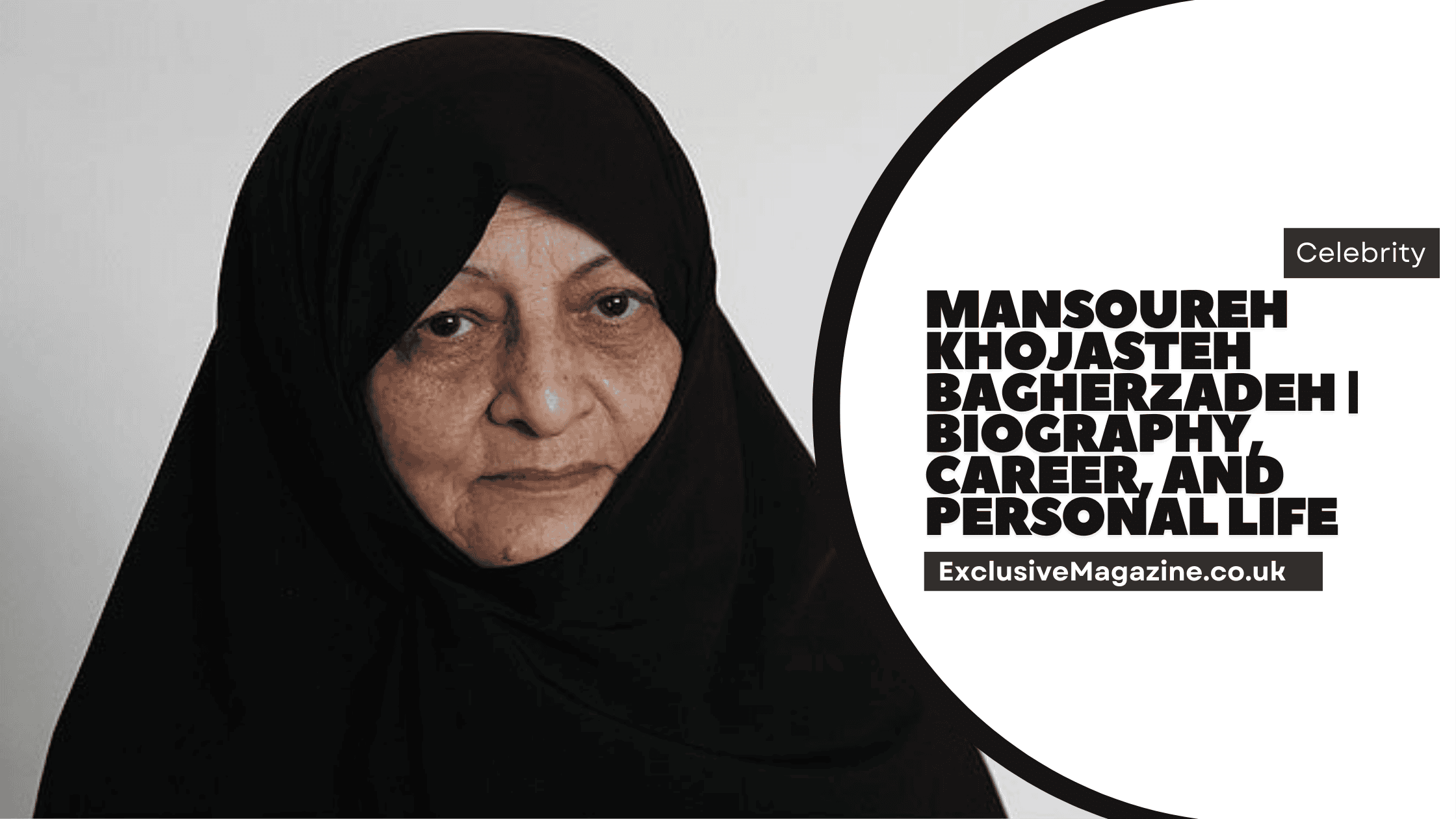

Mansoureh Khojasteh Bagherzadeh is the wife of Iran’s Supreme Leader, Ayatollah Ali Khamenei. She was born in Mashhad in 1947 and the couple has six children.
Early life and family
Mansoureh was born into a religious and respected family in Mashhad, northeast Iran. Her father was Mohammad Esmaeil Khojasteh Bagherzadeh, known locally as a businessman.
She grew up in a setting where religious study and social networks were important. Her family background gave her close ties to clerical and social circles in Mashhad.
Her brother Hassan Khojaste Bagherzadeh later held a senior role at Iran’s state broadcaster. This family link placed Mansoureh in a wider network of public and media figures.
Public records list her birth year as 1947, though exact birth date details are rarely published. Available profiles repeat the same basic biographical facts and emphasize privacy.
Religious and social background
Mansoureh’s family is described in sources as devout and socially prominent within Mashhad. The city is a major religious center in Iran, which shaped her upbringing.
Her environment included access to religious scholars and seminaries that influenced family life. These influences are noted in profiles that describe the family’s local standing.
Her marriage into Ali Khamenei’s family connected two circles that were already active in religious and political life. That connection had implications for both domestic and public roles later.
Sources that document her background emphasize tradition and continuity rather than public activism. Most accounts frame her as part of a conservative religious household.
Meeting and marriage to Ali Khamenei
Mansoureh met Ali Khamenei in 1964 at a private ceremony and they married the following year. Their wedding sermon was read by Ayatollah Mohammad Hadi Milani.
The marriage took place before the 1979 revolution and during a period of increasing political activity among clerics. Both partners were involved in networks that later played roles in the Islamic Republic.
Some sources note the couple married when Mansoureh was young, a detail cited in reporting about historical norms. Reporting mentions this in the context of wider social discussions.
Official biographies focus on the family union and avoid personal details beyond dates and basic facts. Iranian state-linked and private sources both maintain a restrained tone on private matters.
Children and family ties
Mansoureh and Ali Khamenei have six children: four sons and two daughters. Their children are named Mostafa, Mojtaba, Masoud, Meysam, Boshra, and Hoda in public records.
Many of the children married into families with religious or political connections. These marriages created extended networks among Iran’s clerical and political elite.
Some sons work in religious study or in offices related to the Supreme Leader’s works. Public profiles note Mostafa’s seminary focus and others’ roles in cultural or administrative functions.
The family maintains a low public profile while holding influence through private and institutional roles. Media coverage often emphasizes the private nature of family life.
For comparisons on influential spouses and family roles in global politics, see our article on Linda Bazalaki.
Quick reference table: Children
| Name | Known role or note |
|---|---|
| Mostafa | Engaged in seminary studies. |
| Mojtaba | Active in media and politics. |
| Masoud | Connected by marriage to other clerical families. |
| Meysam | Works with publishing efforts related to the Leader. |
| Boshra | Married into a clerical family. |
| Hoda | Married into a family with religious ties. |
Role during Khamenei’s presidency (1981–1989)
When Ali Khamenei served as president, Mansoureh was the spouse of the president from 1981 to 1989. This period preceded his role as Supreme Leader and involved different ceremonial responsibilities.
Her public appearances during the presidency were limited and formal. State media recorded some official events but personal publicity was minimal.
The presidential household in Iran has historically kept a distinct line between public duty and private life. Mansoureh’s role followed that pattern, with few public statements or major initiatives attributed to her.
Documentation from that era lists her as the spouse of the president but provides little detail on specific programs she led. Official records prioritize the head of state’s political agenda.
Role as spouse of the Supreme Leader (since 1989)
Since 1989, Mansoureh has been identified as the spouse of the Supreme Leader of Iran. The title is ceremonial and tied to a very private public profile in Iran’s system.
Her public role after 1989 did not shift into formal leadership positions or public policy making. Instead, she kept a limited presence at official cultural or religious events.
State narratives sometimes note her support for revolutionary activities and family sacrifices during the Iran movement. Official sources have published accounts that place her within the broader revolutionary story.
Independent reporting highlights the same low visibility and stresses that most public responsibilities remain with state institutions. Journalists note the contrast between private influence and public absence.
For insight into leadership roles and administrative influence in international institutions, check our article on Gersson Archila.
Public activities and contributions
Khamenei’s official website has published chapters describing Mansoureh’s role in revolutionary life and in supporting family activities. These accounts frame her contributions as part of the leader’s personal history.
Publicly documented activities focus on cultural, religious, and family support functions. She is portrayed as a steady presence behind key events rather than a public organizer.
There are few records of independent charities or organizations led by her name. Most references are tied to family offices or to published memories on official channels.
When state media mentions her, the coverage typically concerns family milestones, religious observances, or historical reminiscence. This pattern keeps public focus on symbolic roles.
Privacy and media coverage
Mansoureh has generally stayed out of sustained media attention and values privacy. Iranian press and international outlets both report limited direct statements or interviews.
State and independent sources agree that detailed personal information is scarce. This scarcity shapes how journalists and scholars write about her.
Her family connections occasionally appear in reporting about elite networks and media appointments. Those mentions focus on institutional links rather than personal commentary.
When controversies touch the family, reporting often highlights background or marriage details rather than direct public actions by Mansoureh. Media narratives treat her presence as private and contextual.
Controversies and public debates
Some international reporting has discussed the age at which Mansoureh married and used that fact in wider debates about social norms. These discussions appear in coverage of historical practices.
Other controversies involve questions about family influence in political appointments and media roles. Reporting notes family members in positions tied to state institutions.
Iranian state sources generally do not frame these matters as controversies and instead present family networks as normal social ties. Official narratives emphasize continuity and service.
Because Mansoureh rarely speaks publicly, most debate focuses on implications of family links rather than on her public statements. Analysts therefore rely on documented family ties to draw conclusions.
Historical and political context
Mansoureh’s life spans major political changes in Iran, including the pre-revolutionary era, the 1979 revolution, and the Islamic Republic’s consolidation. Her family history is often described against this timeline.
Marriages and family alliances were common elements of social organization among clerical families in that period. Such alliances helped shape networks that later mattered in politics and media.
Her low public profile reflects a broader pattern among spouses of senior clerics, where private roles are emphasized over public initiatives. This pattern affects how historical records are written.
Scholars and journalists studying Iran cite family ties and private influence as important to understanding elite behavior. Mansoureh’s case is often used as an example of private family roles in public life.