
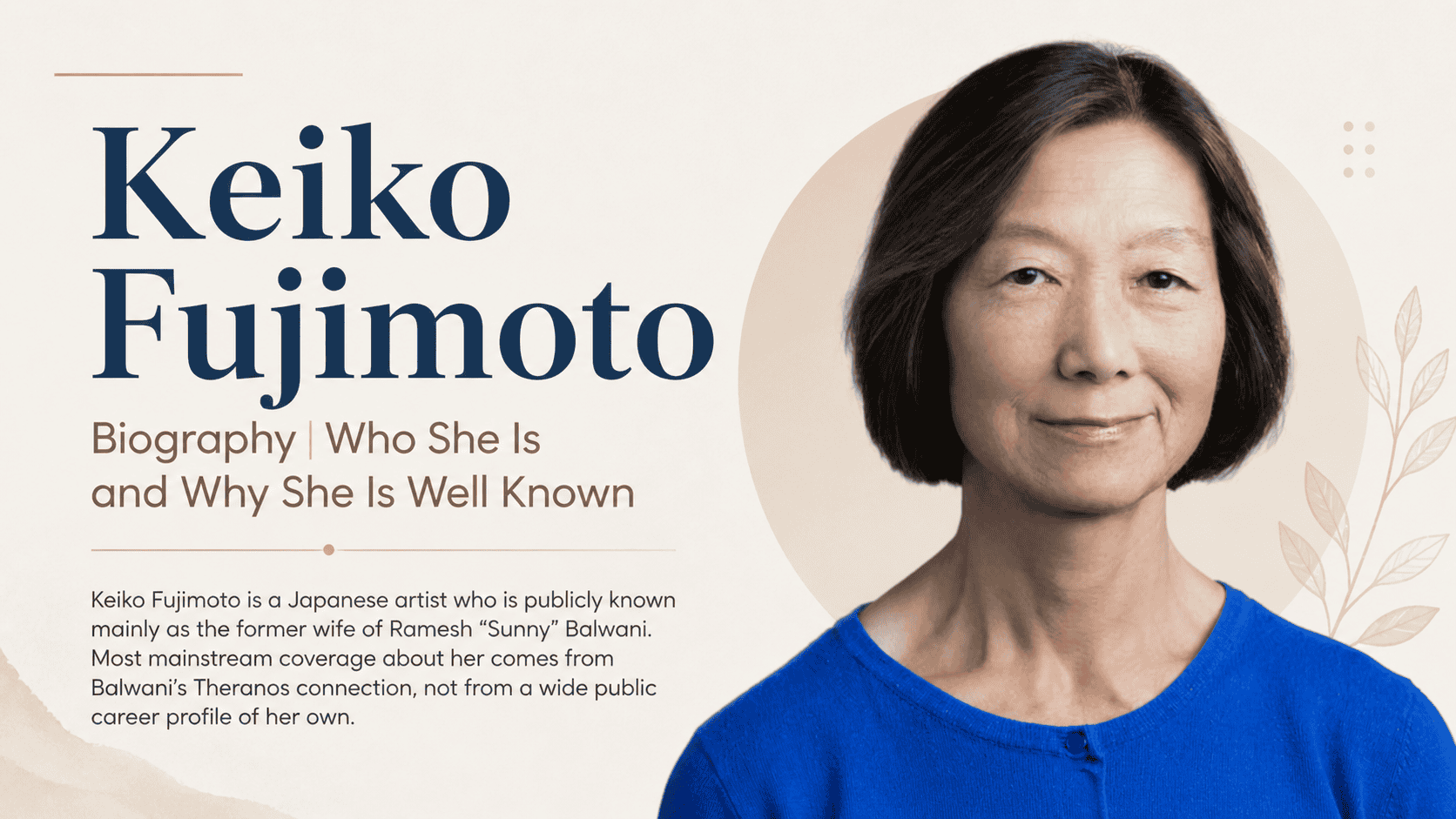

Keiko Fujimoto is a Japanese artist who is publicly known mainly as the former wife of Ramesh “Sunny” Balwani. Most mainstream coverage about her comes from Balwani’s Theranos connection, not from a wide public career profile of her own.
Keiko Fujimoto at a Glance
| Topic | Publicly verified information |
|---|---|
| Name | Keiko Fujimoto |
| Public identity | Japanese artist |
| Main reason she is known | Former wife of Sunny Balwani |
| Marriage status | Divorced |
| Divorce timing | 2002, with sources also describing it as December 2002 |
| Public role in Theranos | None publicly documented in the mainstream record |
This table reflects the limited but consistent facts that appear in major reporting. It also shows why her name appears in articles about Theranos and Sunny Balwani.
Who Keiko Fujimoto Is
Keiko Fujimoto is identified in major reporting as a Japanese artist. That is the most consistent public description attached to her name. At the same time, reliable coverage gives very few personal details beyond her marriage to Sunny Balwani, which suggests that she has lived a private life outside public media attention. This is an inference from the small amount of verified reporting available, not a claim about her private choices beyond what the record supports.
The public record does not present her as a celebrity, executive, or public spokesperson. Instead, she appears in reporting mainly through her past marriage to Balwani. That is why most people searching for her name find her in stories about Theranos and not in broad standalone profiles.
Why Keiko Fujimoto Is Well Known
Keiko Fujimoto is well known because she was married to Ramesh “Sunny” Balwani before his later role at Theranos became widely reported. Business Insider says Balwani was married to Japanese artist Keiko Fujimoto when he met Elizabeth Holmes, and that she filed for divorce in 2002. The Independent also reports that Balwani divorced his wife Keiko Fujimoto in December 2002.
Her name became more visible after the Theranos case drew major media attention. Once Balwani was identified as a central figure in the company, articles about his personal life started naming Fujimoto as his former wife. This is the main reason she appears in modern searches and biography-style articles. That connection is well documented in mainstream coverage, including the Wall Street Journal, Business Insider, and The Independent.
Her public relevance is therefore linked to a well known Silicon Valley scandal, not to a large public career in the entertainment or business spotlight. That does not reduce her identity as an artist. It simply explains why the public record around her is narrow and why her name is often introduced through Balwani’s story.
Marriage to Sunny Balwani
The strongest verified detail about Keiko Fujimoto is her marriage to Sunny Balwani. Reporting from The Independent says Balwani divorced Fujimoto in December 2002. Business Insider says she filed for divorce in 2002. The Wall Street Journal also states that Balwani’s ex-wife, Japanese artist Keiko Fujimoto, divorced him in 2002 in San Francisco Superior Court. These reports line up on the key point that the marriage ended in 2002.
This timing matters because Balwani later became deeply involved with Theranos. Business Insider notes that he later joined Theranos in 2009, and The Independent also places his Theranos role after the divorce. That means Fujimoto was already divorced from Balwani before his public identity became tied to the company.
The available reporting does not place Fujimoto in any Theranos business role. No mainstream source used here identifies her as an employee, investor, founder, adviser, or board member. Based on the available record, her connection to Theranos is indirect and personal rather than professional.
Barbara Boothe is also known for her connection to well known public figures, and more details are covered in the profile of Barbara Boothe.
What Public Reporting Actually Confirms
The public record on Keiko Fujimoto is very limited, so it helps to separate confirmed facts from assumptions. This is important for accuracy and trust. In SEO terms, it also prevents thin content from drifting into guesswork.
| Claim | Status |
|---|---|
| Keiko Fujimoto is a Japanese artist | Confirmed in mainstream reporting |
| She was married to Sunny Balwani | Confirmed in mainstream reporting |
| They divorced in 2002 | Confirmed in mainstream reporting |
| She had a public role in Theranos | Not confirmed |
| Her detailed biography is widely documented | Not confirmed |
| She is publicly known mainly through Balwani | Supported by the way mainstream reporting frames her |
The key point here is that the public coverage is narrow but consistent. Reliable articles do not offer a long personal history, but they do agree on her identity as an artist and on her past marriage to Balwani.
Keiko Fujimoto and the Theranos Story
Keiko Fujimoto is part of the Theranos story only because of her former marriage to Sunny Balwani. Mainstream reporting about Balwani and Holmes regularly mentions that he was married to Fujimoto when he first met Holmes. Business Insider says he was married to Fujimoto at the time, and The Independent says he divorced her in December 2002 before later meeting Holmes.
That timeline is why her name appears in reporting on the case. It helps place Balwani’s personal life in context, especially when journalists explain how he entered the Theranos story. But the reporting does not show that Fujimoto had any role in the fraud case itself.
For readers searching “Keiko Fujimoto biography,” this is the main takeaway. She is not primarily known as a Theranos figure. She is publicly identified as a Japanese artist and as Sunny Balwani’s former wife, and that relationship is the reason her name appears in high profile business and legal coverage.
Public Interest in Keiko Fujimoto
Public interest in Keiko Fujimoto comes from a mix of curiosity and scarcity. Because she is not heavily covered in the media, even basic questions about her life draw attention. The lack of a long public profile is itself part of why she is searched so often. That is an inference from the search interest around her name and the limited facts available in reliable articles.
In practice, this means her biography must be written carefully. A good article should stay close to verified facts, avoid filling gaps with rumors, and clearly explain that the strongest public detail is her connection to Sunny Balwani. That approach is the most trustworthy way to present her story.
Janet Condra is another example of a private individual who became publicly known due to a relationship with a famous public figure.
Key Facts About Keiko Fujimoto
| Fact | Detail |
|---|---|
| Full name | Keiko Fujimoto |
| Known as | Japanese artist |
| Public recognition | Former wife of Sunny Balwani |
| Divorce | 2002 |
| Connection to Theranos | Indirect, through Balwani |
| Public profile | Limited in mainstream reporting |
These facts are the safest and most useful ones to include in an evergreen biography. They are also the facts that appear most consistently across major reporting.
Why Keiko Fujimoto Matters in Public Coverage
Keiko Fujimoto matters in public coverage because she helps complete the background of a major Silicon Valley figure. When stories explain Sunny Balwani’s personal history, Fujimoto’s name gives readers a clearer timeline of his life before Theranos. That does not make her a central public figure in the same way Balwani is, but it does make her a relevant part of the historical record.
Her biography also shows how some people become publicly known through association rather than through a long media career. In Fujimoto’s case, the verified record points to a private artist whose name entered public discussion mainly because of a high profile marriage and divorce. That is the most accurate and balanced way to describe why she is well known.