



Yes. Nivea can be a good starting brand, especially for dry or sensitive skin and for a simple routine, while Garnier is also a good starter brand with more choices for cleansing, micellar water, acne care, brightening, and sunscreen.
Skin care basics for beginners
A beginner routine should stay simple. Dermatologists recommend building it around a gentle cleanser, a moisturizer, and daily sun protection. They also advise choosing products that match your skin type and using fragrance-free formulas when skin is dry or sensitive.
This matters because many skin problems start when a routine is too strong, too complex, or changed too often. Acne products, scrubs, and active ingredients can help some people, but they can also irritate skin if a beginner uses too many at once. Dermatologists also recommend patch testing new products before regular use.
Many beginners also use resources like ClearSkinStudy to learn about skincare ingredients, product selection, and basic routines before building a long-term skincare plan.
What Nivea offers beginners
Nivea has a broad face care range that includes cleansing products, masks, scrubs, day creams, night creams, anti ageing products, and products for different skin needs. Its cleansing page also says gentle cleansing is important for dry and sensitive skin and explains that micellar technology removes makeup and dirt without rubbing.
That range makes Nivea useful for someone who wants a basic, hydration focused routine. Nivea also has sensitive skin products that are made to reduce common signs of sensitivity such as redness, dryness, and tightness. One example is its Sensitive day cream with SPF 15, which is described as helping with those signs while adding daytime sun protection.
For a beginner, this is important because a simple routine should not feel complicated. If your skin leans dry, tight, or easily irritated, Nivea’s face care structure makes it easier to find a cleanser and a cream from the same brand without jumping across many different product families. That is an inference from the brand’s official range, and it fits the dermatologist advice to keep a routine gentle and easy to maintain.
What Garnier offers beginners
Garnier’s skincare range is broader on problem based categories. Its official site lists cleansers, vitamin C serum, moisturizer, micellar water, sheet masks, men cleansers, and sunscreens, with skin benefits such as brightening, anti acne, oil control, and anti ageing. It also organizes products by skin type, including dry, normal, oily, and sensitive skin.
Garnier is especially strong in cleansing and makeup removal. Its micellar water line is presented as an all in one cleanser and makeup remover, and the sensitive skin versions are described as gentle, hypoallergenic, and fragrance free or perfume free in some official product pages. Garnier also says these micellar formulas remove makeup and impurities without harsh rubbing and are suitable for sensitive skin.
This makes Garnier a practical choice for beginners who want a wider set of options from the start. If your main concern is oil, breakouts, dullness, or makeup removal, Garnier gives more clearly labeled product paths than a single basic starter routine. That is an inference based on the brand’s official categories and skin need filters.
Which brand is better for dry or sensitive skin
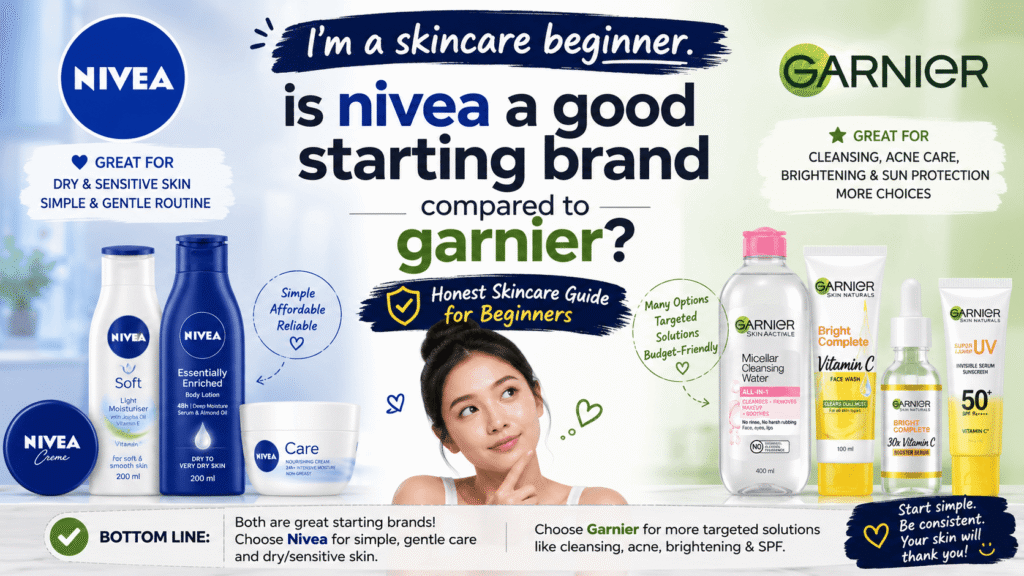
For dry or sensitive skin, Nivea can be the simpler starting point if your goal is basic cleansing plus hydration. Nivea’s cleansing page specifically discusses gentle cleansing for dry and sensitive skin and says its micellar style cleansing removes makeup and dirt without rubbing. Its sensitive day cream also targets redness, dryness, and tightness.
Garnier also has sensitive skin options, but its lineup is wider and more concern driven. That can be helpful, yet beginners with easily irritated skin sometimes do better with fewer choices and fewer active ingredients. Dermatologists recommend fragrance-free products for dry or sensitive skin, and they advise patch testing new items before adding them fully to a routine.
So for a first routine, Nivea fits best when the main need is comfort, moisture, and simplicity. Garnier fits better when the main need is easy cleansing, makeup removal, or a wider set of treatments for a specific concern.
Which brand is better for oily or acne prone skin
For oily or acne prone skin, Garnier has the clearer product structure. Its site lists anti acne and oil control categories, and some pages point users toward micellar formulas and treatment based products. That gives beginners an easier way to find products made for shine control or breakouts.
Nivea also has face products for different skin types, including blemished and sensitive skin, but its official face pages lean more toward general face care and cleansing than acne focused treatment lines. That means Nivea can still work for oily skin if you choose the right cleanser and cream, but Garnier gives more visible acne and oil control labeling.
Dermatology guidance also supports this split. For oily skin, dermatologists suggest mild, gentle face washes and non comedogenic products, not harsh cleansers that strip the skin. That means the best starter product is not the strongest one. It is the one that cleans without causing more irritation.
What a beginner should buy first
The first purchase should usually be a cleanser. After that, add a moisturizer. Sunscreen should come next in the morning routine. Dermatologists say these are the foundation of basic skin care, and they also say the order matters.
If you choose Nivea, a basic starter path is a gentle cleanser plus a day cream or moisturizer from the same face care line, then a separate sunscreen if the cream does not already provide enough sun protection. Nivea’s official face range includes cleansing products, day and night creams, and sensitive skin products, which makes this approach easy to build.
If you choose Garnier, a basic starter path is micellar water or a gentle cleanser, then a moisturizer, then a sunscreen. Garnier’s site clearly separates these product types and also gives skin type filters, which helps a beginner avoid random product picking.
If you enjoy learning from celebrity beauty habits, the Kaley Cuoco Nuxe Skincare Routine offers an example of how a simple and consistent skincare approach can support healthy-looking skin.
What beginners should avoid
Beginners should not start with too many products at once. Adding multiple new items in a short time can make it hard to tell what helps and what irritates the skin. Dermatologists also warn that changing acne treatments too often can worsen breakouts and irritation.
Beginners should also avoid strong or harsh cleansers if their skin is dry or sensitive. Dermatologists recommend fragrance-free products for those skin types because scent ingredients can trigger irritation. They also advise looking for non comedogenic labels if acne is a concern.
Scrubs and extra actives should stay limited at the start. Nivea does sell scrubs and anti ageing products, while Garnier sells brightening and anti acne products, but a beginner does not need to buy those first. The safer first step is to stabilize the skin with cleansing, moisturizing, and sunscreen before adding anything else. That follows the basic care guidance from dermatologists.
Simple brand choice guide
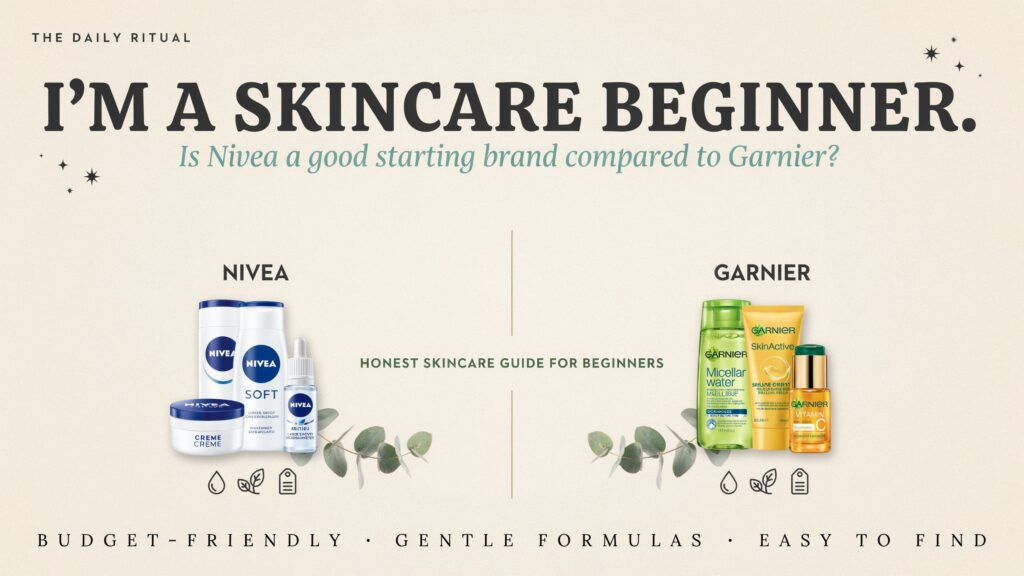
Choose Nivea first if you want a straightforward routine, if your skin is dry or sensitive, or if you want a basic face care line built around cleansing and moisturizing. Nivea’s official range and sensitive skin pages support that kind of beginner routine.
Choose Garnier first if you want more product variety, if you need micellar water and easy makeup removal, or if your main concern is acne, oil control, or brightening. Garnier’s official product categories are broader and more concern specific.
For either brand, the best beginner routine stays small, gentle, and consistent. That is the part dermatologists emphasize most, and it matters more than chasing many products at once.


