

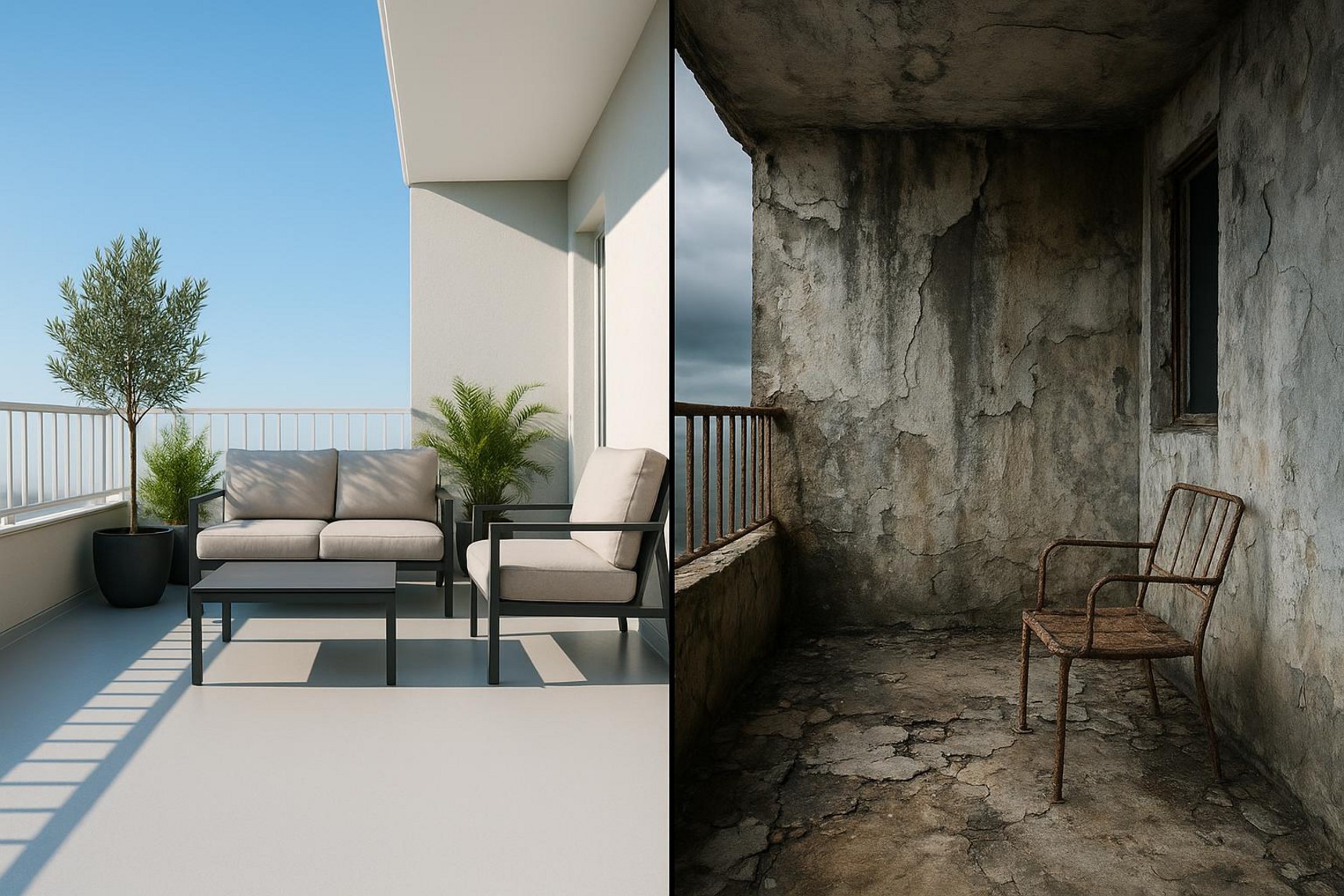

Balconies are a nice add-on to many buildings because they give you outdoor space to sit, relax, and enjoy fresh air. But even though they may look strong, balconies take a beating every day-from rain and sun to temperature changes and constant foot traffic.
So how does professional balcony waterproofing stop structural damage? It works by adding a sealed, long-lasting layer that blocks water from getting into the materials underneath. Moisture is the main cause of balcony decay, expensive repairs, and serious safety risks.
Without the right protection, a balcony can slowly weaken without obvious signs, which can lead to bigger problems for the balcony, the building, and the people inside. Hiring experts for balcony waterproofing Nova Construction Services is a smart way to protect your property, keep people safe, and help the balcony keep its appearance over time.
What Are the Primary Causes of Structural Damage in Balconies?
A balcony usually doesn’t fail all at once. Damage often starts small and gets worse because the balcony is exposed to the weather all year. Weather is one of the biggest causes. Hot and cold temperature swings, heavy rain, strong winds, and UV rays slowly break down balcony surfaces. Over time, this can cause cracks and surface wear. If those issues are ignored, they create easy paths for bigger damage.
Water damage is one of the most harmful results of weather exposure. Rain and moisture can slip through tiny cracks or porous materials and weaken the balcony from the inside. Areas with frequent rain or high humidity have a higher risk. Structural stress also adds to the problem. Balconies carry static loads (like furniture) and moving loads (people walking, normal building movement, and vibrations). This ongoing stress can create small cracks that grow larger. Balconies built with poor support or cheaper materials often wear out faster because they can’t handle daily use as well.
How Does Water Infiltration Lead to Balcony Failure?
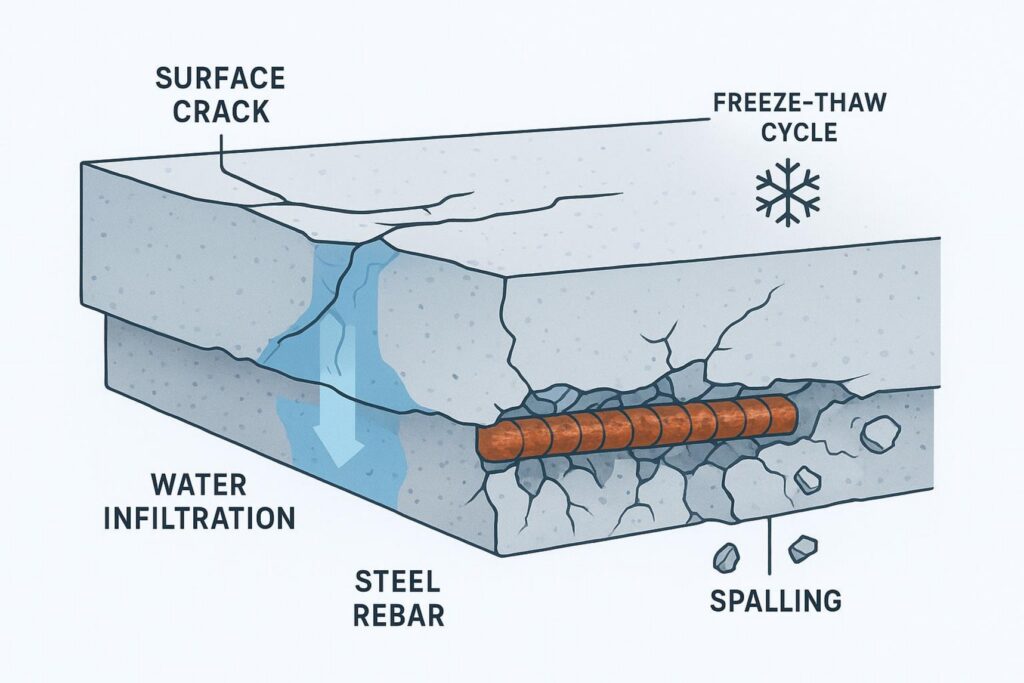
Water infiltration is one of the biggest threats to a balcony because it can cause damage before you even notice it. Concrete is porous, so it can absorb water over time. When water gets into a concrete slab, it can cause spalling. This happens when moisture gets inside, expands, and makes the concrete crack, chip, and separate in layers. That weakens the balcony’s strength.
Many balconies also contain steel reinforcement (rebar). If water reaches the rebar, it starts rusting. Rusted steel expands, pushing hard against the surrounding concrete. This leads to more cracking and faster breakdown, and it lowers how much weight the balcony can safely hold. In colder areas, trapped water can freeze in winter. Ice expands, which puts pressure on the materials around it. This freeze-thaw cycle repeats over and over and makes cracks worse, often leading to costly repairs.
Water entry can also cause mold, mildew, and fungus, which grow easily in damp areas. These can create health concerns and can also damage building materials. If a balcony has wood decking or wood framing, long-term moisture often causes wood rot, making the wood soft and weak. In severe situations, that can lead to full balcony failure.
Risks and Signs of Neglecting Balcony Waterproofing
Skipping balcony waterproofing is like ignoring a small leak-it may not seem urgent, but the damage keeps building. A major issue is that water problems often stay hidden until the damage is already serious. At that point, repairs may be large, or the balcony might even need full replacement.
Hidden Dangers: Early Warning Signs of Water Damage
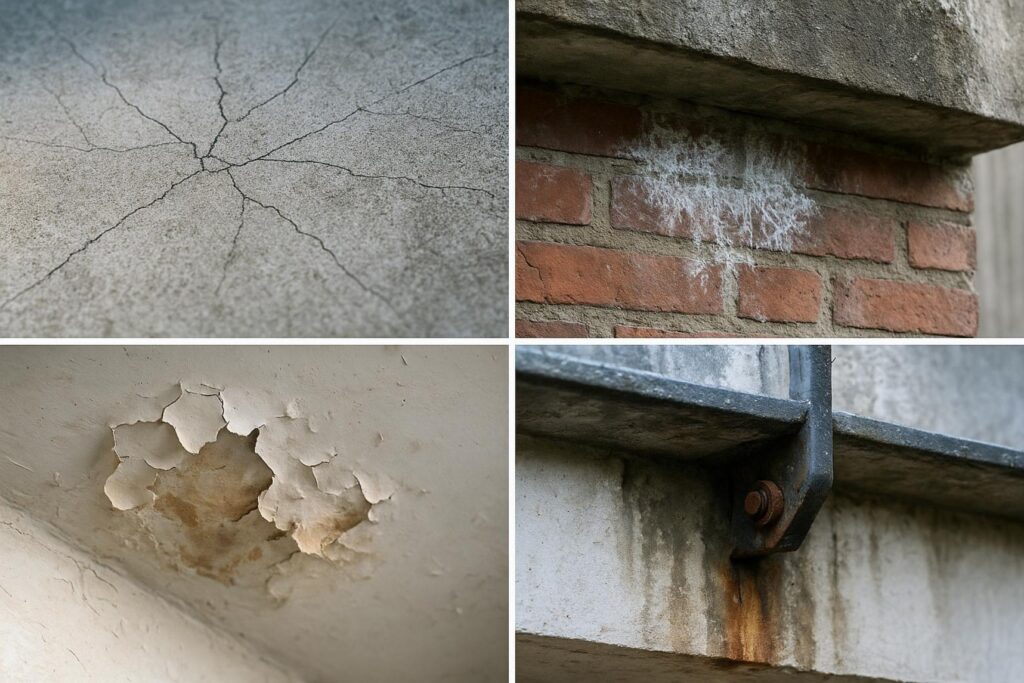
Spotting early signs of damage helps you fix problems before they grow into expensive repairs or safety issues. Watch for thin hairline cracks in concrete or tile. These may look minor, but they often let water in first. Efflorescence (a white powdery residue) or paint that peels, bubbles, or blisters can signal trapped moisture below the surface. On wood balconies, soft spots or rotting boards are a clear sign of serious moisture exposure. Stains on the underside of the balcony, or rust streaks near railings or supports, also point to water getting inside. Pooling water on the surface-often caused by poor drainage-raises the risk of long-term damage. Even small signs should be checked, because they may point to deeper issues getting worse over time.
Common Structural Issues Resulting from Poor Waterproofing
The results of poor waterproofing go far beyond surface looks. A weakened balcony is a serious safety risk. Loose railings, soft spots, or unstable flooring can lead to injuries-or worse. Property owners and managers can also face legal trouble if they ignore safety needs, especially in multi-family buildings where rules like California’s SB 721 and SB 326 require inspections and safety compliance. Not following these rules can lead to lawsuits and major penalties.
From a cost standpoint, repairs after a major failure are usually far more expensive than prevention. Fixing severe water damage often means rebuilding parts of the balcony, repairing structural materials, and refinishing surfaces. Long-term water intrusion can also lead to rebar rust, spalling concrete, and widespread wood rot. Over time, this weakens the whole balcony support system and can lead to a collapse.
Benefits of Professional Balcony Waterproofing
Professional balcony waterproofing does more than keep the surface dry. It’s a practical investment that helps improve safety, increase service life, and protect property value.
Extends Lifespan of Balcony Structures
Professional waterproofing adds a strong, sealed layer that protects the balcony from daily exposure to water and weather. It blocks moisture from entering, which helps prevent new cracks and stops existing cracks from getting worse due to temperature changes. A good waterproofing system also helps protect against UV rays, which can fade and break down surfaces over time. By reducing these types of damage, waterproofing helps the balcony last much longer and can delay major repairs or full rebuilds. When installed correctly, many waterproofing membranes can last for decades, keeping your balcony usable and valuable for years.
Provides Lasting Protection against Leaks and Deterioration
Balcony waterproofing helps protect the structure of your property by stopping water from reaching subfloors and supporting materials. This helps keep the building in good condition and supports property value. It also helps create a healthier space by reducing damp areas where mold and mildew can grow, which may cause allergies or breathing issues.
A sealed waterproofing system that meets today’s building code standards helps the balcony handle rain, sun, UV exposure, and temperature changes more effectively. This helps surfaces stay in better condition and reduces the chance of early repairs or upgrades. Installation usually causes limited disruption, and ongoing maintenance is often simple, which makes it a cost-friendly choice over time.
Waterproofing Methods and Materials for Balconies
Picking the right waterproofing system depends on the balcony. There isn’t one method that fits every situation. You need to choose based on the balcony’s layout, materials, and local weather conditions.
Choosing the Right Waterproofing System for Balcony Type
Several factors affect which waterproofing method makes the most sense, such as:
- How you want the finished surface to look
- What materials are already in place (concrete, plywood, tile, metal)
- Your budget
- Local climate (heavy rain, freeze-thaw weather, strong sun exposure)
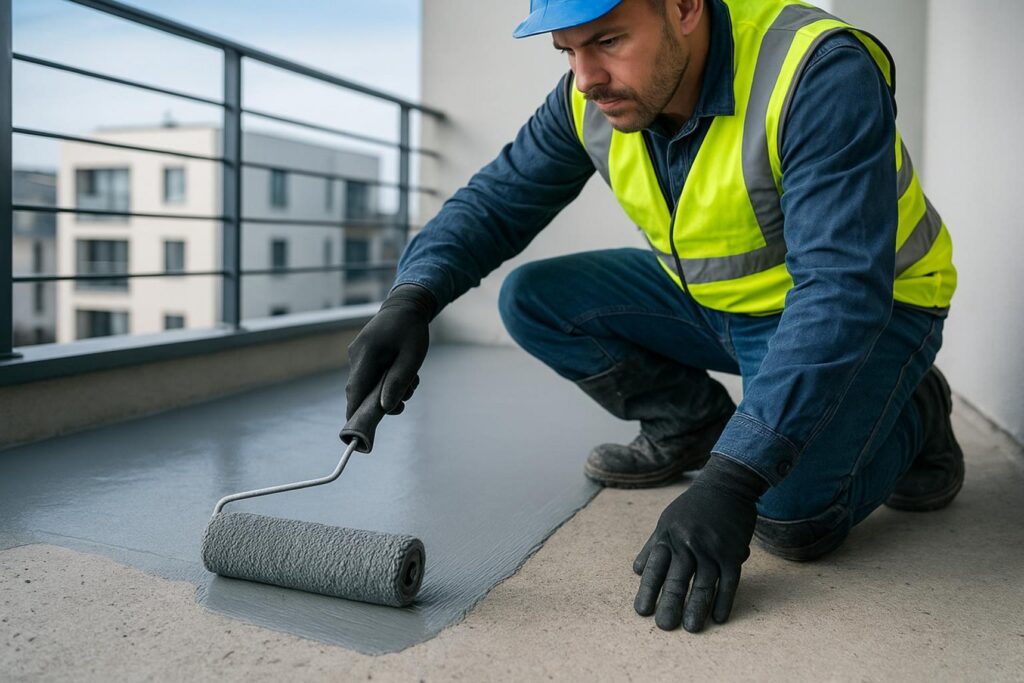
Balconies with detailed shapes, lots of edges, or existing tile often work well with liquid waterproofing membranes. These are commonly made from acrylics, polymer-modified asphalts, or polyurethanes. They are brushed, rolled, or sprayed on, then dry into a flexible, seamless, watertight layer. They work well on uneven surfaces and can handle small amounts of movement, which is helpful for many concrete balconies.
For larger, flat balcony areas and plazas, sheet membranes are a common option. These come in rolls made from PVC, polyethylene, EPDM, or bitumen-based materials. They form a continuous layer that helps resist punctures and tears. They can be used over concrete, wood, metal, or tile, and installation can be fairly fast.
Cementitious coatings mix waterproofing chemicals into a sand-and-cement blend. They are usually easy to apply and may be finished with a texture layer. They can be a good fit for stable concrete or plywood in areas with mild temperature changes, but they don’t flex much.
Polyurethane waterproofing is valued for flexibility, durability, and UV resistance. It can fill small cracks and coat the surface well. It often needs multiple coats and a fully dry base. Used by itself, it can take more time and may not perform as well as multi-part systems in some cases.
There are also full-system options like Westcoat’s ALX and MACoat. ALX is often used for plywood balconies and creates a durable, concrete-like finish through multiple layers. It offers flexibility, UV resistance, slip resistance, and fire-rating compliance. MACoat is made for heavy-use, high-traffic areas and provides similar performance with a low-odor, low-VOC, UV-resistant finish. The right choice usually comes down to balancing the upfront price with long-term upkeep and repair costs.
Professional Installation Process: What to Expect
Even the best waterproofing product won’t work well if it’s installed poorly. Professional installation focuses on doing each step correctly so the system lasts and protects the structure.
Assessment and Surface Preparation
The first step is an in-depth assessment and careful surface prep. This starts with a full inspection to find cracks, stains, soft areas, mold, or water that collects in certain spots. In many cases, building inspectors may be brought in to check strength and stability, especially for multi-family properties that must follow rules like California’s SB 721 and SB 326. The inspection helps identify what repairs are needed before waterproofing begins.
The surface must be solid, free of mold, and sloped the right way so water flows to a drain or scupper. A common guideline is a minimum slope of 2% (about 1/4 inch per foot) so water doesn’t sit on the surface.
Next comes cleaning and prep work, which often includes sweeping and power washing. The surface must dry fully before new materials go on. Old finishes or incompatible coatings may need to be removed to help the new system stick properly. Cracks, damaged sections, and rotted areas are repaired using the right patch materials. The subfloor and any metal lath reinforcement are also checked and repaired as needed. The goal is a clean, strong, smooth base that allows the waterproofing membrane to perform well for as long as possible.
Sealing Joints, Drains, and Penetrations
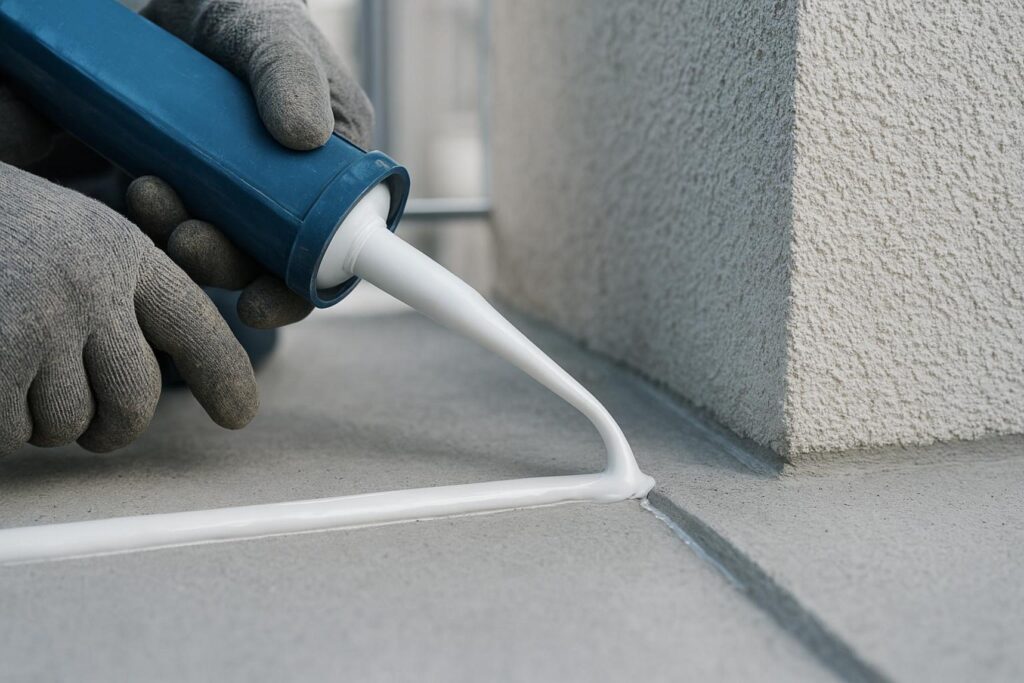
A waterproofing membrane can still fail if key areas are missed. That’s why pros focus on sealing cracks, seams, and joints with the right sealant, such as polyurethane, silicone, or acrylic, depending on the surface and how much movement is expected. Extra care is taken where the balcony connects to walls, around railings, and at any spots where something passes through the surface. These areas are common entry points for water.
Many contractors also use flashing (metal or rubber strips) and reinforcement materials to create tight, watertight connections. Drainage is also a major focus. If the slope is wrong, it must be corrected before waterproofing starts. Drains, scuppers, and gutters may be improved or replaced so water is directed away and doesn’t pool, which helps the system last longer.
Application Techniques for Long-Lasting Results
Once the surface is ready, the waterproofing system is applied using proven methods. For liquid membranes, installers apply the product by brush, roller, or spray to form a seamless protective layer that fills pores and small cracks. For sheet membranes, rolls are placed and sealed to create a continuous layer that resists tears and punctures, often combined with other parts for full protection.
Systems like Westcoat’s ALX involve multiple layers such as a sheet membrane, metal lath, base coat, slurry coat, texture coat, and topcoat, often using polymer-modified cement materials. Approved installers may also add items like polyurethane sealant and seam tape to improve sealing, then finish with an acrylic topcoat for a clean final look. Throughout the process, installers follow manufacturer instructions closely so the system works as intended and lasts.
Quality Assurance and Post-Installation Inspections
The job doesn’t stop after the final coat goes on. Quality checks happen during the work to confirm correct material use and good workmanship. After installation, follow-up inspections help confirm proper curing, adhesion, and consistent coverage. Another key part is meeting local building codes and safety requirements — experienced contractors like Nova Construction Services build these checks into every stage of the project rather than treating them as an afterthought. This step helps reduce future repair needs and supports long-term balcony durability.
Maintaining a Waterproofed Balcony for Structural Safety
Professional waterproofing gives strong protection, but maintenance still matters if you want it to keep working for the long run. Think of it like routine care for a car: small checkups help avoid big breakdowns.
Routine Inspections: Identifying Issues Early
Even with waterproofing, balconies still deal with sun, rain, and changing temperatures. Regular inspections help catch problems early. Building owners and property managers should do a visual check at least every six months, and after severe weather or long periods of intense sun. During inspections, look for new small cracks, peeling or blistering in the membrane, discoloration, or areas where water collects.
It also helps to keep the surface clean by sweeping away dirt and debris and keeping drains, scuppers, and gutters clear. Fixing small issues right away-like patching cracks, filling holes, or replacing worn sealant-can stop damage from spreading. Depending on the system used, a new texture coat or resealing may be needed every 5-10 years. This extra layer helps protect the main membrane from UV exposure and everyday wear.
What to Do If Problems Arise after Waterproofing?
Problems can still happen sometimes. If you find small surface cracks or sealant that has worn out, quick small repairs may be enough. But if you see larger issues-such as widespread peeling, ongoing leaks, major cracking, or signs the balcony feels unstable-you should contact a professional right away. Large repairs without the right tools and experience can lead to more damage and higher costs.
A professional can find the real cause and suggest the best fix, whether that means a focused repair, added structural support, or in severe cases, replacing damaged sections. Hiring licensed, experienced contractors helps make sure repairs are done safely and meet building code requirements, protecting both residents and your property.
Conclusion
A balcony is more than a design feature. It adds usable space and can make a property more enjoyable. But because it is exposed to the weather every day, it is also one of the easiest parts of a building to damage. Professional balcony waterproofing is more than a basic upkeep job-it is a key investment in safety, structure, and the long-term condition of your property. By stopping water from getting inside, you lower the risk of expensive structural repairs, rebar corrosion, mold growth, and dangerous failures. Waterproofing also helps protect property value, supports code compliance, and gives peace of mind.
Working with an experienced provider helps you get the right solution for your specific balcony, starting with inspection and surface prep, then proper installation and clear maintenance advice. With this approach, your balcony can hold up well through years of weather and use, staying safe, attractive, and functional for a long time.