

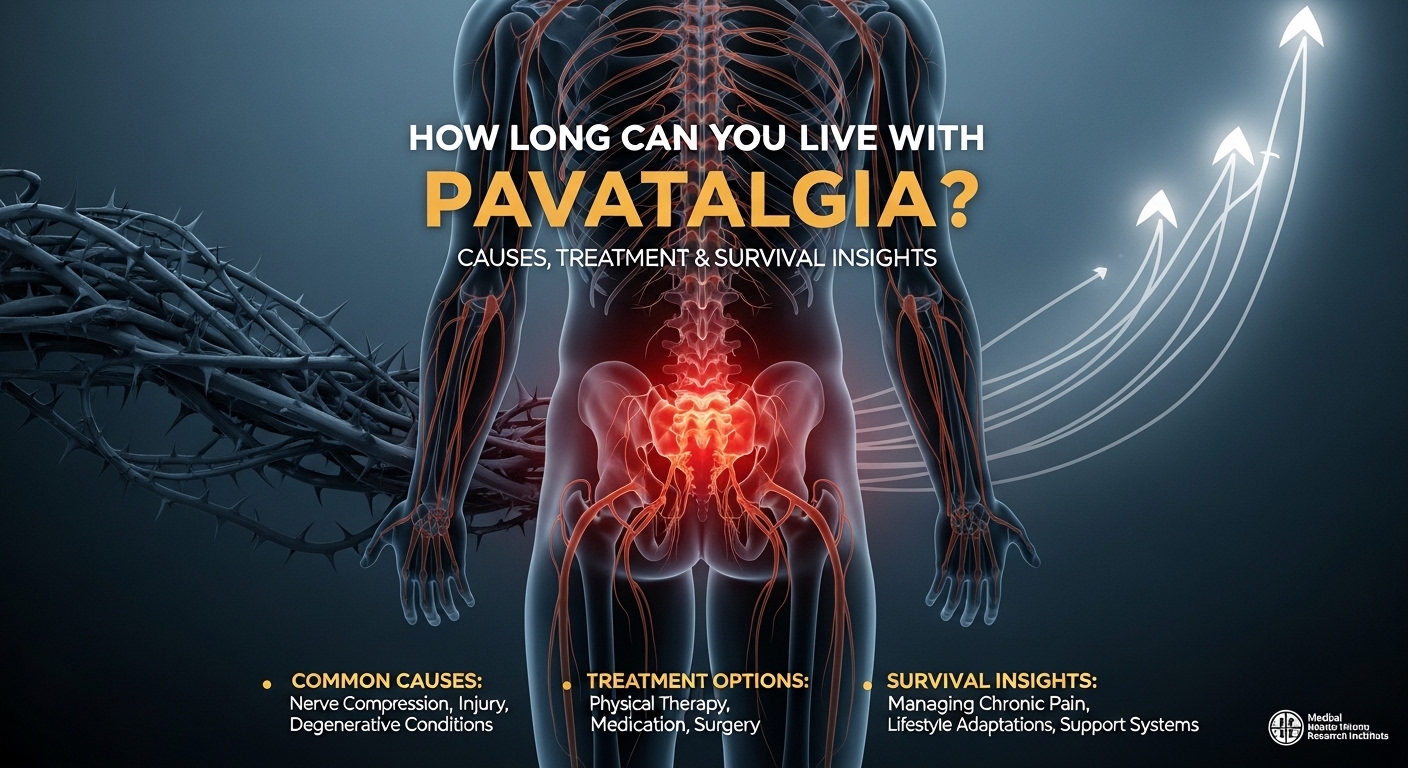

You can live a normal lifespan with pavatalgia in most cases because it is not usually life threatening. The condition mainly affects comfort and daily function, not survival, unless linked to serious underlying disease.
What Is Pavatalgia
Pavatalgia is a term used to describe long lasting pain linked to nerves, muscles, or joints. It is not a single disease. It is a pain condition that may appear in areas like the pelvis, foot, or other body parts depending on the cause.
Doctors often use this term when pain continues for months and tests do not show a clear reason.
Key facts
- It is a chronic pain condition
- It can last for months or years
- It may come and go or stay constant
- It is often linked to nerve or muscle problems
Is Pavatalgia Life Threatening
Pavatalgia itself is not considered a fatal condition. It does not directly reduce life expectancy in most cases.
However, the impact depends on the underlying cause.
Survival overview
| Condition Type | Effect on Life |
|---|---|
| Simple muscle or nerve pain | No effect on lifespan |
| Chronic pain without disease | No direct risk |
| Pain linked to diabetes or vascular disease | May affect lifespan |
| Untreated severe conditions | Possible complications |
Pain alone does not cause death. The real concern is the health issue behind the pain.
How Long Can You Live With Pavatalgia
There is no fixed timeline. Many people live with pavatalgia for years or even lifelong while maintaining normal life expectancy.
Duration patterns
- Short term cases improve within weeks or months
- Moderate cases last several months
- Chronic cases continue for years
The outcome depends on early treatment and proper care.
You can explore a wider range of health and lifestyle insights in our Your Topics | Multiple Stories section for more useful information.
Main Causes of Pavatalgia
Pavatalgia can develop from multiple causes. It is usually not caused by one single problem.
Common causes
1. Nerve irritation
Compressed or damaged nerves send constant pain signals.
2. Muscle tension
Tight or weak muscles create long lasting discomfort.
3. Inflammation
Swelling in tissues increases pain sensitivity.
4. Injury or trauma
Past injuries can lead to chronic pain patterns.
5. Repetitive strain
Daily stress on the body builds up over time.
6. Chronic conditions
Examples include arthritis, diabetes, or nerve disorders.
Risk Factors That Affect Severity
Some factors make pavatalgia worse or longer lasting.
Key risk factors
- Poor posture
- Long sitting hours
- Lack of physical activity
- Stress and anxiety
- Previous injuries
- Weak muscles
These factors do not reduce lifespan but increase discomfort.
Symptoms You Should Know
Symptoms vary between individuals. They may change over time.
Common symptoms
- Constant or recurring pain
- Burning or sharp sensation
- Pain during movement
- Stiffness or tightness
- Reduced mobility
- Fatigue
Pain may increase with activity or long sitting.
When Pavatalgia Becomes Serious
In rare cases, pavatalgia may signal a serious issue.
Warning signs
- Sudden weakness
- Loss of sensation
- Severe and worsening pain
- Loss of bladder or bowel control
- Rapid spread of pain
These symptoms require urgent medical care.
How Pavatalgia Affects Daily Life
Pavatalgia mainly affects quality of life, not survival.
Common impacts
| Area | Effect |
|---|---|
| Physical activity | Limited movement |
| Work | Reduced productivity |
| Sleep | Disturbed sleep |
| Mental health | Stress and frustration |
Long term pain can reduce comfort but can be managed.
Diagnosis Process
There is no single test for pavatalgia. Doctors diagnose it by ruling out other conditions.
Steps in diagnosis
- Medical history
- Physical examination
- Imaging tests like MRI
- Nerve testing if needed
- Exclusion of serious diseases
Accurate diagnosis helps guide treatment.
Treatment Options
Treatment focuses on reducing pain and improving function.
Main treatments
Physical therapy
Improves strength and reduces tension.
Medications
Includes pain relievers and nerve medications.
Lifestyle changes
Posture correction and regular movement help reduce symptoms.
Psychological support
Stress control helps reduce pain intensity.
Advanced treatments
Nerve blocks or surgery in severe cases.
Treatment Comparison Table
| Treatment | Purpose | Effectiveness |
|---|---|---|
| Physical therapy | Muscle and nerve relief | High |
| Medication | Pain control | Moderate |
| Lifestyle changes | Long term management | High |
| Surgery | Severe cases only | Variable |
Can Pavatalgia Be Cured
In many cases, symptoms improve over time with proper care. Some people recover fully, while others manage it long term.
Recovery depends on
- Cause of pain
- Early treatment
- Consistency in care
- Overall health
Ignoring symptoms can make the condition worse.
How to Improve Life With Pavatalgia
Daily management is important for long term comfort.
Practical steps
- Stay active with light exercise
- Maintain correct posture
- Avoid long sitting periods
- Manage stress levels
- Follow medical advice
Small changes can reduce pain significantly.
If you plan to travel while managing chronic pain, check our Luxury Vacation Rental Guidebook Criteria to choose comfortable and health-friendly stays.
Long Term Outlook
Pavatalgia does not usually shorten life. Most people live a full life with proper treatment and management.
The focus should be on controlling pain, improving mobility, and treating any underlying condition.