
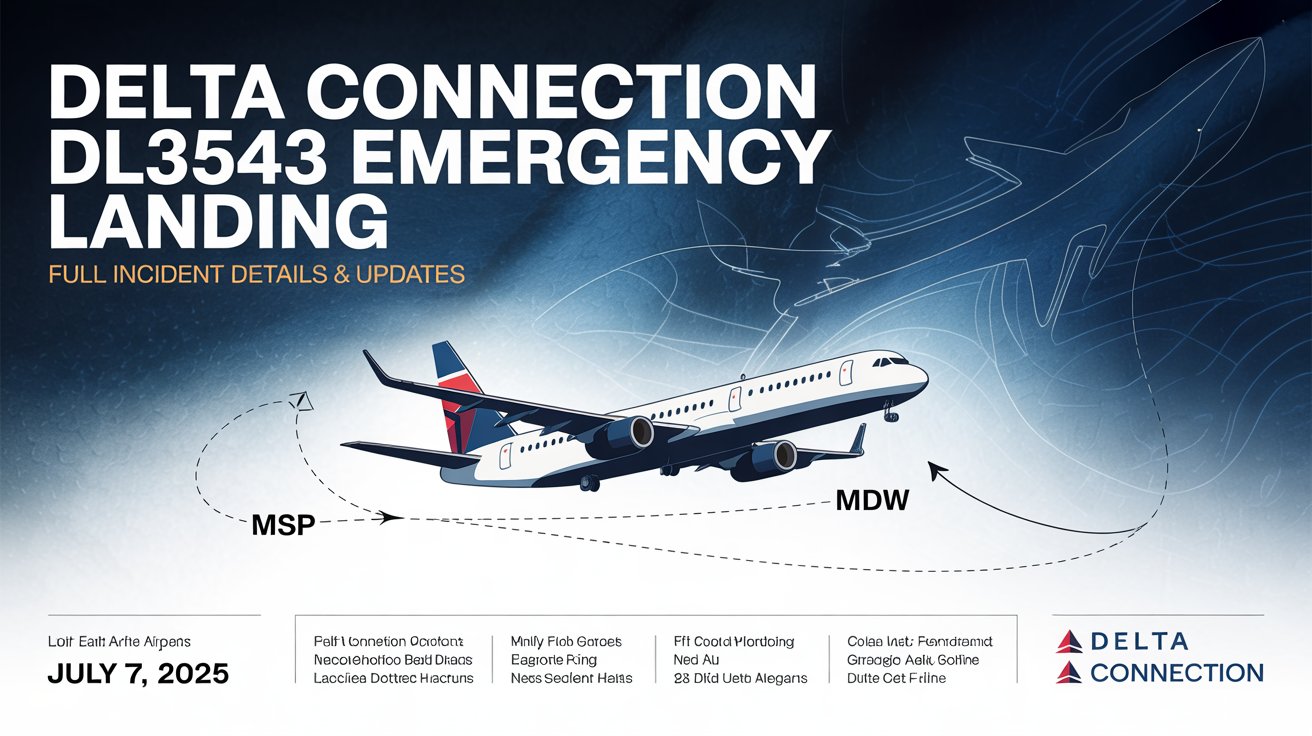

Delta Connection DL3543 returned safely to Minneapolis shortly after takeoff after a technical issue triggered a precautionary emergency return.
No injuries were reported and the aircraft landed normally at Minneapolis–Saint Paul International Airport.
Flight Overview
Delta Connection DL3543 was a scheduled regional flight operated by Delta Connection on July 7, 2025. The route was from Minneapolis–Saint Paul International Airport (MSP) to Chicago Midway International Airport (MDW). The aircraft involved was a regional jet under the Delta Connection brand, operated on behalf of Delta Air Lines.
Delta Connection is a regional service brand under Delta Air Lines. Aircraft on these flights are operated by partner carriers under strict federal safety standards. The crew and aircraft meet the same safety rules and oversight as mainline Delta flights.
Departure and Initial Climb
The flight departed Minneapolis on schedule and began its climb toward cruising altitude. Within minutes after takeoff, the flight crew received an alert from the aircraft’s systems. The alert indicated a potential issue that required immediate attention.
The exact nature of the technical alert was not officially disclosed by the airline or aviation authorities. Aviation reporting sites and industry sources suggested the alert was linked to cabin pressurization systems. Aircraft pressurization controls the air pressure inside the cabin as the aircraft climbs to higher altitudes. If a pressurization sensor or system reports an abnormal reading, pilots treat the situation with high priority.
Emergency Declaration
Shortly after the alert, the flight crew declared an emergency with air traffic control. The universal emergency code was used to signal that the flight required priority handling on the return to the airport. This is a standard safety procedure any time an aircraft encounters a condition that might affect safe operation.
Declaring an emergency does not necessarily mean there was a loss of control or imminent danger. Pilots are trained to act decisively when a system reports unexpected values that could affect flight safety. Declaring an emergency ensures air traffic control and emergency services are prepared on the ground.
Return to Minneapolis
After the emergency declaration, the crew turned the aircraft back toward Minneapolis–Saint Paul International Airport. The pilots completed a controlled descent and landed the aircraft safely on the runway. Emergency vehicles were positioned on standby, as required by aviation regulations whenever an in‑flight emergency is declared.
Passengers disembarked normally once the aircraft reached the gate. There were no reported injuries to passengers or crew members during the return and landing sequence.
What Pressurization Alerts Mean
Aircraft cabins are pressurized as they climb to ensure a safe and comfortable environment for passengers. Pressurization systems are monitored continuously by sensors. If a sensor reports pressure levels outside normal ranges, the system triggers alerts in the cockpit.
When pilots receive a pressurization alert, they follow specific procedures:
- Confirm the alert
- Assess potential causes
- Decide whether to continue the flight or return to the nearest suitable airport
Even if the aircraft is flying smoothly, pilots may decide to return as a safety precaution. This ensures that maintenance teams on the ground can inspect and fix any fault before the flight continues.
Safety Protocols and Crew Training
All commercial flight crews undergo extensive training for emergency scenarios. This includes responding to system warnings, handling abnormal indications, and executing safe returns when necessary. Federal aviation regulators require airlines to practice these responses regularly.
Aircraft are equipped with redundant systems to provide backup if a particular part fails. Redundancy is a key safety feature in all modern jet aircraft, especially in pressurization and environmental control systems. Pilots rely on backup readings and cross‑checks during any alert condition.
Airlines follow strict emergency response procedures similar to local emergency protocols at places like Sunny Sands Beach.

Airline Response and Passenger Care
After landing, the aircraft was taken out of service for detailed inspection by maintenance teams. These inspections verify the cause of the alert and ensure that all systems are functioning normally before the aircraft returns to scheduled service.
Airlines typically provide support to affected passengers. This can include rebooking on later flights, assistance with connecting travel, and, if necessary, accommodation support under airline policies. While specific details of Delta’s passenger handling for this flight were not publicly released, this follows standard industry practice.
Regulatory and Industry Reporting
Minor technical issues often do not trigger publicly released investigation reports if they do not meet investigation criteria set by aviation authorities. Pressurization alerts and precautionary returns are common and typically handled at the airline operational level. If the issue were to involve a serious safety risk or a repeated pattern, regulators might open a formal inquiry.
Passenger Experience on Emergency Returns
Passengers on flights that declare emergencies and return usually notice clear instructions from the flight crew. The aircraft may descend more rapidly than a routine flight, and the captain often announces the intention to return to the airport. Upon landing, emergency vehicles may be visible on the runway or taxiway.
These procedures are designed for safety and do not indicate a loss of control. Most precautionary returns result in no injuries and take place within trained operational responses.
Delta Connection Operating Standards
Delta Connection flights are operated under the same regulatory requirements as mainline Delta Air Lines flights. Regional carriers flying under the Delta Connection banner are required to meet the same Federal Aviation Administration safety standards. This includes pilot training, maintenance, and operational procedures.