


Business vertical classification categories define how industries are grouped based on the markets they serve and the type of products or services they offer. They shape modern industries by creating clear structure, better decision-making, and focused market strategies.
What Business Vertical Classification Categories Mean
Business vertical classification categories group companies by industry or market domain. Each vertical represents a specific area where businesses operate and serve customers.
A vertical focuses on the environment or industry a company targets. For example, healthcare, finance, and retail are all separate verticals.
This system differs from general business functions. Marketing or HR works across industries, but a vertical focuses on a specific industry with its own rules and demands.
If you want a simplified breakdown of complex business structures, read our Business Guide Disbusinessfied to understand how modern companies operate across different vertical categories.
Difference Between Sector, Industry, and Vertical
Understanding classification levels helps explain how modern industries are structured.
| Level | Definition | Example |
|---|---|---|
| Sector | Broad economic category | Technology |
| Industry | Specific group within a sector | Software development |
| Vertical | Market-focused domain | Healthcare software |
| Niche | Very narrow specialization | Dental clinic software |
Sectors provide a high-level view, while verticals focus on specific customer environments.
Core Business Vertical Classification Categories
Most global economies use standard vertical categories to organize industries.
Technology and Information Services
This vertical includes software, cloud computing, and cybersecurity companies. It supports digital transformation across industries.
Healthcare and Life Sciences
This includes hospitals, pharmaceuticals, and medical devices. It operates under strict regulations and focuses on patient care.
Financial Services
This vertical covers banking, insurance, and investment services. It manages money, risk, and financial systems.
Manufacturing and Industrial
This includes factories, production units, and supply chain operations. It forms the base of physical product creation.
Retail and E-commerce
This vertical focuses on selling goods directly to consumers through physical stores or online platforms.
Education and Training
This includes schools, universities, and digital learning platforms. It supports skill development and knowledge transfer.
Energy and Utilities
This vertical includes power generation, oil, gas, and renewable energy systems.
These categories help standardize how industries are analyzed and compared.
How Business Vertical Classification Works in Practice
Organizations assign a vertical based on what a company does and who it serves.
Key factors include:
- Products and services offered
- Target customers
- Business model
- Market behavior
Companies also analyze website content, transaction patterns, and customer base to determine the correct classification.
This process ensures consistency across operations, reporting, and compliance systems.
Role in Market Segmentation and Targeting
Vertical classification allows businesses to divide markets clearly.
Instead of targeting everyone, companies focus on a specific industry. This improves:
- Customer understanding
- Product relevance
- Marketing accuracy
For example, a software company may build solutions only for hospitals. This creates a healthcare vertical focus rather than a general software approach.
This level of targeting increases efficiency and reduces wasted resources.
Impact on Business Strategy
Business vertical classification directly shapes strategic planning.
Companies use verticals to:
- Define target markets
- Build specialized products
- Allocate resources effectively
A clear vertical focus improves long-term growth because decisions align with a specific industry.
It also helps businesses avoid confusion and maintain consistent direction.
Influence on Sales and Marketing Operations
Sales teams rely on vertical categories to approach customers with relevant solutions.
Marketing teams use them to create industry-specific campaigns.
Without clear classification, messaging becomes generic and less effective.
Vertical-based marketing improves:
- Lead quality
- Conversion rates
- Customer retention
It ensures that communication matches the needs of each industry.
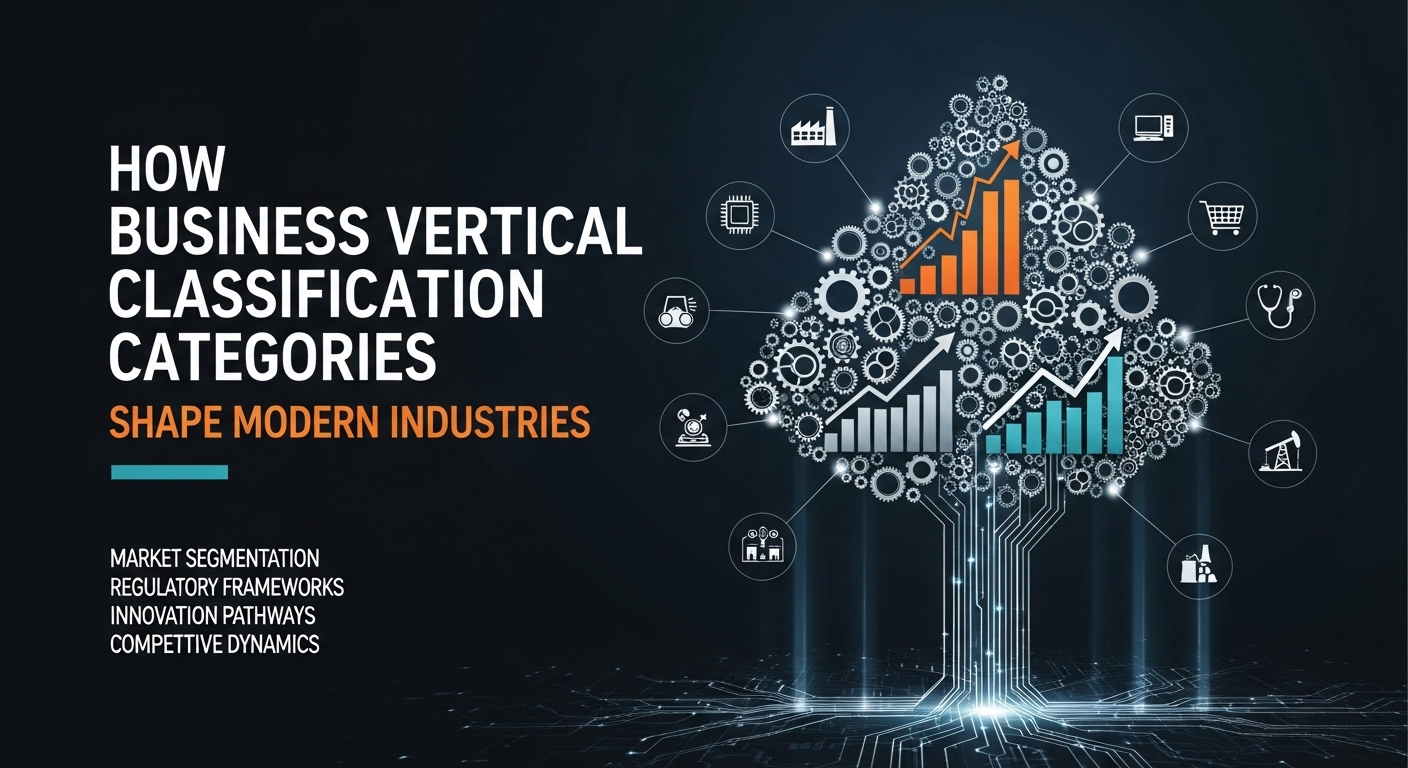
Role in Data Analysis and Reporting
Vertical classification makes data easier to organize and analyze.
Companies track performance by industry instead of mixing all data together.
Benefits include:
- Clear performance comparison
- Better forecasting
- Accurate reporting
For example, a company can compare revenue from healthcare clients versus retail clients to identify growth areas.
Importance in Risk and Compliance Management
Different industries carry different levels of risk.
Vertical classification helps organizations identify and manage these risks properly.
| Vertical Type | Risk Level | Example |
|---|---|---|
| Low Risk | Low compliance needs | Consulting |
| Medium Risk | Moderate regulation | E-commerce |
| High Risk | Strict compliance | Healthcare, finance |
Businesses in sensitive verticals must follow stricter rules and regulations.
This classification helps companies stay compliant and avoid legal issues.
How It Supports Product Development
Vertical classification guides product design and innovation.
Companies build products based on industry needs rather than general demand.
For example:
- Healthcare software must meet privacy standards
- Financial tools must handle secure transactions
This leads to better product-market fit and higher customer satisfaction.
Role in Investment and Financial Decisions
Investors use vertical classification to evaluate opportunities.
They analyze industries based on:
- Growth potential
- Risk level
- Market demand
This helps in making informed investment decisions.
It also allows comparison between industries, such as technology versus manufacturing.
For a deeper understanding of expansion trends across industries, explore our detailed guide on Growth Enterprises Market, which explains how fast-growing companies scale within specific business verticals.
Impact on Global Industry Trends
Vertical classification helps track global trends across industries.
Analysts use it to study:
- Market growth
- Emerging technologies
- Industry shifts
For example, the rise of fintech shows how financial services and technology are merging into new verticals.
This system helps identify future opportunities and risks.
How It Improves Organizational Structure
Many companies organize teams based on verticals.
Each team focuses on a specific industry and handles:
- Sales
- Customer support
- Product development
This structure increases accountability and expertise within each vertical.
It also improves coordination and performance.
Common Mistakes in Vertical Classification
Businesses often make errors when defining their verticals.
Common mistakes include:
- Mixing industries with customer segments
- Using inconsistent labels
- Ignoring business model differences
These issues create confusion and reduce efficiency.
A clear and consistent classification system prevents these problems.
How Vertical Classification Shapes Competition
Companies compete within the same vertical.
This creates industry-specific competition where businesses:
- Offer similar products
- Target the same customers
- Follow similar regulations
Understanding vertical boundaries helps companies position themselves effectively in the market.
Future of Business Vertical Classification Categories
Modern industries continue to evolve with technology and innovation.
New verticals are emerging, such as:
- Artificial intelligence solutions
- Digital health platforms
- Green energy systems
These changes show that classification systems must adapt over time.
Businesses that understand and use vertical classification effectively remain competitive and relevant.