

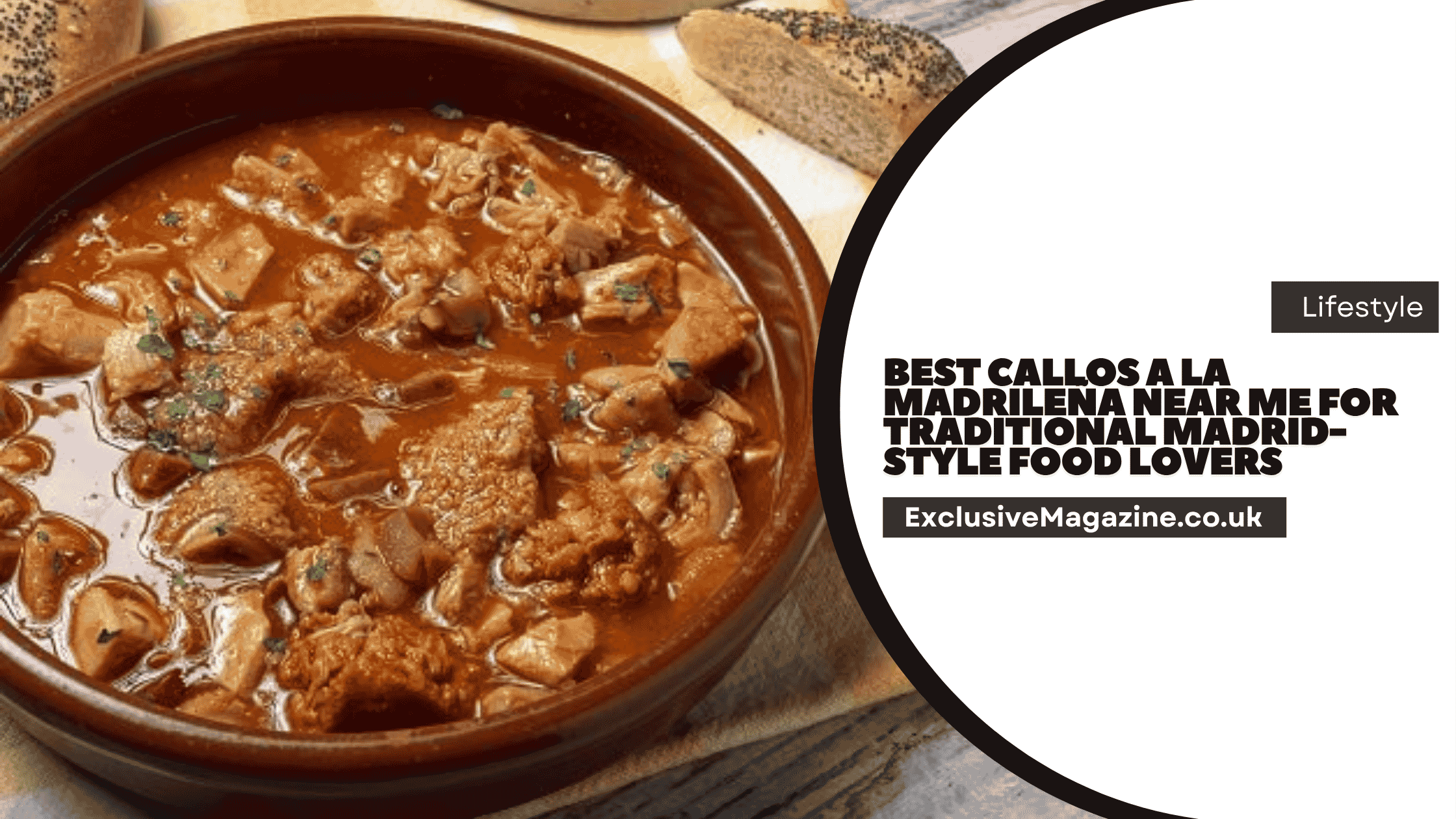

The best callos a la madrileña near you are the places that cook it slowly, use proper tripe and pork cuts, and serve it after the flavors have settled. Traditional taverns and historic Madrid restaurants are the most reliable places to find an authentic plate.
What Callos a la Madrileña Is
Callos a la madrileña is a traditional Madrid tripe stew and one of the best known dishes in Madrid’s local food culture. Madrid tourism lists it among the city’s classic dishes, and Spain Food Nation presents it as a traditional recipe from Madrid style cooking.
The dish is built around slow cooking. That matters because callos is meant to become soft, rich, and deeply flavored, not light or rushed. Official and chef-led recipes both describe long simmering as part of the method, and the finished stew is often better after it rests overnight.
What a Proper Recipe Contains
A traditional recipe usually includes tripe, cow snout, veal trotter, pork fat, ham bone, black sausage, chorizo, onion, garlic, bay leaf, parsley, flour, and paprika. Spain Food Nation gives this ingredient list as a classic Madrid-style version, while chef Omar Allibhoy’s recipe also uses tripe, trotters, panceta, jamón, morcilla, chorizo, spices, and chickpeas.
This ingredient list explains why callos has such a strong taste. The dish depends on gelatin, cured meat, and slow heat, so the best version should feel full, dense, and balanced. That texture is part of the identity of the dish, not a mistake.
What To Look for in a Good Restaurant
A strong place for callos a la madrileña is usually a traditional tavern, a historic restaurant, or a restaurant that focuses on Madrid cooking. Madrid tourism says the best place to try it is in a traditional tavern or historic restaurant where local recipes are preserved. The city also describes callos as one of the pillars of traditional local cuisine.
When you search near you, look for menu words that point to a real Madrid-style method. Good signs are “traditional recipe,” “slow-cooked,” “Madrid style,” “homemade,” or a list of ingredients that includes tripe, morcilla, chorizo, ham, or trotters. Those details matter because they match the classic recipe rather than a simplified version.
A good kitchen should also treat the dish as a cooked specialty, not a fast daily item. The recipe needs time, cleaning, simmering, and a final rest. If a place can explain how it prepares the stew, that is a strong sign of care and consistency.
How To Read the Menu
The menu should give you clues before you order. A proper callos a la madrileña listing should mention tripe clearly and should usually mention the supporting meats too. If the description is too short or vague, it may be a simplified stew rather than a true Madrid-style plate. That is an inference based on the traditional recipe structure used in official sources.
It also helps when the menu says the dish is cooked in advance or left to rest. Spain Food Nation states that the stew is at its best if left until the next day, and Omar Allibhoy says the flavors continue to develop after cooking. That is one of the clearest signs that the kitchen understands the dish properly.
What the Best Plate Should Look Like
A proper plate of callos should not look watery or thin. Because the stew is built on tripe, trotters, and long simmering, the sauce should feel thick and cohesive. That texture is a direct result of the slow-cooked gelatin in the dish. This is an inference from the recipe and the description of its gelatinous character.
The flavor should be rich but not messy. The paprika, chorizo, morcilla, onion, garlic, and ham should work together. None of them should overpower the rest. A good version usually tastes layered, with the meat, spice, and broth all present in the same bite.
Simple Quality Checks Before You Order
| Check | What good looks like | Why it matters |
|---|---|---|
| Recipe details | Tripe, morcilla, chorizo, ham, and trotters are named clearly | It shows the dish follows the classic Madrid pattern |
| Cooking method | Slow simmering or advance cooking is mentioned | Callos needs time to soften and build flavor |
| Texture | Thick, rich, and cohesive sauce | The dish depends on gelatin and long cooking |
| Restaurant type | Traditional tavern or historic restaurant | Madrid tourism points to these places for the most authentic version |
What To Order With It
A structured red wine is a common pairing for callos a la madrileña. Spain Food Nation says the dish needs a well structured red with freshness and firm tannins, and it gives Merlot from DO Méntrida as one example. That makes sense because the stew is heavy, rich, and intense.
Bread is also useful because the sauce is thick and full of flavor. In a traditional setting, the dish is usually treated as a serious main course rather than a light starter. Because of that, it works best when you keep the rest of the meal simple. This is a practical reading of the dish’s recipe and structure.
Many traditional Spanish seafood dishes are also worth trying, especially dishes featured in our guide to Best Pulpo a la Gallega Near Me for authentic Galician-style octopus restaurants.
How To Search Near You Without Guessing
Search with precise food terms instead of broad ones. Use phrases like “callos a la madrileña traditional restaurant,” “Madrid style tripe stew,” “historic Spanish tavern,” or “Madrid cuisine near me.” These terms fit the dish’s real identity and help you avoid places that only use the name for a generic stew. The dish is strongly tied to Madrid’s traditional food culture, so the right search terms matter.
It also helps to check whether the place serves other Madrid classics. Restaurants that focus on traditional Madrid food are more likely to treat callos with care. Madrid tourism places callos alongside other classic dishes such as cocido madrileño, which is another sign that it belongs in a kitchen that understands local cooking.
If you enjoy regional Spanish vegetable dishes, you can also explore our Best Mallorcan Tumbet Near Me guide to discover authentic Mallorca-style food spots.
Signs That a Place Takes the Dish Seriously
A serious restaurant will often give a clear recipe description, mention slow cooking, and use the traditional meats without hiding them. It may also note that the dish improves after resting, which matches the classic method. These are not small details. They are central to how callos is made and served in Spain.
The best results usually come from kitchens that respect the old method. That means clean tripe, careful simmering, a rich sauce, and balanced seasoning. Madrid’s official tourism material and Spain Food Nation both frame callos as a traditional dish that belongs in the city’s culinary identity, so authenticity should be the first filter when you choose a place near you.