


Arkleston Road in Renfrew has faced closures and traffic disruption after an emergency fault and a bridge collision near the M8 motorway. Repair work, safety inspections, and temporary traffic control measures have caused delays and diversions for drivers in the area.
Arkleston Road Renfrew Emergency Fault Update
Arkleston Road is an important local route in Renfrewshire that connects residential areas with the M8 motorway and nearby towns such as Paisley and Renfrew. When an emergency fault occurs on this road, the impact quickly spreads across the local transport network.
Several incidents have affected the route, including infrastructure faults, severe weather damage, and a bridge strike involving a heavy goods vehicle. Each of these issues required urgent inspection and repair work to keep drivers safe.
Authorities such as local councils, police, and infrastructure engineers usually coordinate the response. The process includes closing the affected area, checking structural safety, repairing damaged utilities, and managing traffic until the road can safely reopen.
Emergency faults often lead to temporary closures or lane restrictions. Drivers using Arkleston Road may experience delays, detours, or controlled traffic flow during repair operations.
What Caused the Arkleston Road Emergency Fault
Emergency faults can occur for several reasons. On Arkleston Road, multiple infrastructure problems contributed to the disruption.
One major incident involved a heavy lorry striking the bridge that crosses the M8 motorway. The collision happened around 2.50 pm on 4 June 2025 when a vehicle carrying a heavy load hit the bridge structure.
The crash caused visible structural damage and forced authorities to close the road immediately for safety inspections. Engineers needed time to examine the bridge to ensure it remained safe for vehicles traveling above the motorway.
Another disruption involved underground electrical infrastructure. Engineers discovered a damaged high voltage cable beneath the road that required urgent replacement. Repairing this type of utility fault often requires digging up sections of the road and installing new equipment.
Flooding also contributed to road problems earlier in the year. Heavy rainfall caused water to accumulate along parts of Arkleston Road near Mossland Road and Arkleston Cemetery. The flooding damaged the road surface and required temporary closure while repairs were completed.
These separate incidents created a series of disruptions rather than a single short term event.
Timeline of Key Incidents and Repairs
The emergency fault situation developed over time. Several events affected traffic and road access in different stages.
| Date | Incident | Impact |
|---|---|---|
| February 2025 | Flood damage near Mossland Road | Temporary closure and repair work |
| Early 2025 | Underground cable fault | Road excavation and utility repairs |
| 4 June 2025 | Lorry struck Arkleston Road bridge | Immediate closure for safety checks |
| After June 2025 | Structural inspections and traffic management | Lane restrictions and delays |
This timeline shows how infrastructure problems can overlap and extend disruption for months.
Bridge Strike Damage and Safety Inspections
Bridge strikes are a common cause of road closures in the United Kingdom. They usually happen when tall vehicles hit a bridge that has a lower clearance than the vehicle height.
In the case of Arkleston Road, the bridge over the M8 motorway suffered damage after the heavy goods vehicle collided with it. Concrete debris fell onto the motorway and traffic below had to be managed quickly to prevent accidents.
Authorities closed the road above the motorway while engineers inspected the structure. Safety inspections involve checking several key areas.
| Inspection Area | Purpose |
|---|---|
| Bridge deck | Check for cracks or structural weakness |
| Support beams | Ensure load bearing capacity remains safe |
| Surface materials | Identify loose concrete or debris |
| Protective barriers | Confirm safety barriers remain intact |
Only after engineers confirm that the structure is stable can traffic return safely.
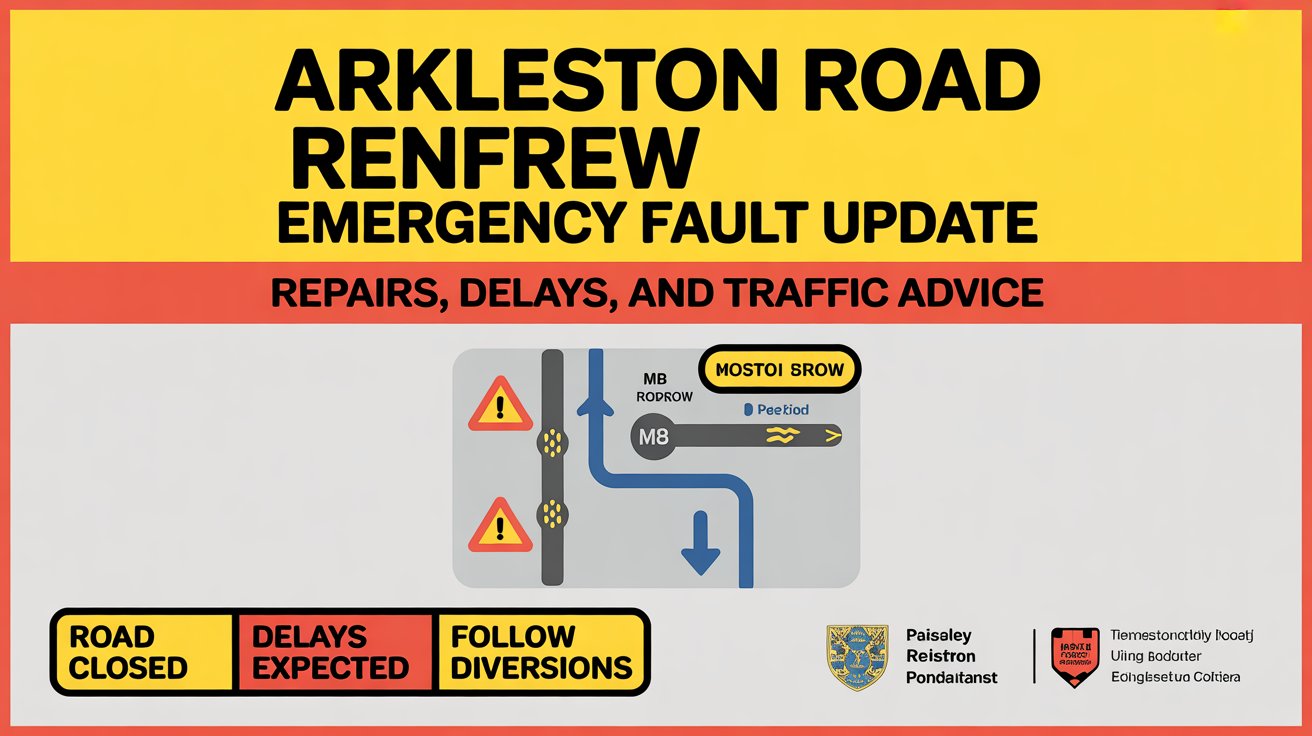
Emergency Utility Repairs Under the Road
Another cause of disruption was damage to underground power infrastructure.
Electrical cables often run below major roads to supply nearby residential areas and businesses. If a cable fails or becomes damaged, engineers must dig trenches to access the equipment.
On Arkleston Road, repair teams replaced approximately 300 meters of damaged high voltage cable. The work required heavy machinery, temporary road closures, and strict safety procedures.
Working with high voltage systems involves several stages.
| Repair Stage | Description |
|---|---|
| Fault detection | Engineers locate the damaged cable |
| Excavation | Road surface opened to reach underground lines |
| Cable replacement | Damaged sections removed and replaced |
| Testing | Electrical safety checks performed |
| Road reinstatement | Road surface rebuilt and reopened |
These repairs are time consuming because safety is the highest priority.
Traffic Delays and Congestion in the Area
Arkleston Road sits near a busy motorway junction close to Glasgow Airport. Even a short closure can create heavy congestion on nearby routes.
Drivers reported long queues during peak travel periods when traffic signals controlled a single open lane. Morning and evening commuting hours were particularly affected.
Local congestion spreads to surrounding roads including:
| Road | Reason for Congestion |
|---|---|
| Glasgow Road A761 | Main diversion route |
| Renfrew Road A741 | Alternative connection to Paisley |
| Hawkhead Road | Local commuter traffic |
Public transport services and delivery vehicles also faced delays because of the restricted road access.
Drivers often needed to leave earlier than usual to reach workplaces, schools, or airports on time.
Alternative Routes for Drivers
Transport authorities typically recommend several diversion routes when Arkleston Road is closed or restricted.
These alternative routes help reduce congestion and allow traffic to bypass the affected area.
| Route | Direction | Use Case |
|---|---|---|
| A761 Glasgow Road | Paisley to Renfrew | Main detour route |
| A741 Renfrew Road | Paisley connection | Alternative access |
| Hillington route | Access toward motorway | Useful for industrial traffic |
Drivers should always check local traffic updates before traveling through the area.
Navigation apps may also suggest different routes depending on current congestion levels.
Impact on Local Residents and Businesses
Emergency faults on busy roads affect more than just drivers.
Residents living near Arkleston Road often experience increased traffic as vehicles are diverted through nearby streets. This can lead to noise, congestion, and safety concerns for pedestrians.
Businesses may also face operational challenges. Delivery vehicles can arrive late due to detours and traffic delays. Customers may avoid visiting shops or offices if road access becomes complicated.
Local service providers such as taxis, couriers, and maintenance companies must adjust their travel routes and schedules during the repair period.
Even nearby facilities such as cemeteries or industrial sites may need special access arrangements while roadworks continue.
Traffic Management During Repairs
Authorities use several methods to manage traffic when a road is partially closed.
Traffic control systems help maintain a safe flow of vehicles while construction teams work nearby.
Common measures include:
| Traffic Control Method | Purpose |
|---|---|
| Temporary traffic lights | Control vehicles through single lane sections |
| Road barriers | Protect workers and restrict unsafe access |
| Diversion signs | Direct drivers to alternative routes |
| Speed restrictions | Reduce accident risk near repair sites |
These measures remain in place until the road is fully safe for normal traffic.
Safety Advice for Drivers Using Arkleston Road
Drivers traveling near construction or repair zones must follow additional safety precautions.
Roadworks areas can contain narrow lanes, uneven surfaces, or sudden stops. Careful driving helps prevent accidents.
Key safety advice includes:
- Reduce speed when approaching roadworks signs.
- Follow temporary traffic lights and signals.
- Maintain a safe distance from vehicles ahead.
- Watch for construction workers near the road.
- Avoid sudden lane changes.
Drivers should also remain patient during delays. Traffic congestion near repair zones is normal while emergency work is completed.
Long Term Repair Plans and Expected Timeline
Large infrastructure repairs can take several months or even years.
Bridge damage requires careful structural planning before permanent repairs begin. Engineers must design solutions that meet strict safety standards and coordinate work with motorway traffic below.
In some cases, permanent reconstruction cannot begin immediately because nearby motorway projects or traffic restrictions must be scheduled first.
For Arkleston Road, full restoration may take extended time due to the complexity of bridge repairs and coordination with motorway maintenance projects.
During this period, temporary traffic control systems may remain in place to ensure safe travel.
How Authorities Handle Emergency Road Faults
Emergency road faults follow a structured response process used by transport authorities.
When a fault is reported, several teams become involved.
| Response Step | Responsible Team |
|---|---|
| Incident report | Police or local authority |
| Site inspection | Engineers and road safety officers |
| Road closure | Traffic management teams |
| Repair work | Utility or construction contractors |
| Safety approval | Structural engineers |
This system helps ensure that repairs are completed safely and efficiently.
Emergency responses also involve coordination between police, transport agencies, utility providers, and local councils.
For example, a similar situation occurred during the Dover Emergency Response Pencester Road, where authorities quickly closed sections of the road and redirected traffic while emergency teams handled the situation.
Importance of Infrastructure Maintenance
The events on Arkleston Road highlight how important regular infrastructure maintenance is for public safety.
Road surfaces, bridges, and underground utilities all require routine inspection. When faults are discovered early, repairs can often be completed before they cause major disruption.
However, unexpected events such as vehicle collisions or severe weather can still cause sudden damage that requires emergency response.
Maintaining roads and bridges is essential for reliable transportation networks. It helps prevent accidents, reduce traffic delays, and protect critical infrastructure used by thousands of drivers each day.
Emergency responses are not limited to road infrastructure. A recent aviation case, the Delta Connection DL3543 Emergency Landing, also showed how transport authorities act quickly to protect passengers and manage unexpected technical faults.