


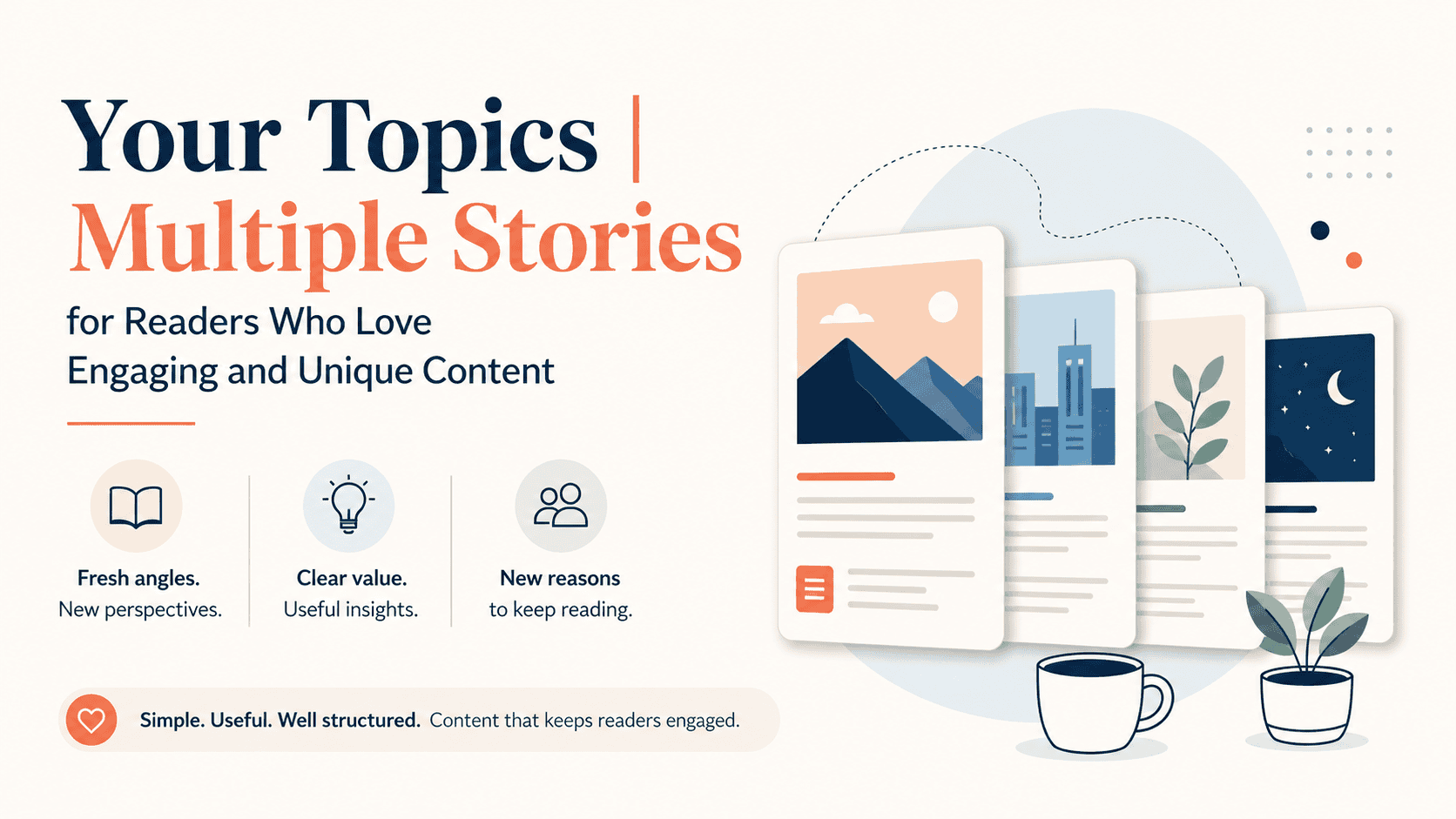
Multiple stories help readers stay engaged because each piece offers a fresh angle, clear value, and a new reason to keep reading. This content style works best when the writing is simple, useful, and well structured.
What Multiple Stories Content Means
Multiple stories content is a grouped style of publishing that gives readers several related angles on one broad subject. It may include short reports, feature pieces, explainers, list style coverage, and updates that stay connected through one main topic. This approach works well because search users and regular readers both prefer content that is easy to scan and easy to understand. Google also advises creators to focus on helpful, reliable, people first content, while web usability research shows that people usually scan pages instead of reading every word.
A strong multiple stories page does not try to say everything in one block of text. It separates ideas into clear sections so the reader can move from one story to another without confusion. That structure supports readability and makes the page more useful for people who want quick answers, deeper context, or related information on the same theme.
Why Readers Stay With Varied Content
Readers stay longer when a page gives them different but connected points of value. One section may explain a topic. Another may compare options. A third may answer common questions. This variety gives the page more depth without making it hard to follow. Usability research from Nielsen Norman Group has long shown that people prefer concise, scannable writing and factual language over padded or overly promotional text.
Variety also helps meet different search intents. Some readers want a quick answer. Others want background. Others want step by step guidance. A page that includes multiple stories around one subject can serve all three groups if the structure is clear and the sections are focused. Google Search Central recommends using words that people search for in important places such as the title and main heading, which supports both discovery and reader clarity.
How To Organize Related Stories
The best structure is a main topic with smaller related sections underneath it. Each section should solve one question or cover one angle. That keeps the page easy to skim and helps readers quickly find the part that matters to them most. Google Search Central says content should be helpful, reliable, and people first, and that same idea fits well here because each section should stand on its own while still supporting the full topic.
A clear heading system also matters. Descriptive headings help readers understand what comes next, and they help search engines understand the page too. The SEO Starter Guide recommends placing useful search terms in prominent locations such as the title and main heading. That makes simple, direct headings important for both usability and SEO.
Story Types That Work Well Together
| Story type | Main purpose | Best use |
|---|---|---|
| News style update | Share a fresh development | Best for recent changes or announcements |
| Explainer | Make a topic easy to understand | Best for complex subjects |
| Comparison piece | Show differences clearly | Best for choices and decision making |
| How to guide | Give practical steps | Best for action based topics |
| Background article | Add context and history | Best for readers who need the full picture |
This type of structure works because each story serves a different reader need without repeating the same idea in the same way. It also supports a cleaner reading experience, which matters on the web because users scan for the section that answers their question fastest.
Gaming readers looking for interactive and modern entertainment topics should also check out 5 Advantages of Darkwarfall Gaming to understand why this gaming experience continues to attract attention.
What Makes Content Feel Engaging
Engaging content is not about using louder language. It is about being clear, relevant, and easy to absorb. Good content uses short sentences, specific wording, and a direct point for each paragraph. Nielsen Norman Group research supports concise writing and scannable layout because users usually prefer text that gets to the point quickly.
Engagement also improves when the content answers real questions in a logical order. Readers usually want the main answer first, then supporting detail, then related context. That flow works better than long openings or vague setup. Google’s guidance on helpful content makes the same point in different words by stressing content made for people rather than content made to manipulate search results.
Readers who enjoy creative and emotional online content can also explore our detailed guide on Script HTML Bucin Ngajak Balikan Paling It for unique digital writing ideas and engaging web based expressions.
SEO Benefits Of A Multi Story Approach
A multi story format can support SEO because it covers a topic from several useful angles. This helps build topical depth, which can make a page more relevant for a wider range of searches. It also gives you room to use related phrases naturally instead of repeating one keyword too often. Google Search Central recommends using words people would use when searching and placing them in useful spots such as titles, headings, alt text, and link text.
This approach can also strengthen internal linking. Related stories can point to each other and to other useful pages on the site. Google notes that crawlable links help search engines discover more pages on a site. For readers, those links create a smoother path through the content and help them stay within the same subject area.
EEAT Signals That Matter Most
EEAT is strongest when content is accurate, specific, and clearly written by a source that understands the subject. Google’s guidance emphasizes helpful, reliable, people first content and also notes that creators should think about who made the content, how it was made, and why it exists. That means every section should have a clear purpose and should avoid filler.
Trust also depends on language quality. Simple grammar, direct statements, and accurate terminology help readers feel confident in the page. Google’s guidance on AI generated content also says to focus on accuracy, quality, and relevance, including in titles and descriptions. That principle applies to all web content, not only automated text.
Writing Style That Works For Real Readers
The strongest writing style for this topic is calm, direct, and factual. It should use ordinary English and avoid complicated phrasing. Web writing research shows that people scan pages, prefer concise language, and respond better to content that is short and easy to process. That is why each paragraph should carry one main idea and move quickly to the next useful point.
Here are the main writing habits that support this style.
- Use clear headings that tell the reader exactly what the section covers.
- Keep paragraphs tight and focused on one idea.
- Use familiar words instead of heavy jargon.
- Place the main answer near the top of each section.
- Avoid promotional language and keep every sentence grounded in fact.
Content Quality Checks Before Publishing
| Check | What to confirm |
|---|---|
| Accuracy | Every fact is correct and current |
| Clarity | The meaning is obvious on first read |
| Structure | Headings match the content below them |
| Usefulness | The page answers real reader needs |
| SEO fit | Main terms appear naturally in key places |
These checks are important because useful content performs better when it is built for readers first. Google’s helpful content guidance and SEO Starter Guide both stress relevance, clarity, and helpfulness over shortcuts. The page should feel complete enough to stand alone, but not overloaded with extra text that weakens the main message.
How To Keep The Topic Evergreen
Evergreen content stays useful because it focuses on stable information instead of short lived trends. For a topic built around multiple stories, that means choosing angles that remain relevant over time, such as structure, readability, content variety, search intent, and clarity. Google’s guidance on helpful content supports this approach because it rewards content that serves people well, not content that depends on temporary search tricks.
Evergreen pages also work better when they are updated carefully instead of rewritten from scratch each time. A strong page can keep its core structure, while supporting examples, links, and wording are refreshed when needed. That keeps the page useful without losing its focus or breaking its search value.
What Readers Expect From This Kind Of Page
Readers expect quick value, clean structure, and a clear path through the content. They do not want filler, vague claims, or long openings that delay the point. They want a page that gives them the main answer early and then supports it with well organized detail. Research on web reading behavior supports this because readers usually scan, not read slowly from top to bottom.
A page built around multiple stories should respect that behavior. It should make each section easy to find, easy to understand, and easy to trust. That is the simplest path to strong engagement and long term SEO value.