

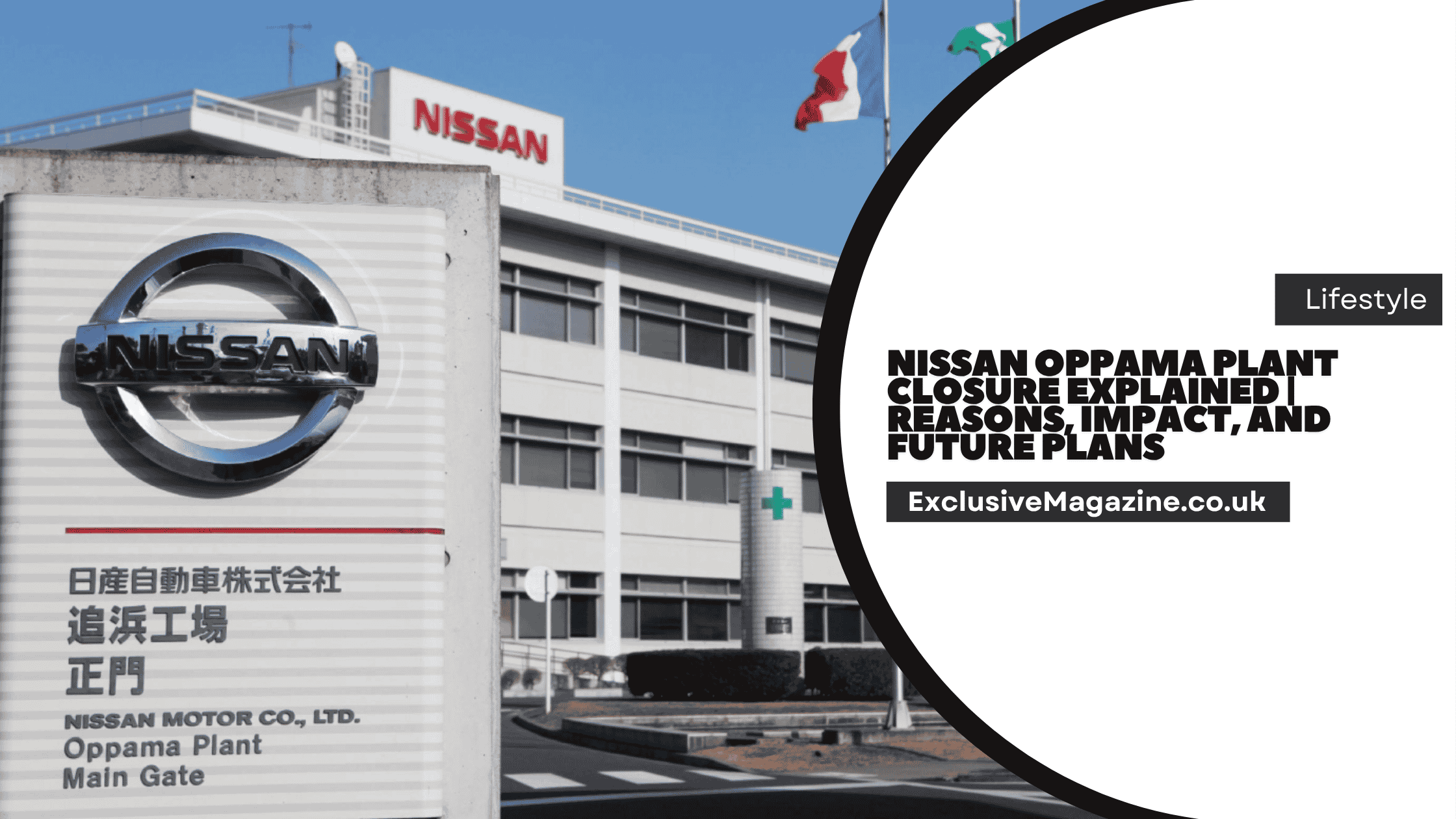

Nissan will stop vehicle production at its Oppama plant by March 2028 and shift the work to Nissan Motor Kyushu in Fukuoka. The closure is part of Nissan’s wider cost cutting plan, Re:Nissan, and the company is still reviewing what the Oppama site should become next.
What Nissan Decided
Nissan confirmed on July 15, 2025, that the Oppama plant in Yokosuka, Kanagawa Prefecture, will end vehicle production at the close of fiscal 2027, which falls in March 2028. The company said production will move to Nissan Motor Kyushu, its factory in Fukuoka. Reuters and AP both reported that Nissan framed the move as part of a major restructuring drive designed to improve efficiency and restore profitability.
Oppama is one of Nissan’s most famous plants. It began operations in 1961 and became closely tied to Nissan’s growth story. Nissan’s own plant page says it has long been a pioneer site for advanced vehicle production, including the LEAF, the world’s first mass market electric vehicle. Reuters also noted that the plant has produced more than 17.8 million vehicles over its life.
Why Nissan Is Closing Oppama
The main reason is Nissan’s broader turnaround plan. In May 2025, Nissan launched Re:Nissan after reporting weak performance and higher costs. In its shareholder report, Nissan said the plan targets 500 billion yen in total cost savings versus fiscal 2024, split between 250 billion yen in variable costs and 250 billion yen in fixed costs. The company also said it will reduce vehicle production plants from 17 to 10 by fiscal 2027 and cut its workforce by 20,000 employees between fiscal 2024 and 2027.
Nissan said this plan was driven by challenging performance, rising variable costs, and an uncertain business environment. The company’s own documents describe Re:Nissan as an action based recovery plan meant to restore operating profitability and free cash flow in the automotive business by fiscal 2026. In simple terms, Oppama is being closed because Nissan wants fewer plants, lower fixed costs, and a simpler manufacturing network.
Reuters also linked the decision to Nissan’s weaker sales in major markets, including the United States and China, plus debt pressure and the need to raise efficiency. AP reported that the closure is part of a larger effort to consolidate manufacturing and improve profitability after a difficult financial year.
The automotive industry has also seen similar restructuring moves in other regions, including the recent case of the Harley-Davidson West Virginia dealership closure, which reflects how legacy brands are adjusting to market pressure and rising operational costs.
Why Oppama Matters
Oppama is not an ordinary factory. It has been part of Nissan’s identity for decades. Nissan says the site includes not only the vehicle plant, but also a research center, a proving ground, and a wharf. The company lists about 3,700 employees at the site as of September 30, 2025, including related functions. Reuters earlier reported around 3,900 workers. The difference reflects how the site is counted, but both figures show that the plant has a large workforce and a wide support operation.
The plant also has symbolic value. Reuters described it as a landmark in Yokosuka’s postwar industrial growth and a place that helped turn the area toward a civilian economy. It was also the birthplace of the LEAF, which became a major name in the global EV market. That history is part of why the closure drew so much attention in Japan and abroad.
What the Closure Means for Workers and the Local Area
The impact reaches far beyond Nissan’s own balance sheet. Reuters reported that the closure would affect local businesses and service providers that depend on the plant. The plant has been a major source of jobs and stable business activity in Yokosuka for many years, so the change will matter to suppliers, transport firms, shops, and nearby households as well.
Nissan has not presented the closure as an immediate shutdown. Production continues until March 2028, which gives the company time to move output and handle the transition. Even so, the long runway does not remove the business risk for workers and the surrounding economy. Reuters said the plant’s future had already become a major concern in the city soon after the closure began to look likely.
Similar large-scale operational disruptions have also been reported in other major institutions, such as the Sandringham Estate emergency closure, which shows how even well-established sites can face sudden operational changes due to safety and management decisions.
Where Production Will Go
Nissan said vehicle production at Oppama will move to Nissan Motor Kyushu in Fukuoka. That is the central operational change behind the closure. Reuters reported that the company wants to use the move to cut costs and improve efficiency by concentrating production in fewer factories. AP reported the same transfer plan and said all production from Oppama will shift to the southern Japan plant.
Nissan’s official plant page also now highlights the transfer plan at the top of the Oppama Plant page, which shows that the company is treating the move as a confirmed strategic step rather than a rumor. The page still describes the plant’s history and role, but the headline now points to the transfer plan.
What Nissan May Do With the Site
Nissan has not announced a final replacement use for the site. Reuters reported that the company is exploring alternative uses, including possible EV related production discussions that had been linked in media reports to Foxconn. At the same time, Reuters noted that Nissan said such reports were not based on company released information. AP also reported that Nissan is exploring options for repurposing or selling the land.
That means the future of the land remains open. The most reliable reading at this stage is that Nissan has confirmed the shutdown of vehicle production, but not a final long term use for the property. The Research Center and other nearby facilities were reported to remain operational, so the wider Oppama complex is not being emptied all at once.
How Oppama Fits Nissan’s Bigger Restructuring
Oppama is one part of a wider factory shakeup. Nissan’s Re:Nissan plan calls for a sharp reduction in global manufacturing sites from 17 to 10 by fiscal 2027. The company says this is needed to lower fixed costs and improve its long term financial position. Reuters and AP both described Oppama as one of the major symbols of that shift.
The broader message is clear. Nissan is shrinking and simplifying its industrial base so it can operate with less waste and less excess capacity. That is why the Oppama closure matters beyond one factory. It shows how seriously Nissan is changing its production model in response to market pressure, weak profits, and a tougher global auto industry.