

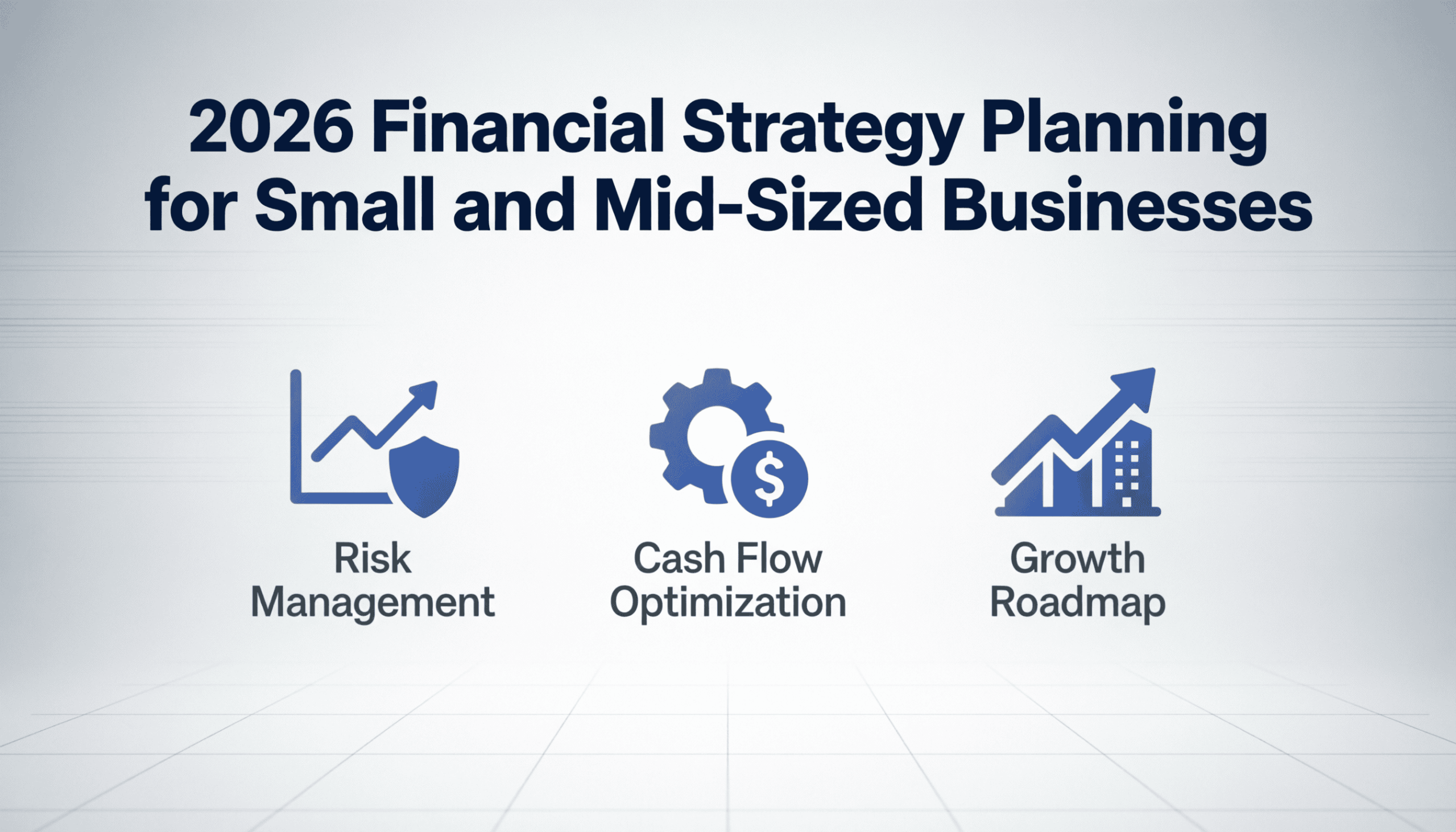

As 2026 unfolds, small and mid-sized businesses face a financial landscape marked by technological disruption and economic uncertainty. Traditional planning methods no longer suffice when market conditions shift rapidly and competitive pressures intensify. Companies that adapt their financial strategies now will separate themselves from those clinging to outdated approaches. The difference between thriving and merely surviving often comes down to how effectively leaders integrate modern tools, anticipate challenges, and structure their operations for sustainable growth in an increasingly complex environment.
Key Financial Planning Trends Small and Mid-Sized Businesses Must Watch in 2026
As economic uncertainties persist and technology reshapes business operations, small and mid-sized businesses face a rapidly evolving financial landscape that demands strategic adaptation. Artificial intelligence integration stands paramount, automating expense tracking, forecasting, and budget optimization while reducing manual errors.
Businesses adopting AI-powered financial tools gain competitive advantages through real-time insights and predictive analytics. Cash flow management intensifies as inflation volatility continues affecting purchasing power and operational costs.
Companies must implement dynamic pricing strategies and maintain robust liquidity reserves to weather market fluctuations. Sustainable finance emerges as investors and customers increasingly prioritize environmental responsibility.
Green financing options and ESG reporting requirements influence capital allocation decisions. Remote workforce expenses require sophisticated tracking systems as hybrid work models persist, transforming traditional overhead structures and necessitating updated budgeting frameworks.
Setting Clear Financial Goals to Support Sustainable Growth
Why do countless small and mid-sized businesses struggle to achieve consistent growth despite adequate revenue? The answer often lies in poorly defined financial objectives that lack measurable parameters and realistic timelines.
Effective financial goal-setting requires businesses to establish specific, quantifiable targets aligned with their operational capacity. This includes determining precise revenue benchmarks, profit margin thresholds, and cash flow requirements for each quarter. Without these concrete metrics, organizations drift aimlessly through fiscal periods.
Sustainable growth demands integration between financial goals and operational planning. Business leaders must connect budgetary allocations directly to strategic initiatives, ensuring every dollar supports expansion objectives. This alignment prevents resource waste and maintains financial discipline.
Regular quarterly reviews enable timely adjustments when market conditions shift. Businesses that monitor progress against established benchmarks can pivot strategies before minor setbacks become major obstacles.
How Client Accounting Services Help Streamline Financial Management
Many small and mid-sized businesses find themselves trapped in administrative quicksand, dedicating countless hours to bookkeeping, payroll processing, and financial reporting instead of focusing on revenue-generating activities.
Client accounting services eliminate this burden by outsourcing financial tasks to specialized professionals who maintain accurate records, guarantee regulatory compliance, and deliver timely reports. These services provide access to advanced accounting software and expertise without the overhead costs of hiring full-time staff. Business owners receive real-time financial visibility through cloud-based dashboards, enabling data-driven decisions.
Client accounting services identify cost-saving opportunities, streamline accounts payable and receivable processes, and prepare companies for audits or financing applications. This strategic partnership transforms financial management from a time-consuming obligation into a competitive advantage.
Budgeting and Forecasting Strategies for Better Decision-Making
With accurate financial records established through client accounting services, business leaders gain the foundation needed to implement robust budgeting and forecasting strategies.
Effective budgeting requires analyzing historical data, identifying revenue patterns, and allocating resources according to strategic priorities. Rolling forecasts, updated quarterly or monthly, provide more agility than static annual budgets, allowing businesses to adjust to market conditions in real-time.
Scenario planning strengthens decision-making by modeling best-case, worst-case, and most-likely outcomes. This approach helps leadership teams anticipate cash flow challenges and opportunities before they materialize. Variance analysis, comparing actual results against projections, reveals operational inefficiencies and guides corrective action.
Modern forecasting tools integrate data from multiple sources, generating predictive insights that inform pricing strategies, hiring decisions, and capital investments. Businesses that combine disciplined budgeting with adaptive forecasting position themselves to navigate uncertainty while pursuing growth objectives strategically.
Improving Cash Flow and Managing Operational Expenses Effectively
Cash flow challenges rank among the most common threats to small and mid-sized business survival, regardless of profitability on paper. Revenue recognition doesn’t guarantee available funds when bills become due. Businesses must implement systematic approaches to accelerate receivables through stricter payment terms, early payment incentives, and automated invoice reminders.
Operational expense management requires continuous scrutiny. Leadership should conduct quarterly reviews of all recurring costs, renegotiate vendor contracts, and eliminate redundant subscriptions or services. Technology investments that automate manual processes often reduce long-term labor costs while improving accuracy.
Maintaining adequate cash reserves, typically three to six months of operating expenses, provides essential buffers against unexpected disruptions. Establishing lines of credit before emergencies arise guarantees access to capital when needed, though disciplined usage prevents unnecessary interest expenses from eroding margins.
Leveraging Financial Data and Technology for Real-Time Insights
Modern accounting software has transformed financial management from retrospective reporting to proactive decision-making. Cloud-based platforms now provide real-time visibility into revenue, expenses, and cash positions, enabling businesses to identify trends and anomalies immediately rather than waiting for month-end closings.
Automated dashboards consolidate data from multiple sources, bank accounts, payment processors, and inventory systems, creating thorough financial snapshots. This integration eliminates manual data entry errors and reduces reconciliation time considerably.
Predictive analytics tools analyze historical patterns to forecast future performance, helping businesses anticipate cash shortages or surplus periods. Mobile access allows owners and financial managers to monitor key metrics remotely, facilitating faster responses to emerging opportunities or challenges. Investing in appropriate financial technology scales with business growth while maintaining accuracy and compliance standards essential for strategic planning.
Risk Management and Compliance Considerations for Growing Businesses
As businesses expand their operations and revenue streams, they encounter increasingly complex regulatory requirements and exposure to financial, operational, and reputational risks. Establishing a thorough risk management framework becomes essential for sustainable growth. This includes conducting regular risk assessments, implementing internal controls, and maintaining adequate insurance coverage across all operational areas.
Compliance demands intensify as companies scale, particularly regarding tax obligations, industry-specific regulations, and data protection laws. Small and mid-sized businesses must stay current with evolving standards such as ASC 606 for revenue recognition and cybersecurity requirements.
Developing documented policies and procedures guarantees consistency while demonstrating due diligence to auditors and regulators. Engaging qualified advisors, including accountants, legal counsel, and risk specialists, provides expertise that internal teams often lack, protecting the organization from costly violations and operational disruptions.
Building a Scalable Financial Strategy for Long-Term Success
When companies shift from startup mode to established enterprises, their financial strategies must evolve beyond short-term survival tactics to include thorough planning frameworks.
Scalable financial strategies require integrated systems that accommodate growth without requiring complete overhauls. This includes implementing automated accounting processes, establishing clear financial metrics, and creating flexible budgeting models that adapt to revenue fluctuations.
Leadership must prioritize building cash reserves equivalent to six months of operating expenses while maintaining access to credit facilities for unexpected opportunities. Investment in financial infrastructure, including forecasting tools and reporting systems, enables data-driven decisions at critical junctures.
Regular quarterly reviews should assess whether current financial structures support expansion plans. Companies that establish these foundations early position themselves to capitalize on market opportunities while maintaining operational stability through economic uncertainties.