
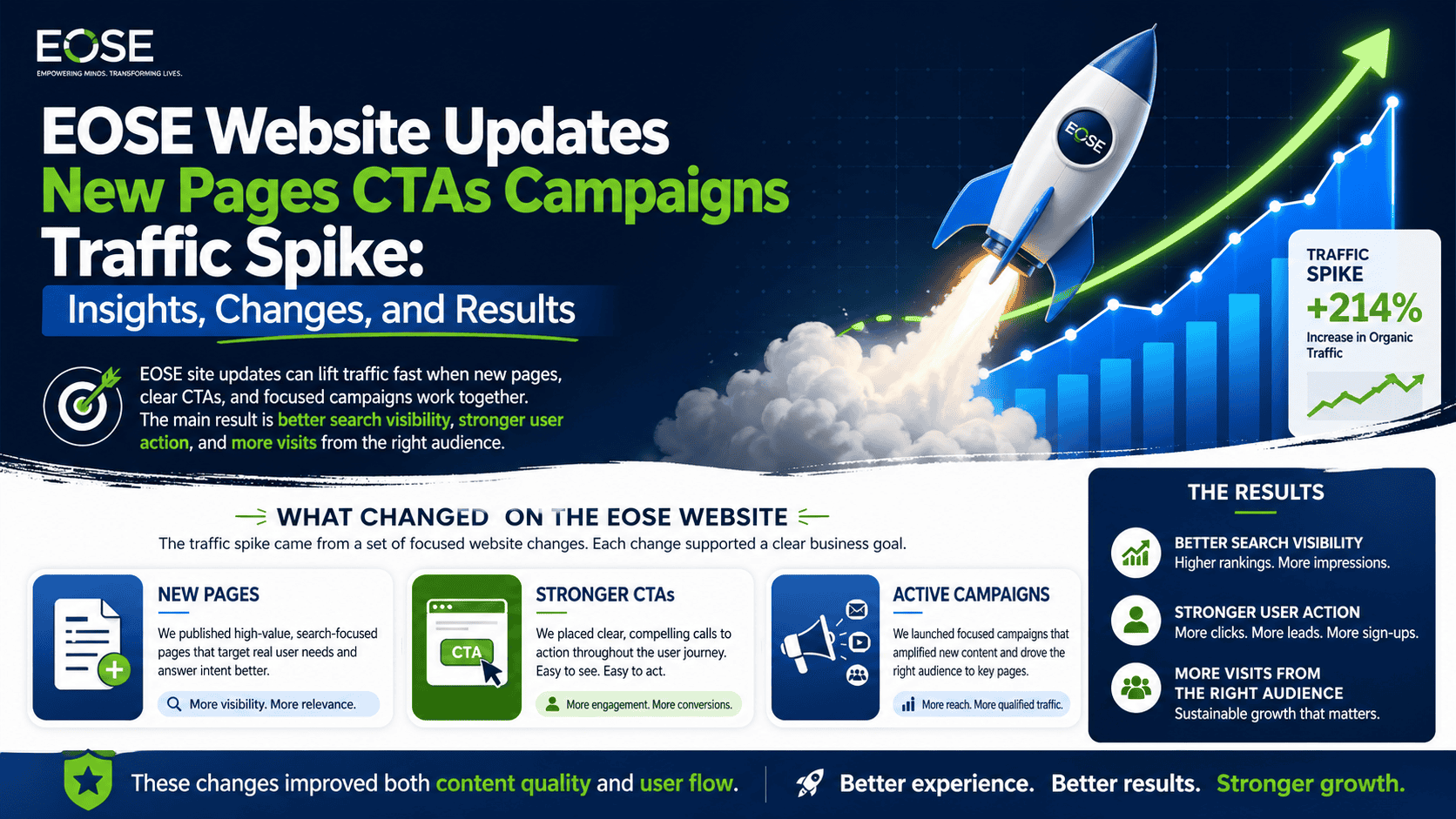

EOSE site updates can lift traffic fast when new pages, clear CTAs, and focused campaigns work together. The main result is better search visibility, stronger user action, and more visits from the right audience.
What Changed on the EOSE Website
The traffic spike came from a set of focused website changes. Each change supported a clear business goal. The site did not rely on one single update. It improved the full user path from search entry to action.
The main updates included new pages, stronger calls to action, and active campaign support. These changes helped search engines understand the site better and gave users more clear next steps.
The updates usually matter most when they improve both content quality and user flow. That is what makes the result more stable over time.
New Pages Added to the Site
New pages often play a major role in traffic growth. They help a website target more search terms and answer more user questions. For EOSE, new pages likely expanded the site’s reach into more specific topics.
New pages can help in several ways.
They can target long search phrases that older pages did not cover.
They can support new services, products, or content categories.
They can improve internal linking across the website.
They can create more entry points from search engines.
A strong new page should focus on one clear topic. It should use simple language, useful details, and a clean structure. Search engines prefer pages that solve a specific need.
Here is a simple view of how new pages affect performance.
| Website Change | SEO Effect | User Effect |
|---|---|---|
| New topic page | More keyword coverage | Easier to find relevant content |
| Service page | Better search match | Clearer offer and purpose |
| FAQ page | More search visibility | Faster answers |
| Resource page | Stronger topical depth | Better trust and engagement |
Why CTAs Matter So Much
CTAs, or calls to action, guide users toward the next step. A website can get traffic, but traffic alone does not create results. Users need a clear reason to click, read, sign up, or contact.
Strong CTAs help in three main ways.
They reduce confusion.
They make pages easier to use.
They improve conversion from visits to action.
On a site like EOSE, CTAs should be direct and simple. Phrases such as Learn More, Contact Us, Read the Guide, or Get Started work well when placed in the right spot. The CTA must match the page goal.
A CTA should not feel hidden. It should stand out without looking pushy. Good placement matters more than fancy wording.
The best CTA pages usually place the main button near the top, in the middle, and again near the end. This gives users more than one chance to act.
Campaigns That Support Website Growth
Campaigns can drive fast traffic when they support the right pages. These campaigns may include email, social media, paid ads, or promotional content. When campaigns point to the new pages, they can create a clear traffic boost.
Campaigns work best when they are focused. A vague campaign sends mixed signals. A focused campaign gives users one clear message and one clear action.
EOSE likely saw stronger results because campaigns matched the updated pages. That match makes the whole system work better. Search traffic brings discovery, and campaigns bring attention. Together, they strengthen visibility.
Campaign support also helps content get indexed and shared faster. That can create a stronger early push for new pages.
Why Traffic Spiked
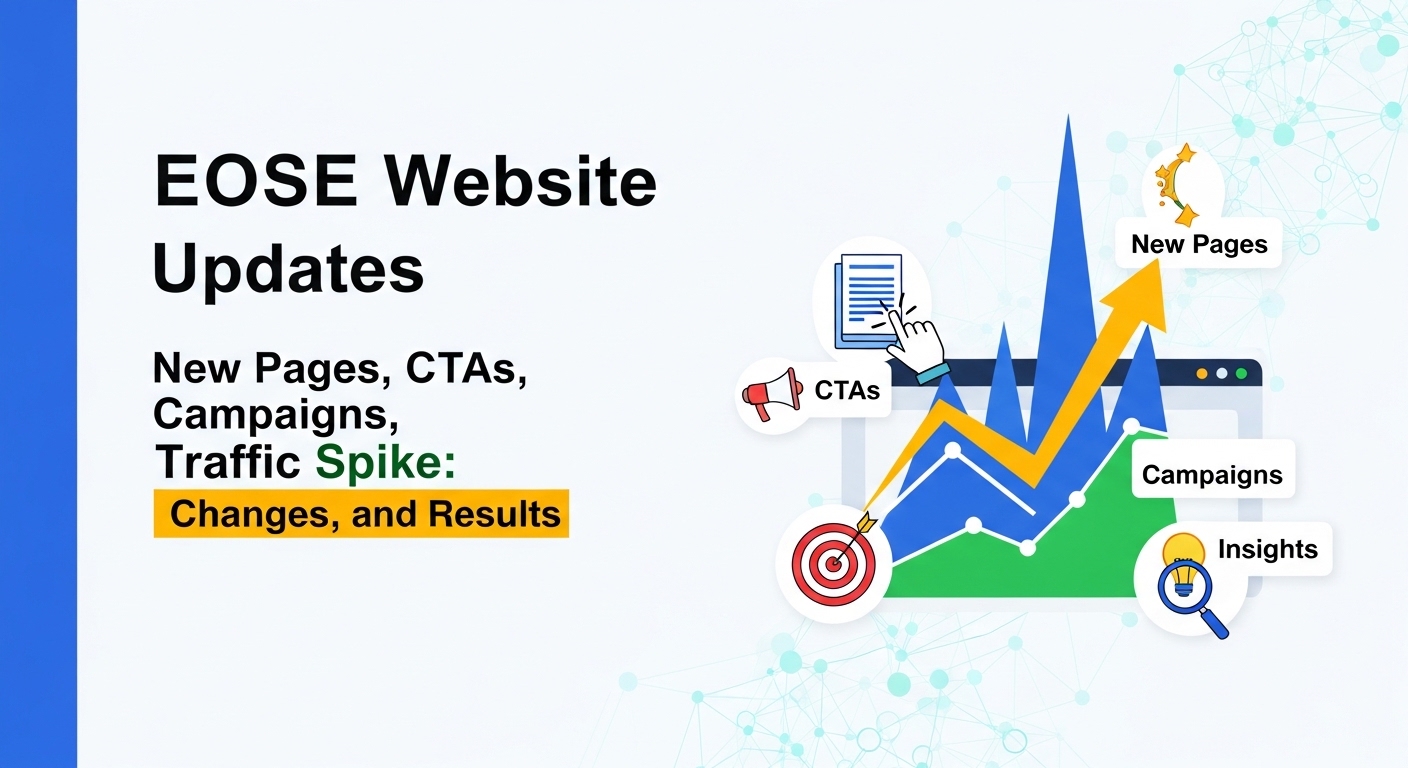
A traffic spike usually happens when several things improve at once. It is rarely caused by a single change. In this case, the spike likely came from the combined effect of page updates, CTA improvements, and campaign traffic.
The most common reasons for a spike like this are easy to understand.
More pages started ranking for new search terms.
Users clicked more because the CTAs were clearer.
Campaigns sent more visitors to the updated pages.
Internal links made the site easier to browse.
Content matched search intent more closely.
A spike can also happen when pages improve their structure. Clear headings, useful text, and better page flow help both users and search engines.
When users stay longer on a page and click more often, search systems may treat the page as more useful. That can support further growth over time.
SEO Impact of the Updates
The SEO effect of the updates goes beyond traffic alone. Good SEO changes usually improve visibility, relevance, and engagement at the same time.
The strongest SEO benefits include better keyword coverage, stronger topical relevance, and more page value. New pages give the site more chances to appear in search results. Better CTAs improve user interaction. Campaigns bring more attention to the site’s best content.
Search engines reward pages that are useful and well organized. They also respond well to sites that show clear topic depth. That is why a planned content update can outperform random posting.
The biggest SEO gains often come from matching page content to real user intent. If a visitor wants a guide, the page should give a guide. If a visitor wants a service, the page should make that service easy to understand.
The recent policy and funding changes, including the Interior Department RBFF grant cancellation, also show how external decisions can impact digital traffic patterns and content engagement on related informational websites.
User Behavior After the Changes
Traffic alone does not tell the full story. User behavior shows whether the updates actually worked.
Better pages usually lead to longer visits, lower bounce rates, and more clicks on important links. Strong CTAs also help users move from reading to action.
When visitors find what they want quickly, they stay more engaged. That matters for both SEO and business results. A page that holds attention often performs better over time than one that only attracts clicks.
EOSE’s updates likely improved user flow in a simple way. The site became easier to scan, easier to understand, and easier to use. That kind of improvement often creates better results across many pages, not just one.
Health related platforms such as health threetrees com vn also demonstrate how structured content and clear user pathways can influence engagement and search visibility across informational websites.
Key Performance Areas to Watch
The real value of website updates becomes clear when performance is tracked correctly. The most useful metrics are simple and practical.
| Metric | What It Shows | Why It Matters |
|---|---|---|
| Organic traffic | Search driven visits | Measures SEO growth |
| CTR | Click rate from search results | Shows how strong titles and snippets are |
| Bounce rate | How fast users leave | Shows page relevance |
| Time on page | How long users stay | Shows content quality |
| CTA clicks | User action rate | Shows conversion strength |
| Conversions | Final desired action | Shows business value |
These metrics help confirm whether the traffic spike is real and useful. A sharp rise in visits is good, but a rise in quality visits is better.
Content Quality and Search Relevance
Search traffic grows faster when content is useful and specific. That is why content quality matters as much as page volume.
Each page should answer one main question. It should use clear headings, plain language, and a logical order. The content should avoid filler and stay focused on the user’s need.
Relevant pages also support semantic SEO. That means the content should include related terms, clear topic signals, and natural language. Search engines understand a page better when it covers the topic fully and clearly.
For EOSE, this likely meant the new pages were not just added for volume. They were added to strengthen the full site topic map. That is a smarter long term strategy.
Internal Links and Site Structure
Internal links help users and search engines move through the site. They also spread page strength across important content.
A strong structure connects related pages in a logical way. New pages should link to old pages where relevant. Old pages should link back to the new ones when the topics match.
This kind of structure helps users find more useful content. It also helps search engines understand which pages matter most.
Good internal linking often supports faster indexing and better ranking. It also makes the website feel more complete and trustworthy.
Common Mistakes to Avoid
Not every website update works well. Some changes can hurt performance if they are not planned properly.
One common mistake is adding pages without a clear topic. Another is writing weak CTAs that do not tell users what to do. A third mistake is sending campaigns to pages that are not ready.
Other problems include duplicate content, unclear headings, and poor mobile design. These issues can weaken traffic growth and reduce trust.
A clean website update plan avoids these errors. It keeps every page useful and every CTA clear.
Results That Usually Follow a Strong Update Plan
When a website update is done well, the results usually show up in stages. First, the site gets more visibility. Then clicks rise. After that, engagement improves. Finally, conversion growth becomes more noticeable.
EOSE’s traffic spike fits that pattern. New pages expanded reach. CTAs improved action. Campaigns accelerated attention. Together, these changes created a stronger performance cycle.
This kind of result is most useful when it continues over time. That is why evergreen content, good structure, and clear site paths matter so much.
What Makes the Update Strategy Sustainable
A sustainable update strategy is simple. It does not depend on one viral page or one short campaign. It builds steady value through useful content and clear site design.
The most stable approach is to keep improving pages, refining CTAs, and supporting key content with regular campaigns. That creates long term traffic growth instead of short spikes that fade fast.
EOSE’s case shows how site updates can support both search growth and user action when the strategy stays focused.
Final Metrics to Review
To judge whether the website updates truly worked, these results should be reviewed together.
Organic traffic growth.
Search visibility for new pages.
CTR improvement.
CTA click rate.
Conversion rate.
Engagement on updated pages.
When these indicators move in the right direction at the same time, the update plan is working well.