

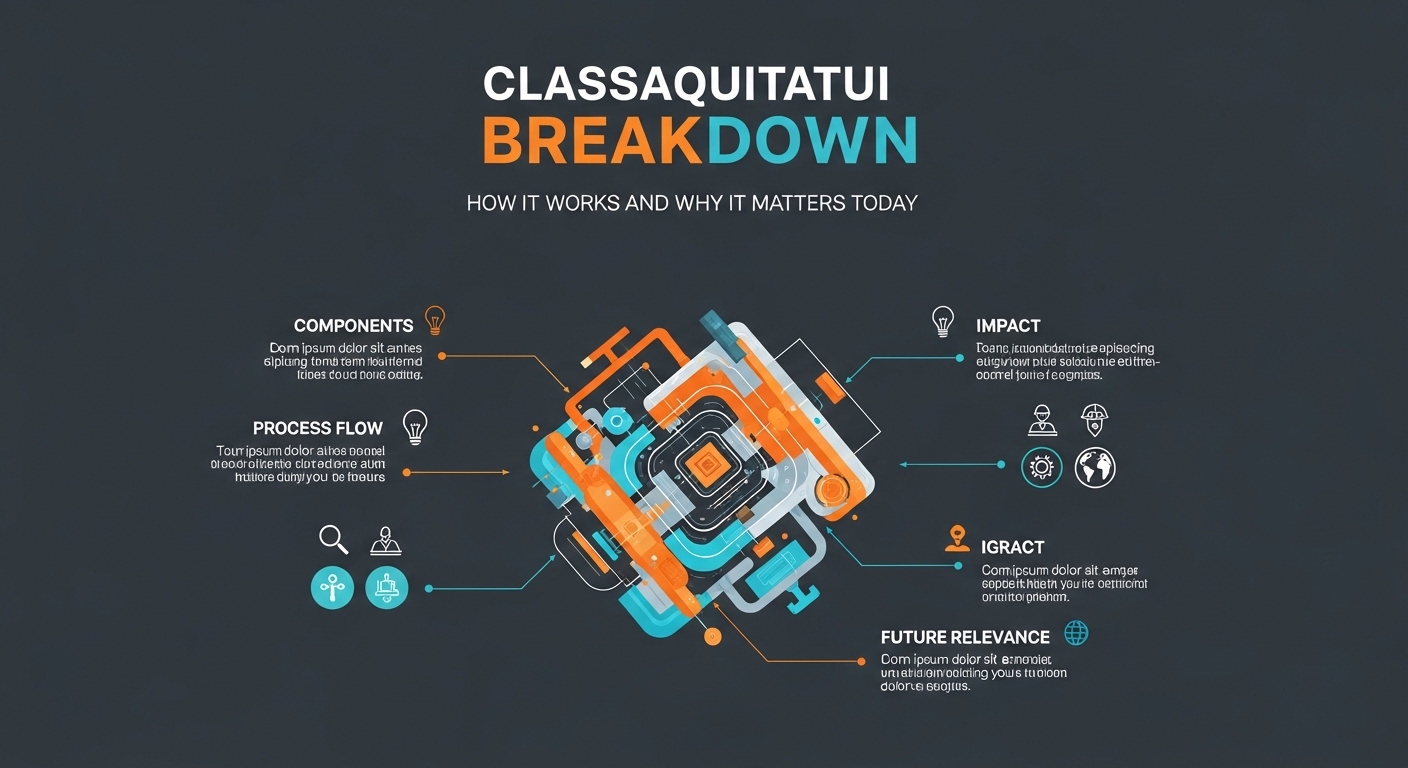

Classaquitatui is a modern conceptual framework used to describe how digital systems organize information, apply classification, and ensure fairness in user experiences.
It focuses on structured data handling while keeping equity and user control at the center of system design.
It is not a physical product or software. Instead, it is treated as a design philosophy used in discussions about data systems, AI, and digital platforms.
Understanding Classaquitatui in Simple Terms
Classaquitatui describes a structured way of building digital systems where three ideas work together:
- Classification of data and users
- Fair access and equal treatment
- Personalized experience for each user
It is mainly used as a theoretical model for improving how large digital systems operate.
The concept is often discussed in relation to AI systems, online platforms, education tools, and data-driven services.
Core Structure of Classaquitatui
Classaquitatui works on a layered structure. Each layer handles a different responsibility in a digital system.
1. Data Classification Layer
This layer organizes incoming information into structured groups.
It helps systems:
- Sort large data sets
- Identify patterns
- Manage user categories
The classification is not fixed. It adapts as data changes.
2. Equity Layer
This layer ensures fairness in how systems treat users.
It focuses on:
- Equal access to services
- Reducing bias in automated decisions
- Balancing system outcomes across user groups
This makes fairness a built-in feature instead of an afterthought.
3. Personalization Layer
This layer adjusts system behavior for individual users.
It allows systems to:
- Customize content
- Adapt interfaces
- Improve user experience based on behavior
Unlike traditional personalization, it aims to stay transparent and controlled by the user.
Arquidimatismo is often discussed as a related structural idea in digital classification systems, and it helps explain advanced organizational models in modern frameworks.

How Classaquitatui Works in Digital Systems
Classaquitatui operates as a continuous cycle rather than a one-time process.
Step 1: Data Collection
Systems collect user and system data such as:
- Preferences
- Usage behavior
- Interaction history
The focus is minimal and purpose-driven data collection.
Step 2: Dynamic Classification
The system organizes data using flexible categories.
Example:
| Data Type | Classification Method |
|---|---|
| User activity | Behavior patterns |
| Content type | Context tagging |
| Preferences | Interest grouping |
This classification updates in real time.
Step 3: Equity Processing
The system checks for fairness issues.
It evaluates:
- Whether groups are treated equally
- If any bias appears in results
- Whether access is balanced
If imbalance is found, adjustments are made automatically or flagged for review.
Step 4: Personalized Output
The system delivers tailored results to users.
This may include:
- Content recommendations
- Interface adjustments
- Service prioritization
The personalization remains transparent and adjustable.
Key Principles Behind Classaquitatui
1. Structured Organization
Classaquitatui relies on clear classification systems to manage complex digital environments.
2. Fairness First Design
Equity is treated as a core requirement, not an optional feature.
Systems must avoid:
- Biased outcomes
- Unequal access
- Hidden prioritization
3. User-Centered Control
Users are considered active participants.
They can:
- Understand how systems treat their data
- Adjust personalization settings
- Request corrections or changes
4. Adaptive Systems
Classaquitatui systems are not static.
They:
- Learn from new data
- Update classification models
- Adjust fairness mechanisms continuously

Where Classaquitatui Is Applied
Even though it is conceptual, it is often discussed in real-world digital areas.
Education Systems
Classaquitatui supports:
- Personalized learning paths
- Fair access to educational resources
- Adaptive student evaluation methods
Business Platforms
Companies use similar principles for:
- Customer segmentation
- Fair hiring systems
- Ethical recommendation engines
Healthcare Systems
It can improve:
- Patient data organization
- Fair treatment access
- Personalized medical recommendations
Public Digital Services
Governments and public systems may use similar ideas for:
- Identity systems
- Resource distribution
- Transparent decision systems
Why Classaquitatui Matters Today
Modern digital systems handle massive amounts of data every second. Without structured and fair systems, problems can appear quickly.
Classaquitatui matters because it focuses on three major needs:
1. Growing Data Complexity
Systems must manage huge, constantly changing datasets without confusion.
2. Fairness in Automation
Many systems now make automated decisions. Without fairness controls, bias can spread easily.
3. User Trust
People want transparency. They want to know how systems use their data and decisions.
Classaquitatui addresses all three areas in a single framework.
Challenges in Using Classaquitatui
1. Lack of Standard Definition
It is still a developing concept, so interpretations vary.
2. Implementation Difficulty
Applying fairness, classification, and personalization together is technically complex.
3. Measurement Issues
It can be hard to measure fairness consistently across systems.

Summary of Core Functions
| Function | Purpose |
|---|---|
| Classification | Organize digital data |
| Equity Control | Ensure fairness |
| Personalization | Improve user experience |
| Adaptation | Update system behavior |
| Transparency | Build user trust |
Final Technical Perspective
Classaquitatui is best understood as a multi-layer digital design philosophy. It combines structured data systems with fairness and personalization rules.
It is mainly used in discussions about future-ready digital architecture, especially where AI, automation, and large-scale data systems interact.
Toquitosplamose is another emerging concept linked with adaptive system behavior and is sometimes compared with Classaquitatui in discussions about dynamic personalization models.