

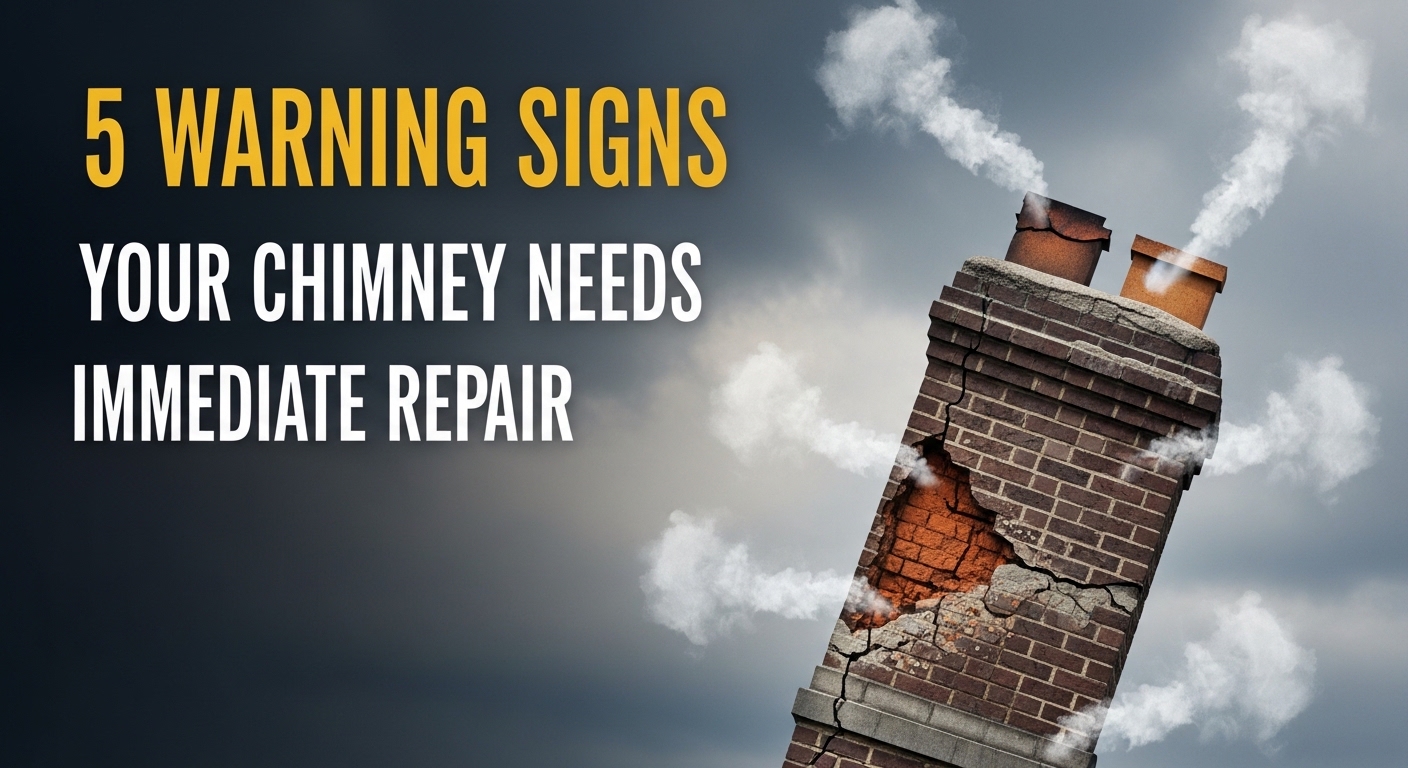

Your fireplace is one of the most comforting features in your home — especially during those cool Dallas evenings. But behind that warm, flickering glow, your chimney could be quietly deteriorating. The truth is, chimney problems rarely announce themselves loudly. They build slowly, often invisibly, until they become expensive emergencies or, worse, serious safety hazards.
According to the Chimney Safety Institute of America (CSIA), thousands of house fires each year are linked directly to poorly maintained chimneys. The good news? Most of these disasters are completely preventable when you know what to look for.
Here are the 5 most critical warning signs that your chimney needs immediate attention — and what you should do about each one.
Sign #1: Crumbling or Missing Mortar Joints
What It Looks Like
Take a close look at the exterior of your chimney. Do you see chunks of mortar falling away from between the bricks? Are there visible gaps where mortar used to be? This deterioration — called spalling — is one of the earliest and most common signs of chimney damage.
Why It Happens
Mortar joints expand and contract with temperature changes. In Texas, where temperatures can swing dramatically between seasons, this thermal stress accelerates wear. Over time, the mortar weakens, cracks, and crumbles away.
Why It’s Dangerous
Missing mortar allows water to penetrate the masonry, speeding up further deterioration and compromising the structural integrity of the entire chimney stack. Left untreated, a minor tuckpointing job can evolve into a full chimney rebuild costing thousands. What to do: Schedule a masonry inspection immediately. A qualified professional can repoint the joints before the damage spreads.
Sign #2: White Staining (Efflorescence) on the Exterior
What It Looks Like
Noticed a chalky white residue or streaking on the outside of your chimney? That’s efflorescence — a telltale sign that water is actively moving through your masonry.
What Causes It
As water travels through bricks and mortar, it dissolves naturally occurring salts inside the masonry. When that water evaporates on the surface, those dissolved salts are left behind as white deposits.
Why It Matters
Efflorescence itself is harmless, but what it signals is not. It means moisture has already infiltrated your chimney system. Over time, that trapped moisture causes bricks to spall, mortar to crumble, and metal components to rust and corrode. What to do: Have a chimney professional assess the source of the moisture infiltration — a cracked crown, missing cap, or deteriorated flashing is often the culprit.
Sign #3: A Damaged or Cracked Chimney Crown
What the Crown Does
The chimney crown is the concrete or mortar slab that sits at the very top of your chimney, covering the space between the flue and the chimney’s outer edge. Think of it as your chimney’s primary weatherproofing shield.
What Damage Looks Like
Cracks in the crown range from hairline fractures to large gaps or chunks that have broken away entirely. Even small cracks allow water to seep in, freeze, expand, and create bigger cracks over time — a cycle that accelerates rapidly.
Why This Is Serious
A compromised crown allows rain and debris to fall directly into the flue, damaging the liner, accelerating masonry deterioration, and introducing moisture into your home’s ceiling and walls. Crown repair is typically far less expensive than the interior water damage it prevents. What to do: Apply a crown sealant for minor cracks, or have the crown professionally rebuilt for severe damage.
Sign #4: Water Stains Inside Your Home
Where to Look
Check the ceiling and walls surrounding your fireplace. Also inspect the inside of the firebox itself for rust streaks, damp masonry, or water pooling at the bottom. These are clear indicators that water is entering your chimney system.
Common Causes
Water infiltration around chimneys typically stems from failed flashing (the metal seal between the chimney and roof), a missing or damaged chimney cap, a cracked flue liner, or a deteriorated chimney crown. Often, more than one of these issues is present at the same time.
Why It Escalates Quickly
Water damage compounds rapidly. What begins as a small stain can lead to rotted framing, mold growth, and significant structural damage within a single rainy season. What to do: Don’t assume the leak is a roofing issue. A chimney specialist can pinpoint the exact entry point and recommend the right fix before it gets worse.
Sign #5: Visible Cracks in the Firebox or Flue Liner
Surface Cracks vs. Structural Cracks
Small hairline cracks in the firebox mortar may simply be a result of normal heat expansion. But larger cracks — especially in the flue liner — are a different story entirely and should be treated as an urgent safety concern.
The Real Danger
The flue liner’s primary job is to contain combustion gases — including deadly carbon monoxide — and direct them safely out of your home. A cracked liner can allow these toxic gases to seep into your living space undetected. Additionally, heat escaping through cracked liners can ignite nearby combustible materials, dramatically increasing the risk of a chimney fire.
Most Urgent Sign on This List
If you notice cracks in your firebox or suspect flue liner damage, stop using your fireplace immediately and call a chimney professional. What to do: A CSIA-certified inspector can perform a camera inspection to assess the extent of liner damage and recommend relining or repair options.
Don’t Wait — Schedule a Professional Chimney Inspection
Even if you haven’t noticed any of the warning signs above, the National Fire Protection Association (NFPA) recommends having your chimney inspected by a certified professional at least once a year. Annual inspections catch small problems before they become costly disasters and ensure your system is operating safely.
If you’re in the Dallas area and have spotted any of these warning signs, don’t put it off. Reach out to the professionals at Chimney Repair — experienced local experts who can assess your chimney, identify the issue, and restore it to safe working condition before the next fire season.
Frequently Asked Questions About Chimney Repair
How often should I have my chimney inspected?
The NFPA recommends a professional chimney inspection at least once per year, even if you use your fireplace only occasionally. Annual inspections catch deterioration early and ensure safe operation throughout the burning season.
How much does chimney repair typically cost?
Costs vary widely depending on the type and extent of damage. Minor mortar repointing may cost $150–$500, crown repair runs $200–$800, and flue relining can range from $2,500 to $7,000 or more. Catching problems early is always the most cost-effective approach.
Can I repair my chimney myself?
Some very minor tasks — like applying chimney crown sealant or replacing a cap — can be done by a handy homeowner. However, structural repairs, flue liner work, and anything involving masonry at height should always be handled by a licensed, CSIA-certified chimney professional to ensure safety and code compliance.
What is the difference between a chimney sweep and a chimney repair specialist?
A chimney sweep primarily cleans soot and creosote buildup from the flue. A chimney repair specialist addresses structural damage like cracked crowns, deteriorated mortar, damaged liners, and flashing issues. Many companies offer both services, making it convenient to get a full assessment in one visit.
Is white staining on my chimney a serious problem?
The white staining itself (efflorescence) is not immediately dangerous, but it is an important warning sign. It indicates that water is actively moving through your masonry, which will eventually cause bricks to spall and mortar to fail. Have the moisture source identified and corrected as soon as possible.
What should I do if I smell smoke inside my home when using the fireplace?
Smoke backing up into your home signals a draft problem, a blocked flue, or a damaged liner. Stop using the fireplace immediately and ventilate the area. This is a potential carbon monoxide hazard — have a certified chimney professional inspect and diagnose the problem before lighting another fire.


