

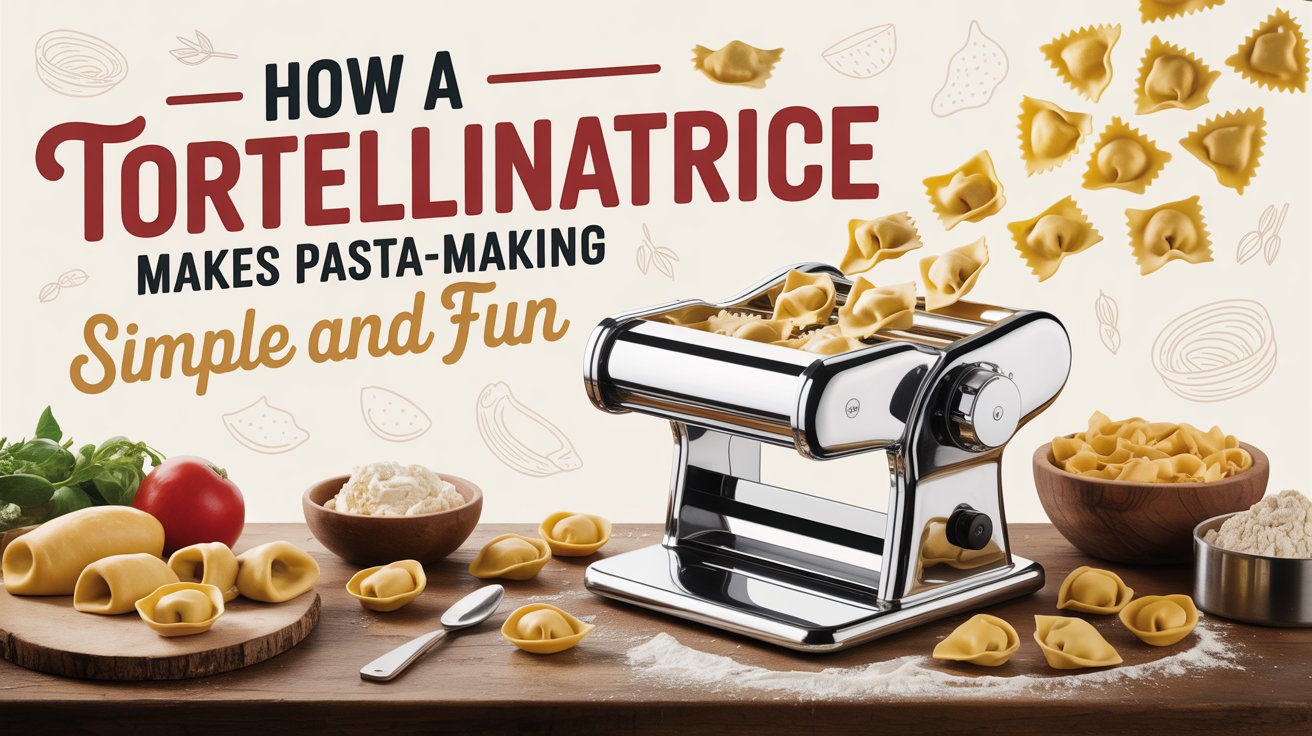

A tortellinatrice turns a long sheet of pasta dough, adds filling, folds it into the classic tortellini shape and seals it, making the process faster and consistent. It takes what was slow and skill‑intensive and makes pasta‑making simple and reliable.
What Is a Tortellinatrice
A tortellinatrice is a machine made to produce tortellini and other filled pasta forms. The word comes from Italian, meaning a maker of tortellini. It automates tasks that were once done by hand: rolling dough, placing filling, folding and sealing. This lets cooks produce many pieces with the same size and shape.
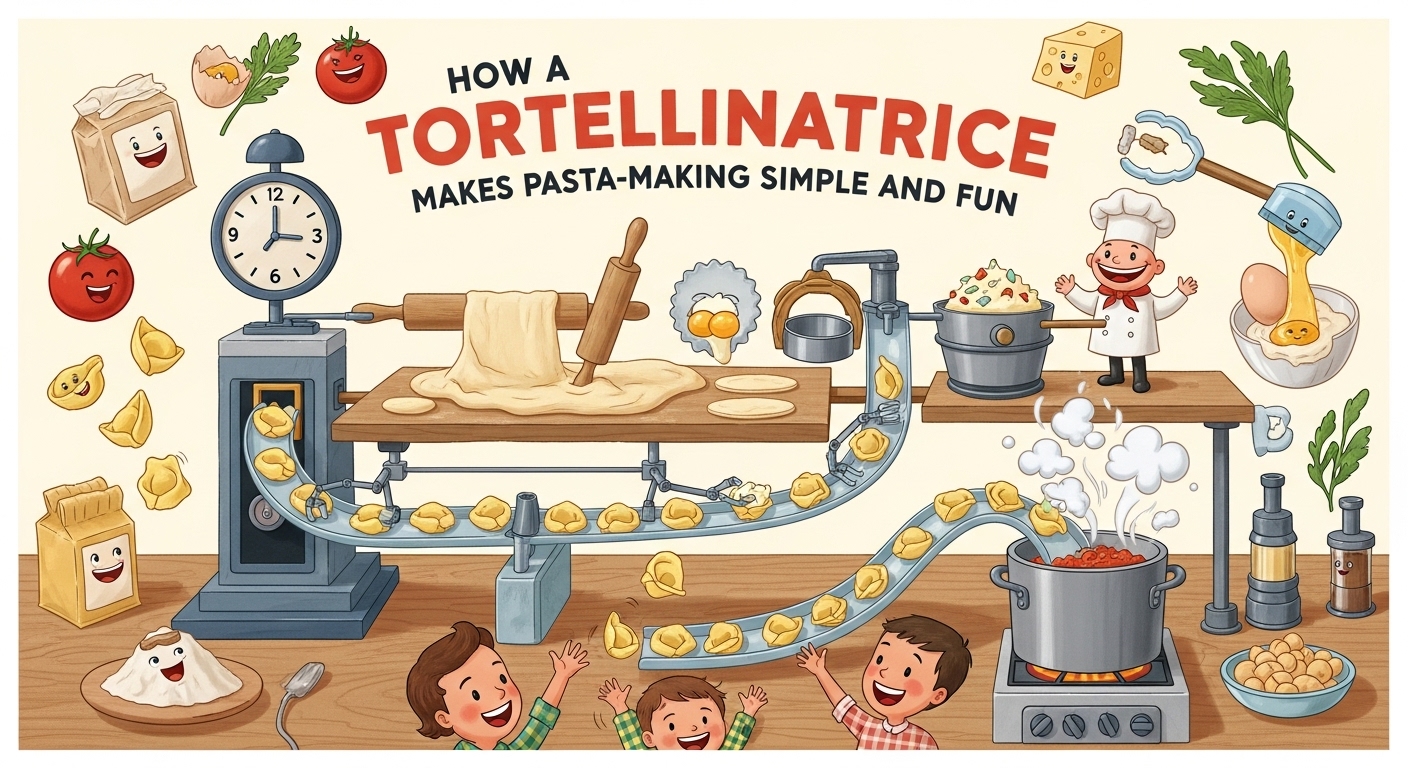
How the Tortellinatrice Works
The machine follows a clear sequence to create filled pasta.
- Dough Feeding
You start by feeding pre‑rolled sheets of pasta dough into the machine. - Filling Deposition
A filling injector places measured amounts of meat, cheese, or vegetable mixtures at regular intervals on the dough. - Folding and Forming
Rollers and folding tools guide the dough over the filling and shape it into tortellini or other pasta formats. - Sealing and Cutting
The unit presses the edges to seal each piece tightly and cuts individual pieces out of the sheet. - Output Collection
Finished pasta drops into a tray or conveyor for cooking, packaging or freezing.
This step‑by‑step automation replaces repetitive manual work with a consistent process that runs smoothly.
Key Components of a Tortellinatrice
Most machines share a core set of parts, each serving an important role in pasta forming:
| Component | Function |
|---|---|
| Dough Feed System | Guides dough sheets into the machine |
| Laminating Rollers | Roll dough to a controlled thickness |
| Filling Hopper | Stores filling before it is placed |
| Depositor Nozzles | Places filling at regular intervals |
| Folding/Forming Unit | Shapes dough around filling |
| Sealing Mechanism | Closes pasta edges to prevent leakage |
| Cutter/Separator | Cuts and separates individual pieces |
| Control Panel | Adjusts settings like speed and filling volume |
These parts work together so the machine produces uniform, well‑sealed pasta quickly.
Types of Tortellinatrice Machines
Tortellinatrici vary by size, speed and level of automation.
Manual Machines
Small devices that require turning a crank or hand‑feeding. Best for home kitchens or low‑volume output.
Semi‑Automatic Machines
Partly automated systems that still need manual dough feeding. Used in small restaurants and boutique pasta shops.
Fully Automatic Machines
Complete automation of all steps. Used in large kitchens and pasta factories for high production volume.
For more insights on modern kitchen tools and technology, you can check out UploadInsider for detailed reviews and updates.
Benefits of Using a Tortellinatrice
Using a tortellinatrice simplifies pasta making in several clear ways.
Saves Time
A machine completes tasks that would take hours by hand. Tens to hundreds of pieces can be made in minutes.
Improves Consistency
Every piece comes out the same size, shape and amount of filling. Uniform pasta cooks evenly and looks professional.
Reduces Labor
The machine handles repetitive folding and sealing, reducing physical strain and cutting down on hands‑on time.
Better Hygiene
Food‑grade materials and enclosed mechanisms lower direct contact with dough and filling, supporting cleaner production.
Cost Efficiency
In commercial settings, higher output and reduced waste help lower production costs over time.
Practical Uses for a Tortellinatrice
Tortellinatrici serve a range of users.
Home Kitchens
Compact models allow families and hobby cooks to enjoy fresh pasta without the time and skill normally required.
Restaurants and Catering
Restaurants use machines to meet steady demand, maintain portion control and serve fresh pasta with consistency.
Pasta Shops and Factories
Larger machines produce high volumes for retail packaging and distribution, integrating with freezing or packaging lines.
Culinary Schools
Students learn dough science and production techniques using machines alongside traditional methods.
Choosing the Right Tortellinatrice
When selecting a machine, consider these key factors:
Production Volume
Estimate how many pieces you need daily. Manual units fit small use, fully automatic units support industrial output.
Space and Size
Measure available space. Industrial machines require more room than countertop models.
Material and Construction
Stainless steel parts are durable and easy to clean, while some home models may mix metal and plastic.
Ease of Maintenance
Look for parts that detach for cleaning and check availability of spare components.
Tips for Using a Tortellinatrice
To get the best results, follow simple operational steps.
- Start with well‑rested dough that is smooth and elastic.
- Roll dough to a consistent thickness suited to your filling.
- Choose fillings that are smooth but not watery so they dispense evenly.
- Clean the machine between batches to avoid residue build‑up.
Professional cooks can also follow guides like Reaperscans to learn step-by-step techniques for making pasta and other culinary tips.
Maintenance and Care
Proper care keeps a tortellinatrice working well for years.
Daily Cleaning
Remove any dough or filling residues after each use.
Lubrication
Apply food‑safe lubricants to moving parts on a regular schedule.
Parts Inspection
Check rollers, seals and cutters for wear and replace parts as needed.
Professional Servicing
Schedule periodic professional maintenance if the machine is used heavily.
Other Pasta Types You Can Make
Some tortellinatrice can form other filled pasta.
- Ravioli – square or rectangular pockets.
- Agnolotti – half‑moon shaped pasta.
- Cappelletti – small hat‑shaped pasta often served in broth.
This versatility increases the value of the machine beyond tortellini alone.
Common Misconceptions
Many people think a tortellinatrice replaces skill. It does not replace culinary knowledge. It automates shape and sealing but still depends on good dough and fillings made by the cook.
Safety Considerations
When operating any pasta machine, follow basic precautions: keep fingers clear of moving parts, disconnect power before cleaning and use stable surfaces for installation. Proper training ensures safe use in any kitchen.
Overall, a tortellinatrice brings professional quality and efficiency to pasta making, turning a traditional craft into a process that is accessible, repeatable and adaptable for many users.