

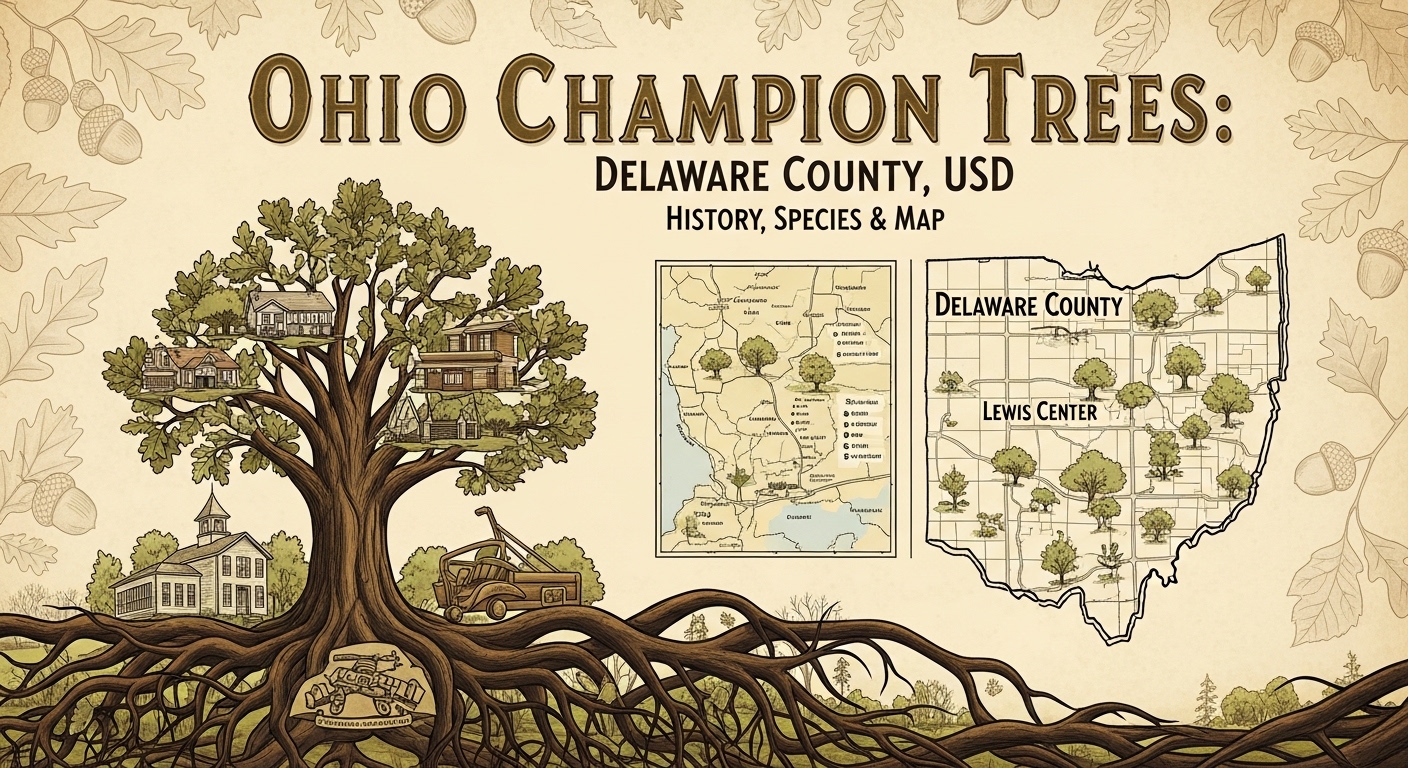

Ohio Champion Trees in Delaware County near Lewis Center are the largest recorded trees of their species, measured by size and officially tracked by the state.
These trees represent historic natural growth, common native species, and protected locations across public and private land.
What Are Ohio Champion Trees
Ohio Champion Trees are the biggest known examples of each tree species in the state. Experts measure each tree using a standard system.
Three factors decide the ranking:
- Trunk circumference measured at about 4.5 feet above ground
- Total tree height
- Average crown spread
The final score comes from adding these values. The highest score in each species becomes the state champion.
These trees are recorded through the Ohio Champion Tree Program managed by the Ohio Division of Forestry.
Location: Delaware County and Lewis Center
Delaware County sits in central Ohio and includes the community of Lewis Center. This area supports large tree growth due to natural conditions.
Key environmental features:
- Fertile glacial soil
- Moderate rainfall
- Mix of woodland and open land
- Presence of rivers and floodplains
Lewis Center developed as a suburban area, but some original trees remained. Many of these trees now qualify as champion or near-champion size.
History of Champion Trees in the Area
Before modern development, Delaware County contained large forests. These forests included hardwood species that grew without interruption.
Important historical points:
- Early forests formed after glacial retreat
- Settlers cleared land for farming but left some large trees
- Some trees survived because they were too large to remove
- Later development preserved certain trees in parks and school land
Some trees in the region are estimated to be over 100 to 200 years old.
These trees provide direct evidence of the original landscape of central Ohio.
Common Champion Tree Species
Several species in Delaware County often reach champion size due to favorable conditions.
Main Species Found
| Tree Species | Scientific Name | Key Features | Typical Habitat |
|---|---|---|---|
| White Oak | Quercus alba | Long lifespan, wide canopy | Upland areas |
| Eastern Cottonwood | Populus deltoides | Very tall, fast growth | Near rivers |
| American Sycamore | Platanus occidentalis | Large trunk, peeling bark | Floodplains |
| Silver Maple | Acer saccharinum | Rapid growth, wide crown | Wet soils |
| Tulip Tree | Liriodendron tulipifera | Straight trunk, tall height | Forest areas |
These species grow well in Ohio’s soil and climate.
Some cottonwoods exceed 120 feet in height, while sycamores can reach very large trunk sizes.
Example Champion Trees Near Lewis Center
Several known champion or near-champion trees exist in and around Lewis Center.
Notable Examples
| Location | Tree Type | Key Detail |
|---|---|---|
| Alum Creek area | American Sycamore | Large trunk and wide canopy |
| Olentangy River corridor | White Oak | Very old and stable growth |
| Highbanks Metro Park | Tulip Tree | Tall and straight growth |
| Local neighborhoods | Silver Maple | Wide crown spread |
Many of these trees are located in natural parks or preserved land.
Some trees also exist on private property, which limits public access.
Role of Public Land and Schools
Public land plays a key role in preserving large trees.
Important locations include:
- Parks and nature reserves
- School properties
- Historic cemeteries
School land often protects trees because it changes slowly and remains undeveloped for long periods.
This allows trees to grow without major disturbance.
Private Property and Tree Protection
A large number of champion trees are located on private land.
Property owners help protect these trees by:
- Avoiding construction near roots
- Hiring tree care experts
- Maintaining soil and water conditions
Without private cooperation, many champion trees would not survive.
Ecological Importance of Champion Trees
Champion trees provide strong environmental benefits.
Key Benefits
- Store large amounts of carbon
- Provide habitat for birds and animals
- Stabilize soil and prevent erosion
- Improve air quality
- Maintain water balance in ecosystems
Large trees support more wildlife than smaller trees. They also help regulate local temperature.
Measurement System Explained
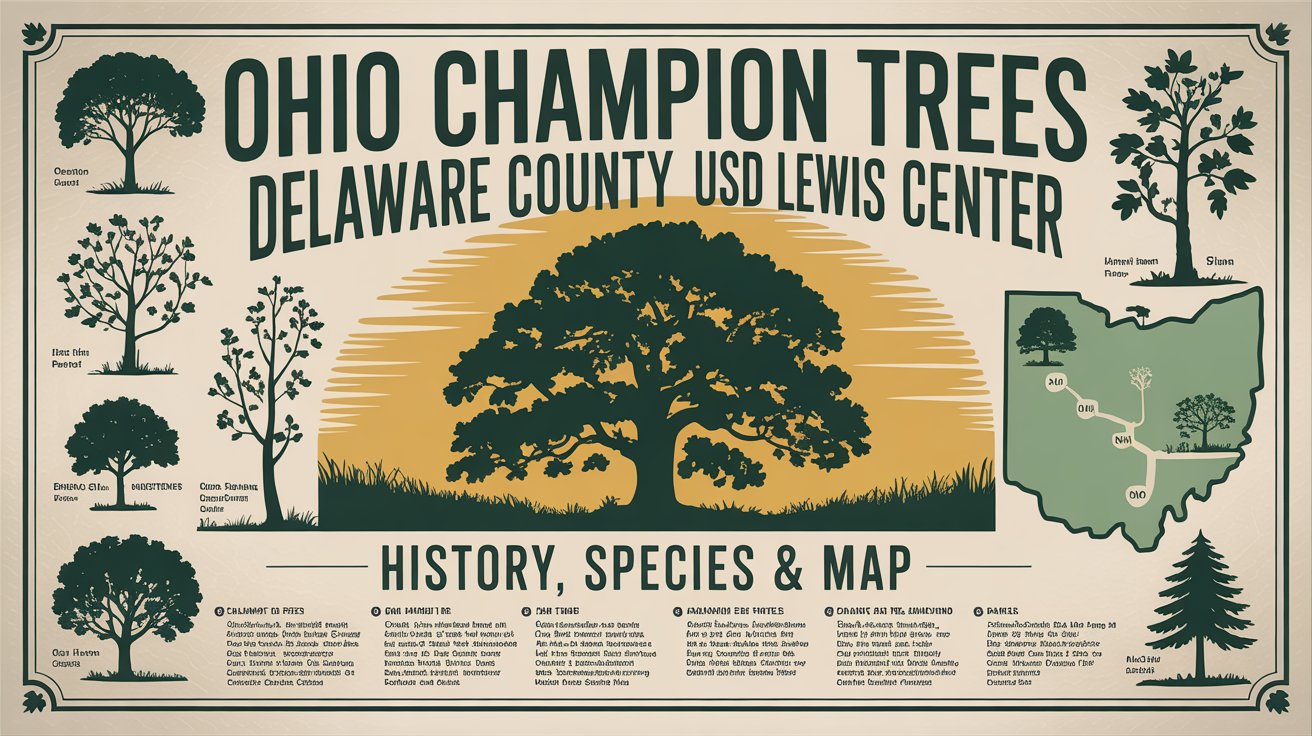
The measurement process follows a clear formula.
Champion Tree Scoring Table
| Measurement | Unit | Purpose |
|---|---|---|
| Circumference | Inches | Shows trunk size |
| Height | Feet | Shows vertical growth |
| Crown Spread | Feet | Shows canopy width |
Formula
Total Score = Circumference + Height + ¼ Crown Spread
The tree with the highest score in its species becomes the champion.
Trees are re-measured over time. Rankings can change if a larger tree is found.
In documentation and mapping systems, Brand Name Normalization Rules help ensure that tree species names, locations, and records stay consistent across databases and official listings.
Map and Locations Overview
Champion trees in Delaware County do not always appear on public maps.
General Areas Where Trees Are Found
- Alum Creek State Park
- Highbanks Metro Park
- Olentangy River corridor
- Preservation Parks of Delaware County
- Residential areas with preserved land
Public maps usually show general regions, not exact tree locations. This protects trees from damage or overcrowding.
Simple Location Table
| Area Type | Accessibility | Notes |
|---|---|---|
| Public parks | Open to visitors | Best for viewing |
| River corridors | Partial access | Natural growth zones |
| School land | Limited access | Protected spaces |
| Private property | No public access | Requires permission |
Why Delaware County Supports Large Trees
Several natural factors explain why this region produces large trees.
Key Factors
- Deep, nutrient-rich soil
- Consistent rainfall
- Historic forest coverage
- Limited disturbance in some areas
These conditions allow trees to grow taller and wider over long periods.
How Trees Gain Champion Status
A tree becomes a champion through a formal process.
Steps
- Tree is identified as unusually large
- Measurements are taken
- Data is verified by forestry experts
- Tree is added to official records
The Ohio Division of Forestry maintains the registry.
Changes Over Time
Champion trees do not keep their title forever.
Reasons for change:
- Storm damage
- Disease
- Natural aging
- Discovery of a larger tree
New champion trees are recorded regularly.
Importance for Research and Education
Champion trees serve as valuable resources.
Uses
- Study of tree growth patterns
- Environmental research
- Educational programs
- Conservation planning
They provide long-term data about climate and ecology.
For readers studying consumer protection and regulatory oversight, this detailed breakdown of Spectrum Cable Deceptive Billing Class Action explains how billing transparency issues are handled under legal frameworks.
Access and Visiting Guidelines
When visiting areas with large trees, follow basic rules:
- Stay on marked paths
- Do not damage roots or bark
- Respect private property
- Avoid climbing large trees
These actions help protect the trees for future study and preservation.
Summary Data Table
| Category | Details |
|---|---|
| Region | Delaware County, Ohio |
| Key Area | Lewis Center |
| Program | Ohio Champion Tree Program |
| Measurement Factors | Circumference, Height, Crown Spread |
| Common Species | Oak, Sycamore, Maple, Cottonwood |
| Locations | Parks, schools, private land |
| Age Range | Often 100 to 200+ years |
This structured information helps researchers, students, and visitors understand Ohio Champion Trees in Delaware County near Lewis Center in a clear and accurate way.