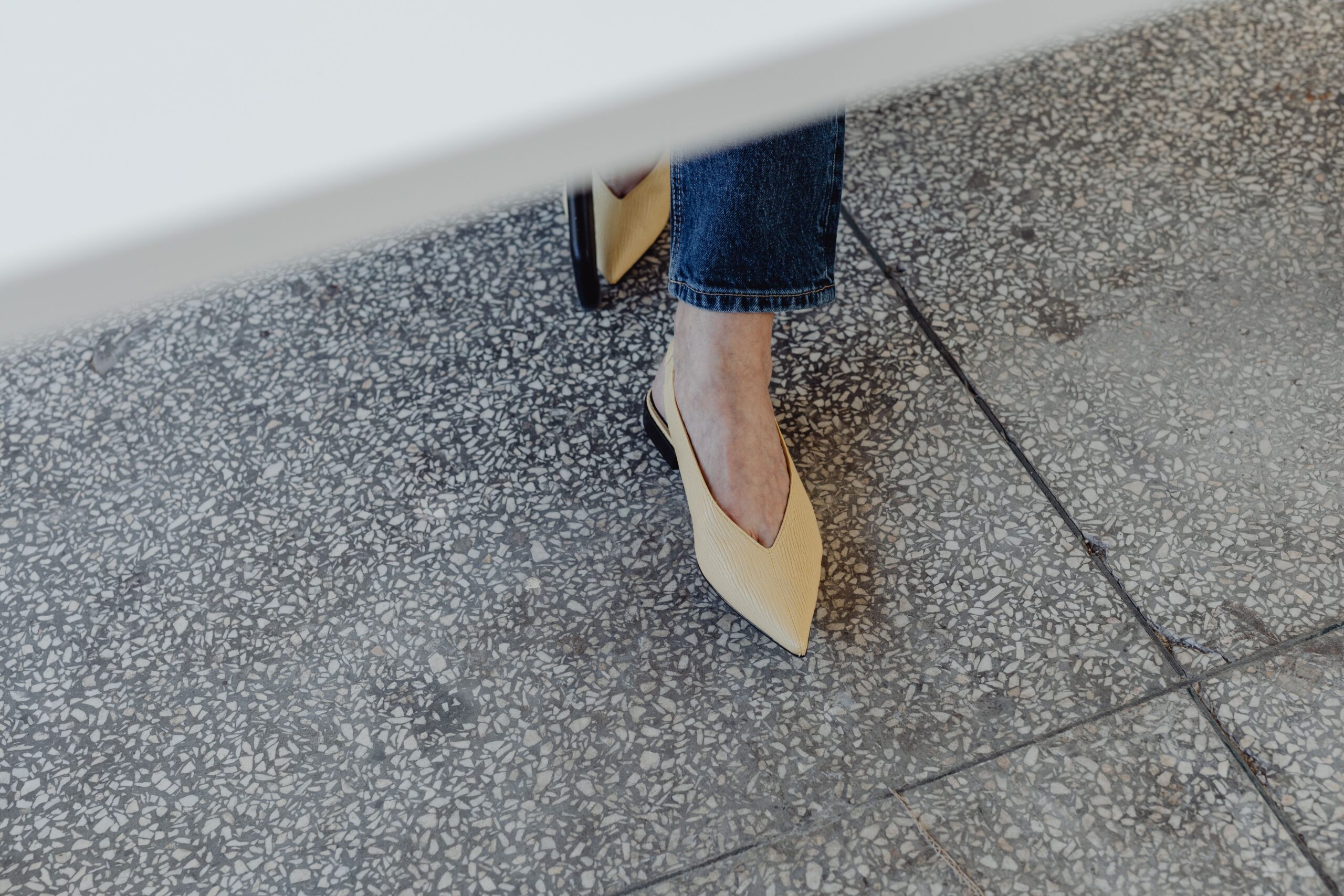

Pointed-toe flats sit in an interesting place between casual shoes and dressier footwear. They have the ease of a flat, but the sharper toe gives them enough structure to change the mood of an outfit. A pair of jeans can look more polished, tailored trousers can feel less formal, and a simple dress can suddenly look finished without adding a heel.
That balance is what makes them useful. They do not ask for a special occasion, and they do not need an especially complicated wardrobe around them. The best pairs simply slip into clothes you already wear and make those clothes feel slightly more intentional.
The toe shape does most of the visual work
A pointed toe changes the line of the foot immediately. Compared with a round or square toe, it creates a cleaner finish and can make the shoe look more refined even when the sole is completely flat.
That does not mean every pointed flat feels formal. The rest of the design still matters. A softer upper and minimal detailing can keep the shoe relaxed, while a sharper vamp, polished finish or decorative hardware can move it closer to evening or office wear.
When browsing different styles from ROSATINA, I would pay attention to the balance between the toe shape and the rest of the shoe rather than treating “pointed” as one single look. Some pairs are sleek and narrow, while others have a softer point that feels easier with everyday clothing.
They make denim look more considered
Jeans are probably the easiest way to make pointed flats feel modern instead of overly dressy. Straight-leg denim works especially well because it leaves enough of the shoe visible without making the outfit feel too deliberate.
A white shirt, relaxed knit or blazer is usually all you need on top. The denim keeps the look grounded, while the pointed toe gives the lower half a cleaner line.
Wide-leg jeans can work too, especially when the hem is long enough to skim the top of the shoe. In that case, only a small part of the pointed toe may show, but that is often enough to keep the outfit from looking heavy.
Cropped jeans create the opposite effect because they put the whole shoe on display. If I am wearing that combination, I usually keep the rest simple so the clean shape of the flat becomes part of the styling rather than competing with too many other details.
Tailored trousers feel less predictable with flats
Pointed-toe flats are an easy alternative when tailored clothing looks too formal with heels but too casual with sneakers.
With straight trousers, they keep the line neat without adding extra height. With wide-leg trousers, the point can extend slightly beyond the hem and give the outfit a more finished edge. Cropped tailoring exposes more of the shoe, making colour and upper shape more noticeable.
This is especially useful for workwear that needs to move through different parts of the day. A blazer and trousers can feel appropriate for the office, lunch and dinner without requiring a shoe change.
The trick is to watch the trouser length. If fabric bunches heavily over a flat shoe, the pointed shape can disappear. If the hem is too short, the outfit may feel more broken up than intended. A clean meeting point between trouser and shoe usually works best.
Dresses do not always need heels
There is a habit of reaching automatically for heels when a dress needs to feel more polished. Pointed flats can do much of the same visual work without changing the height of the outfit.
A simple midi dress with pointed flats feels clean and easy, especially for daytime events, lunches or occasions involving more walking. A short dress can look sharper with a minimal flat instead of a sneaker, while a longer dress can benefit from the small section of pointed toe that appears beneath the hem.
The contrast also works with softer dresses. Flowing fabric paired with a clean, angular shoe can create enough structure that the outfit does not feel overly delicate.
For evening, material and finish become more important. A smooth surface, metallic detail or stronger colour can make a flat feel dressier without needing a heel.
Black is useful, but it should not become the automatic choice
Black pointed flats are easy to understand because they work with denim, tailoring and many dresses. They create a clear line and are especially useful in wardrobes that already contain plenty of darker colours.
Still, black is not automatically the best option.
Cream and beige can soften dark trousers and make spring or summer outfits feel lighter. Brown works naturally with denim, camel, white and warmer neutrals. Burgundy adds more depth than black while still pairing easily with grey, navy and brown.
Metallic shades can also be surprisingly practical. Silver or gold-toned flats can behave almost like jewellery, especially with simple outfits, and they often work across more colours than expected.
When looking through different pointed-toe flats, it makes more sense to think about the colours already in your wardrobe than to search for one universally “safe” shade.
A flat shoe still needs proper fit
Because there is no heel, flats are sometimes assumed to be automatically comfortable. Pointed styles are a reminder that fit still matters.
The toe should look pointed because of the shoe’s shape, not because your toes are being forced into an overly narrow space. A shoe that presses tightly at the front can become uncomfortable quickly, even without any heel height.
Heel fit matters too. If the back slips constantly, walking becomes irritating and the shoe may start rubbing. If it grips too tightly, the result is not much better.
I would also consider when the shoes will be worn most often. A pair for commuting or full-day wear has to meet a higher comfort standard than one intended mainly for short dinners or occasional events.
The best everyday flat is the one you stop thinking about once you are wearing it.
Minimal outfits give pointed flats more impact
Pointed shoes tend to work especially well when the rest of the outfit is not overloaded.
A simple knit with trousers, a white shirt with denim, or a clean monochrome outfit gives the shoe shape more space to register. Even when the colour is neutral, the pointed silhouette itself provides enough definition.
This is useful if your wardrobe is built around basic pieces. You do not need another print, layer or accessory every time an outfit feels plain. Sometimes changing from a rounded casual shoe to a pointed flat is enough.
The same idea works with accessories. If the shoes have noticeable hardware, embellishment or colour, the handbag and jewellery can stay quieter. If the flats are completely simple, there is more freedom to use a stronger bag.
They work well when the dress code is unclear
Some situations sit awkwardly between casual and formal. You want to look put together, but heels feel unnecessary and sneakers may feel too relaxed.
Pointed flats are useful in exactly that middle ground.
They can work for offices with flexible dress codes, lunches, gallery visits, dinners, travel days or smaller events where comfort matters but you still want the outfit to look finished. They are also practical when the day involves both walking and sitting, because there is less pressure to choose between appearance and mobility.
That flexibility is one of the main reasons a good pair tends to get repeated. The shoes do not belong to only one part of the day.
Simple shoes can still change with the season
Pointed flats are often associated with transitional weather, but they can stretch across much more of the year depending on climate and styling.
In spring, they work with lighter trousers, denim and dresses. During summer, they can replace sandals for dinners or indoor settings where you want a closed shoe. In autumn, they sit naturally beside knitwear, longer skirts and tailored trousers.
Even in colder weather, they can remain useful on milder days or for indoor occasions, especially when boots would make the outfit feel heavier than necessary.
Colour can help with that transition. Lighter shades naturally feel easier in warmer months, while black, brown and burgundy move comfortably into autumn. A neutral wardrobe can usually carry the same pair through several seasons.
The best pair should already have somewhere to go
Before buying pointed flats, I like a very simple test: think about the clothes already hanging in the wardrobe.
Can the shoes work with your most-worn jeans? Do they make sense with work trousers? Is there a dress or skirt that would look better with them? Could you wear them to lunch and still feel right taking the same outfit to dinner?
If several combinations come to mind immediately, that is usually a much better sign than simply loving how the shoes look on their own.
Pointed-toe flats are not complicated shoes, and that is exactly why they can be so useful. They take familiar outfits and sharpen them slightly, without changing the way you move through the day. In a wardrobe full of pieces competing for attention, there is real value in a shoe that quietly makes everything else look more finished.