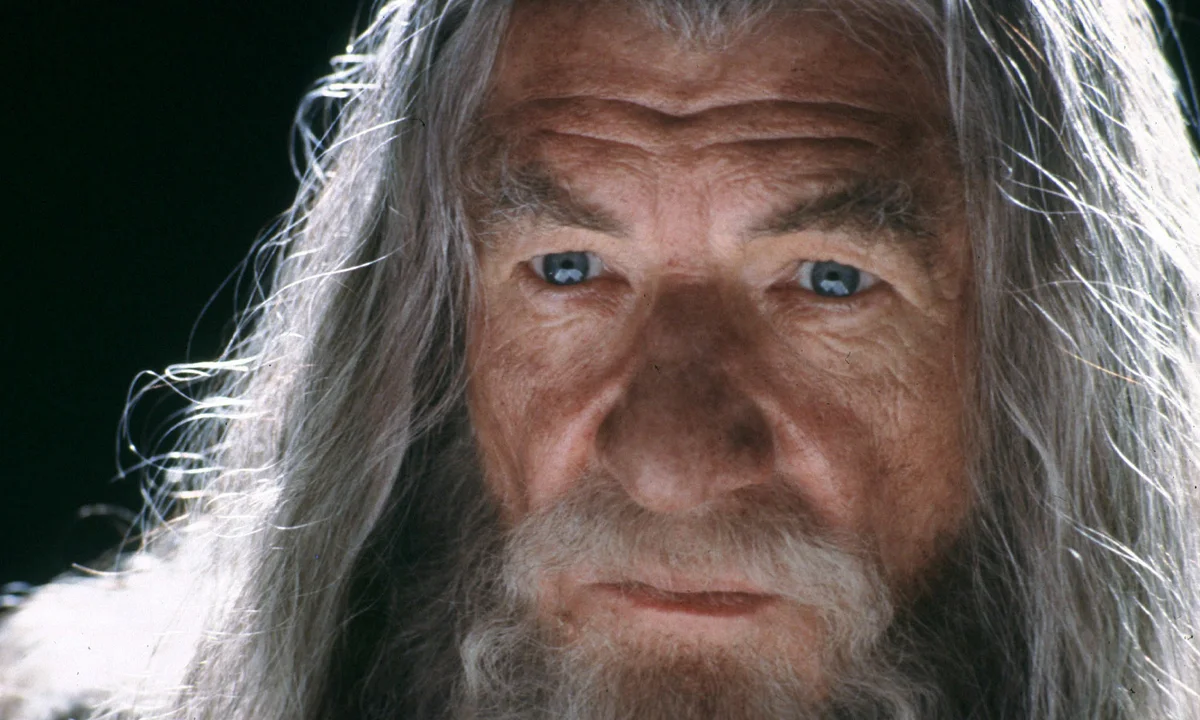

Ian McKellen entered the world only months before Europe went to war. He was born in Burnley, Lancashire, on 25 May 1939, but his family moved to Wigan shortly before the outbreak of the Second World War. His father, Denis, worked as a civil engineer, while his mother, Margery, managed the home and encouraged her children’s interest in the arts.
War shaped McKellen’s earliest understanding of normal life. He slept beneath an iron table intended to protect him during air raids. Sirens, blackouts and the possibility of bombing formed part of his childhood routine. He later remarked that he did not fully understand the danger because he had never known a world without war. The experience may help explain the calmness he often brings to characters surrounded by chaos.
Illness also entered his life early. McKellen contracted diphtheria when he was three, at a time when the disease could still kill children. He recovered and soon began attending a nursery school in central Wigan. His family lived near Mesnes Park and Wigan Cricket Club, giving him access to the public spaces and local institutions that defined life in a northern industrial town.
Theatre provided a more colourful world. McKellen’s parents took him to see Peter Pan at Manchester Opera House when he was three. The production made a lasting impression, although he was too young to understand acting as a profession. He responded to the transformation of a physical space: ordinary people entered a building, the lights changed, and another reality appeared.
A Christmas present deepened that fascination. When McKellen was nine, he received a folding Victorian toy theatre made from wood and Bakelite. It came with cardboard scenery and figures from stories including Cinderella and Laurence Olivier’s Hamlet. The gift allowed him to control scenery, entrances and dramatic timing long before he stepped onto a professional stage.
His sister Jean introduced him to Shakespeare through amateur productions at Wigan Little Theatre. She took him to Twelfth Night and Macbeth, and she later appeared as Bottom in a school production of A Midsummer Night’s Dream. Jean continued acting, directing and producing amateur theatre throughout her life. Her example taught her younger brother that performance did not belong only to famous actors or prestigious London companies.
McKellen began acting at school and played Malvolio in a scene from Twelfth Night at 13. Bolton School encouraged his interest through ambitious productions and annual visits to Stratford-upon-Avon. He watched Laurence Olivier, Vivien Leigh, Peggy Ashcroft, John Gielgud, Paul Robeson and Charles Laughton. The pupils then discussed the performances around their camp stove, including what had failed. That habit of examining craft, rather than merely admiring celebrity, stayed with him.
Personal loss brought an early end to childhood. His mother died from breast cancer when he was 12. His father died in a road accident when McKellen was 24. He has spoken about both losses without turning them into a simple explanation for his career. Yet theatre offered continuity when family life changed abruptly. It gave him routines, communities and a language for emotions that were difficult to discuss directly.
The decades of work before international fame
McKellen entered St Catharine’s College, Cambridge, in 1958 to study English. Academic work soon competed with an intense theatrical schedule. He appeared in 21 undergraduate productions, and his scholarship was withdrawn after his studies suffered. The setback revealed his priorities more clearly than any planned career decision could have done.
Cambridge gave McKellen opportunities unavailable to most young actors. He worked with the Marlowe Society, performed at the Arts Theatre and met people who would influence British drama for decades. Derek Jacobi was among his contemporaries. McKellen graduated in 1961, but he had already developed the discipline and professional contacts needed to enter repertory theatre.
His first professional engagement began at Coventry’s Belgrade Theatre in 1961. He played Roper in A Man for All Seasons and took other roles as part of the resident company. Repertory actors frequently rehearsed one play during the day while performing another at night. They could not wait for inspiration. They had to learn lines, understand blocking and adjust to different directors at speed.
Regional theatre gave McKellen a practical education. He worked in Ipswich and Nottingham before reaching the West End in 1964 with A Scent of Flowers. His progress looked rapid, but British theatre still placed strong boundaries around types of actors and roles. McKellen had to demonstrate that he could handle modern drama, comedy and classical verse rather than rely on one successful performance.
His decisive breakthrough came in 1969. McKellen played the title roles in Shakespeare’s Richard II and Christopher Marlowe’s Edward II for the Prospect Theatre Company. The productions toured and reached the Edinburgh Festival, where critics recognised a classical actor with unusual emotional directness. His Richard appeared fragile and theatrical, while his Edward challenged the evasive treatment of homosexuality commonly seen on British stages.
McKellen’s stage work during the 1970s and 1980s established the reputation that later film audiences inherited without seeing how he had built it. He joined the Royal Shakespeare Company, played Macbeth opposite Judi Dench and appeared in The Alchemist, Bent and The Winter’s Tale. He approached verse as spoken thought rather than decorative recitation, using changes in pace and emphasis to make familiar passages sound newly formed.
Bent carried particular personal and political weight. Martin Sherman’s play follows gay men persecuted by the Nazis, including a prisoner who initially denies his sexuality in an attempt to survive. McKellen played Max in the original London production in 1979. The role arrived when he remained publicly silent about being gay, creating a sharp division between what he could express on stage and what he would say about himself.
Peter Shaffer’s Amadeus brought McKellen major success in America. He played Antonio Salieri in the Broadway production and won the 1981 Tony Award for Best Actor in a Play. His Salieri was not simply a jealous villain. McKellen presented him as a disciplined professional tortured by his ability to recognise genius without possessing it himself.
His solo production Acting Shakespeare revealed another side of his craft. McKellen mixed famous speeches with explanations, stories and demonstrations of acting technique. The show began at short notice in Edinburgh in 1976 and developed across years of international touring. Its simple staging sometimes consisted of little more than a borrowed chair, yet it could hold large audiences without spectacle.
McKellen performed the show in theatres, schools and unusual venues, including a restaurant in Virginia. The practical arrangements could be improvised: on one American visit, a suitable seat disappeared and another had to be borrowed from the Folger Shakespeare Library. The replacement probably looked more distinguished than ordinary restaurant chairs, but its real purpose was simple. It gave McKellen a place from which to turn literary analysis into conversation.
The radio debate that changed his public life
McKellen’s most important public appearance in 1988 did not take place on a stage. On 27 January, he joined a BBC Radio 3 discussion about Section 28, then a proposed clause targeting the supposed “promotion of homosexuality” by local authorities. During an argument with journalist Peregrine Worsthorne, McKellen referred to himself as gay.
The statement was not a planned announcement supported by a press campaign. McKellen had been open with friends and many colleagues, but he had avoided confirming his sexuality publicly. His work in Bent had made that silence increasingly uncomfortable. Section 28 gave him a specific reason to abandon it.
The law threatened more than abstract political rights. Its wording created fear among teachers, librarians, councils and arts organisations. Schools often interpreted it as a reason to avoid honest discussion of gay lives, even though the clause did not directly criminalise teachers. Young people could receive the message that their identities were too dangerous or shameful to mention.
McKellen joined the Arts Lobby, which opposed the legislation on cultural as well as personal grounds. Actors including Judi Dench and Michael Cashman participated in the campaign. McKellen marched against the clause in Manchester and spoke at protests, but Parliament passed Section 28 in May 1988. Scotland repealed it in 2000, while the rest of Britain retained it until 2003.
Publicly coming out changed McKellen’s daily life. He later described the decision as liberating and credited it with improving his acting. Secrecy had required constant editing: avoiding certain pronouns, deciding which stories could be told and judging every interview for possible exposure. Removing that burden gave him more freedom both socially and professionally.
Activism quickly became organised work. McKellen helped found Stonewall in 1989 with a group that included Michael Cashman and Lisa Power. The organisation pursued legal reform through lobbying, research and public campaigning. McKellen admitted that he initially knew little about the 1969 Stonewall uprising in New York from which the group took its name. He listened to campaigners with more political experience rather than presenting himself as their natural leader.
Stonewall’s early priorities included equalising the age of consent, ending the ban on lesbian and gay people serving openly in the armed forces and removing Section 28. McKellen used his profile to attract attention, raise money and gain access to politicians. He did not merely appear at ceremonial events. He attended meetings, addressed rallies and visited schools.
The school visits produced some of his most revealing encounters. McKellen spoke directly with pupils about sexuality, bullying and language. He sometimes entered classrooms where students knew Gandalf but had little knowledge of his activism. That recognition gave him an opening, but he resisted treating fame as the substance of the discussion.
McKellen also challenged institutions with humour. During one school visit, he reportedly told pupils that if they failed to study properly, they would not pass, deliberately echoing Gandalf’s celebrated confrontation with the Balrog. The line created laughter before he moved towards more serious subjects. He understood that a familiar character could make an uncomfortable conversation easier to begin.
His political work did not place him inside a party. McKellen has said that he has never been a member of one. He accepted a CBE in 1979, received a knighthood announced in 1990 and became a Companion of Honour in 2008. Those honours placed him close to the establishment, but he continued criticising governments and laws when he believed criticism was necessary.
Gandalf, Magneto and the roles that almost escaped him
McKellen was already one of Britain’s leading stage actors when cinema turned him into a global celebrity. His film career had begun much earlier, but many of his screen roles remained supporting parts or adaptations of theatre productions. The change came through several characters who connected classical authority with modern popular culture.
Richard III served as an important bridge. McKellen had played Shakespeare’s king on stage and co-wrote the screenplay for Richard Loncraine’s 1995 film. The adaptation placed the story in a fictional version of 1930s Britain dominated by fascist imagery. McKellen addressed the camera as if making the audience his confidant, preserving the play’s direct relationship between Richard and the spectators.
Gods and Monsters then showed film audiences a quieter form of his acting. McKellen played James Whale, the gay British director of Frankenstein, during the final period of Whale’s life in Hollywood. The performance earned McKellen his first Academy Award nomination. It also connected aging, sexuality, memory and cinema without reducing Whale to a tragic stereotype.
Magneto arrived soon afterwards. Director Bryan Singer cast McKellen in X-Men, released in 2000, as a Holocaust survivor who responds to anti-mutant prejudice with militancy. McKellen recognised parallels between the fictional persecution of mutants and real hostility towards minorities. He avoided playing Magneto as a conventional comic-book villain because the character’s fear and anger had a coherent origin.
Gandalf followed almost immediately, although scheduling nearly prevented McKellen from accepting the role. He was committed to X-Men and expected to work on Mission: Impossible 2. Delays and overlapping production dates created complications. The Mission: Impossible role did not proceed, while adjustments around X-Men allowed him to travel to New Zealand for The Lord of the Rings.
Peter Jackson’s films demanded a different type of authority from McKellen. Gandalf needed warmth, impatience, humour and force without losing his mystery. McKellen used the vocal control developed through Shakespeare, but he did not deliver every line as a grand declaration. Some of Gandalf’s most convincing moments come from pauses, glances or sudden shifts in volume.
The physical scale of Middle-earth required technical experimentation. Camera angles, oversized props, smaller doubles and separate sets helped create the height difference between Gandalf and the hobbits. The methods allowed actors to share much of the work, but later filming on The Hobbit relied more heavily on green-screen separation.
That isolation frustrated McKellen. During one difficult scene, he reportedly became upset while performing alone in front of photographs of fellow cast members. The episode has sometimes been presented as proof that digital filmmaking defeated an old-fashioned stage actor. A better reading concerns connection. McKellen’s technique depends heavily on listening and responding, even when his own character dominates a scene.
Fame brought several persistent myths. One concerns Albus Dumbledore after Richard Harris, who played the character in the first two Harry Potter films, died in 2002. Harris had previously described McKellen and other actors as technically skilled but lacking passion. McKellen later joked that he could not take over from an actor who disapproved of him.
The story gradually became a dramatic tale in which McKellen rejected a firm offer to play Dumbledore. His fuller account was less definite. He received an approach about appearing in the films without being told the part, and he was never formally offered the role. Michael Gambon ultimately became Dumbledore, leaving McKellen free from playing two visually similar wizards.
Gandalf earned McKellen his second Oscar nomination and made him familiar to viewers who had never attended Shakespeare. Yet he did not treat blockbuster cinema as an escape from theatre. He returned repeatedly to London, Stratford, Broadway and regional stages. Film fame became a resource that could draw new audiences towards older plays.
Friendship, mischief and life away from the roles
McKellen’s public image grew warmer through his friendship with Patrick Stewart. The two actors had followed comparable paths from northern England through classical theatre to major fantasy franchises. They had known each other professionally for years, but working together in Waiting for Godot turned acquaintance into close friendship.
Their chemistry rested partly on contrast. Stewart often appeared controlled and formal, while McKellen enjoyed teasing him and disrupting that composure. Photographs of the pair visiting tourist sites, eating together and wearing matching bowler hats became popular online. The images felt less like a studio campaign than two experienced actors enjoying an unexpectedly public friendship.
McKellen officiated when Stewart married singer Sunny Ozell in 2013. He obtained the necessary authority through the Universal Life Church for the ceremony. Stewart later clarified that legal details required another formal procedure, but McKellen’s participation reflected genuine closeness rather than promotional theatre.
Their stage partnership deepened during productions of Waiting for Godot and Harold Pinter’s No Man’s Land. Both plays concern memory, companionship and the difficulty of leaving. McKellen and Stewart could draw on their off-stage affection while preserving the conflict within the scripts. Familiarity allowed them to risk silence and stillness without losing contact.
McKellen’s connection to northern popular culture also led him to Coronation Street. In 2005, he appeared in ten episodes as Mel Hutchwright, a fraudulent novelist who impresses residents with literary stories. The part allowed him to join a programme that had represented northern English life since 1960 and that his family had watched from its early years.
Pantomime offered another unexpected turn. McKellen played Widow Twankey in Aladdin at the Old Vic in 2004 and returned the following year. The role combined drag, songs, jokes, audience participation and deliberate theatrical excess. He had loved pantomime as a child and wondered for years why he had never appeared in one.
His performance resisted the idea that popular entertainment requires less skill than classical drama. Pantomime actors must respond to children, manage interruptions and maintain precise comic timing. McKellen approached the form seriously without making it solemn. His willingness to move from King Lear to Widow Twankey reflects curiosity rather than a need to display range.
McKellen has also protected the record of his own career with unusual care. His official website contains production histories, correspondence, photographs, rehearsal material, screenplay notes and answers to messages from admirers. It resembles a personal archive more than a conventional celebrity page. Visitors can trace unsuccessful projects and political arguments alongside famous roles.
Cricket forms another thread through his life. His childhood home backed onto Wigan Cricket Club, and he retained an interest in the sport. While in New Zealand in 2011, he umpired a charity cricket match organised after the Christchurch earthquake. The occasion joined a childhood pleasure with fundraising for a community he had come to know through filmmaking.
McKellen’s affection for New Zealand extended beyond promotional appearances. During production of The Hobbit, he toured a solo show called Shakespeare, Tolkien and You! to raise money for the earthquake-damaged Isaac Theatre Royal in Christchurch. The programme combined Shakespearean speeches, stories about Gandalf and direct interaction with audiences.
Playfulness has remained central to his public character. Videos of McKellen knitting festive jumpers with ABBA member Björn Ulvaeus attracted attention because of their unlikely pairing and understated humour. Such appearances do not erase the seriousness of his acting or activism. They show a man comfortable enough with his reputation to treat it lightly.
An actor who refuses a final act
Age has changed McKellen’s choice of roles without ending his appetite for work. In 2021, he played Hamlet at the Theatre Royal Windsor more than 50 years after first taking the part on tour. Director Sean Mathias used age-blind casting, allowing actors to play characters without matching their conventional ages.
An older Hamlet alters the audience’s expectations. The prince’s indecision no longer looks like youthful confusion but like the behaviour of someone who has spent a lifetime thinking and still cannot control events. McKellen did not try to impersonate a young man. He trusted Shakespeare’s language and the audience’s willingness to accept theatrical convention.
His 2019 solo tour offered another statement about longevity. Ian McKellen on Stage: With Tolkien, Shakespeare, Others and YOU travelled to theatres across Britain to mark his eightieth birthday. He began performances with Gandalf’s sword, Glamdring, invited spectators to handle it and moved through stories from his career.
The tour raised funds for individual theatres rather than directing all proceeds towards one national organisation. McKellen understood that local venues often operate with limited reserves and ageing buildings. His own career had begun in regional repertory, and amateur theatre had introduced him to Shakespeare. Supporting those spaces repaid a practical debt.
The production eventually reached the West End and earned him a special Olivier Award. Its success did not depend solely on nostalgia for Gandalf or admiration for a long career. McKellen demonstrated how an actor can move between storytelling, verse, comedy and conversation while maintaining direct contact with an audience.
Physical risk remained part of that contact. On 17 June 2024, McKellen fell from the stage during a fight scene in Player Kings at London’s Noël Coward Theatre. He was playing Falstaff in Robert Icke’s adaptation of Shakespeare’s two Henry IV plays. The fall left him with a fractured wrist and a chipped vertebra.
McKellen spent three nights in hospital and began physiotherapy at home. He initially hoped to return but withdrew from the remaining performances and planned tour on medical advice. He later said that the padded costume worn as Falstaff had protected him from more serious injuries. The psychological effect lasted after the immediate physical danger had passed.
The accident exposed the demands behind live acting. A performer must navigate scenery, props, lighting, costumes and other actors while maintaining the illusion of spontaneous action. Experience reduces some risks but cannot remove them. McKellen’s reluctance to leave the production showed how strongly he identified with the responsibility to perform.
Retirement has never appealed to him as a ceremonial ending. Acting gives structure to his time and keeps him connected to other people. It also remains a craft he believes can change as the body changes. An older actor may lose speed or stamina but gain different uses of silence, memory and vocal detail.
McKellen’s career therefore cannot be summarised by two fantasy characters. Gandalf and Magneto introduced him to millions, but they stand within more than six decades of Shakespeare, modern drama, political campaigning and regional theatre. His lesser-known stories reveal the same pattern: a child moving cardboard figures across a toy stage became an actor determined to keep the real stage open to everyone.