


In the world of industrial production, two terms are frequently used interchangeably — yet they represent fundamentally different processes, business models, and strategic outcomes. Whether you are a product designer, a procurement manager, or an entrepreneur sourcing components for a new venture, understanding the distinction between fabrication and manufacturing can directly influence your cost efficiency, lead times, and product quality. This article breaks down both concepts in depth, helping you make more informed decisions when choosing the right production method for your needs.
Defining the Two Processes: What Sets Them Apart?
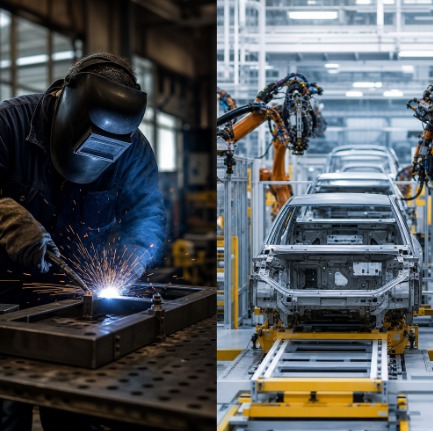
At first glance, fabrication and manufacturing may appear to describe the same activity — the creation of physical goods. However, the distinction lies in the scope, scale, and methodology of each process. Manufacturing typically refers to the large-scale production of standardized goods using automated machinery, assembly lines, and repeatable processes. It is designed for volume, consistency, and speed. Fabrication, on the other hand, involves the construction of structures or components by cutting, shaping, and assembling raw materials — often with a higher degree of customization and craftsmanship involved.
Understanding fabrication vs manufacturing is essential for any business that relies on physical product development. The two approaches serve different purposes: manufacturing excels in producing identical units at scale, while fabrication is better suited for bespoke, complex, or structurally unique components that require skilled labor and precision work. Choosing the wrong approach can lead to unnecessary costs, delays, or quality issues that affect your entire supply chain.
The Role of Raw Materials in Each Process
One of the clearest ways to differentiate the two processes is by examining how raw materials are handled. In manufacturing, raw materials are typically fed into automated systems that transform them into finished goods through a series of standardized steps. The process is highly optimized, with minimal human intervention at each stage. In fabrication, raw materials such as steel, aluminum, or other metals are cut, bent, welded, and assembled by skilled tradespeople who adapt their techniques to the specific requirements of each project. This hands-on approach allows for greater flexibility but generally results in lower output volumes.
When to Choose Fabrication Over Manufacturing
The decision between fabrication and manufacturing is rarely straightforward. It depends on a range of factors including order volume, design complexity, material requirements, and budget constraints. Fabrication is typically the preferred choice when a project demands custom dimensions, unique structural configurations, or one-off prototypes that cannot be efficiently produced on a standard assembly line. Industries such as construction, aerospace, shipbuilding, and custom machinery rely heavily on fabrication because their components must meet highly specific tolerances and design specifications.
Manufacturing, by contrast, is the go-to solution when consistency and volume are the primary objectives. Consumer electronics, automotive parts, packaged goods, and household appliances are all products that benefit from the economies of scale that manufacturing provides. When you need thousands or millions of identical units, manufacturing processes deliver unmatched efficiency and cost-per-unit advantages that fabrication simply cannot match.
Cost Implications: Short Runs vs. High Volume
Cost is often the deciding factor when businesses evaluate their production options. Fabrication tends to carry higher per-unit costs due to the labor-intensive nature of the work and the lower production volumes involved. However, it requires significantly less upfront investment in tooling, molds, or specialized machinery. Manufacturing, while offering lower per-unit costs at scale, often demands substantial capital expenditure before a single unit is produced. For startups or businesses launching new products, this distinction can be critical to financial planning and cash flow management.
The Intersection of Branding, Marketing, and Industrial Production
It may seem unusual to connect industrial production methods with marketing strategy, but the two are more intertwined than many business leaders realize. How a product is made directly influences how it can be positioned in the market. Custom-fabricated products, for example, carry an inherent narrative of craftsmanship, exclusivity, and precision — qualities that resonate deeply with premium audiences. Manufactured goods, meanwhile, can be marketed on the basis of reliability, accessibility, and value. Businesses that understand their production model are better equipped to communicate their brand story authentically. Agencies that specialize in growth-focused marketing, such as those featured by GrowthScribe Marketing Agency, often work with industrial and product-based brands to align their production strengths with compelling market positioning.
Immersive Brand Experiences in Industrial Contexts
As the line between physical product and brand experience continues to blur, companies in both fabrication and manufacturing are finding new ways to engage their audiences. Experiential marketing, showroom design, and immersive product demonstrations are becoming increasingly important tools for industrial brands seeking to differentiate themselves. This approach to crafting immersive brand experiences is no longer limited to consumer-facing industries — it is now a strategic priority for B2B companies in fabrication and manufacturing as well. When potential clients can see, touch, and experience the quality of your work firsthand, the sales cycle shortens and trust is established far more quickly.
About Craftsmen Industries
Craftsmen Industries is a leading provider of custom fabrication and specialty vehicle manufacturing solutions, serving clients across a wide range of industries including experiential marketing, government, and commercial sectors. With decades of experience in precision metalwork, custom builds, and large-format fabrication, Craftsmen Industries brings together skilled craftsmanship and modern engineering to deliver projects that meet the most demanding specifications. Their team of experts works closely with clients from concept through completion, ensuring that every fabricated or manufactured component aligns with the client’s vision, timeline, and budget. Their thought leadership content, including detailed industry comparisons and technical guides, positions them as a trusted resource for businesses navigating complex production decisions.
Making the Right Choice for Your Project
Ultimately, the choice between fabrication and manufacturing is not about which process is superior — it is about which process is right for your specific project, timeline, and business goals. A thorough assessment of your design requirements, production volume, budget, and market positioning will guide you toward the most appropriate solution. In many cases, businesses find that a hybrid approach works best: using fabrication for custom structural components while relying on manufacturing for standardized parts that can be sourced at scale.
Consulting with experienced professionals who understand both disciplines is always a worthwhile investment. The more clearly you understand the capabilities and limitations of each production method, the better positioned you will be to deliver high-quality products efficiently, cost-effectively, and in alignment with your brand’s promise to its customers.
Conclusion
The distinction between fabrication and manufacturing is more than a matter of semantics — it is a strategic consideration that touches every aspect of product development, from initial design to final delivery. By understanding the unique strengths of each approach, businesses can make smarter sourcing decisions, build stronger supplier relationships, and ultimately deliver better products to their markets. Whether you are building a one-of-a-kind custom structure or scaling a consumer product to global distribution, knowing which production method serves your goals is the foundation of operational excellence.


