


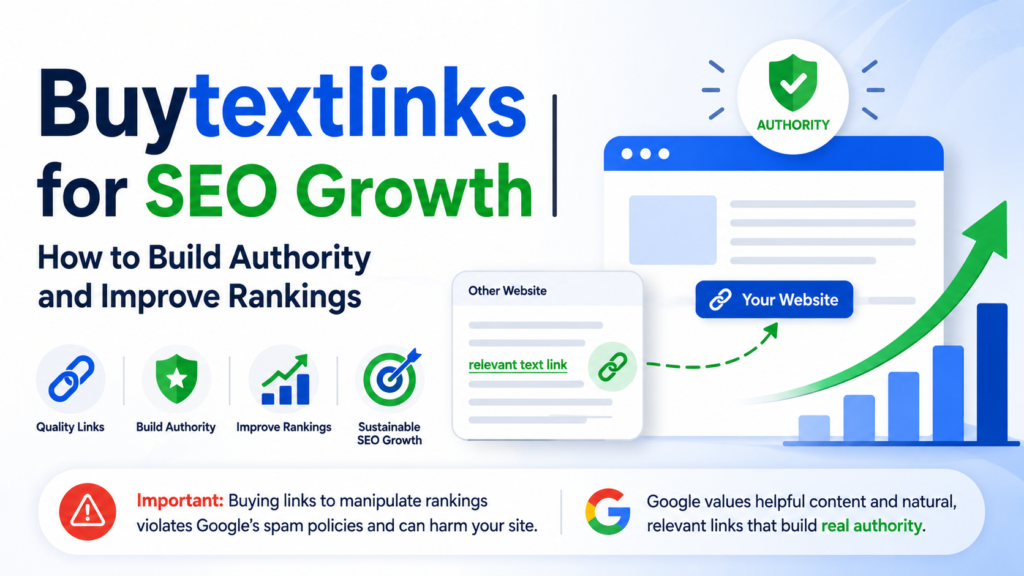
Buytextlinks can support SEO only when the placement is relevant, transparent, and compliant.
Paid links meant to pass ranking value violate Google’s spam policies, so real authority comes from useful content, trusted mentions, and proper link labeling.
What Buytextlinks Means in SEO
Buytextlinks usually refers to buying text links on another website to point to your page. In SEO, this matters because Google uses links as a signal for discovery and relevance. Google also says link text should help people and search engines understand what the page is about.
The problem starts when a link is bought to change search rankings. Google’s spam policies name buying or selling links for ranking purposes as link spam. That includes exchanging money, goods, or services for links that are meant to pass ranking value.
Why Paid Text Links Can Hurt Rankings
A paid text link can create short-term exposure, but it can also create long-term risk if it is used as a ranking trick. Google treats unnatural link practices as spam, and it has repeatedly warned site owners not to buy links for PageRank or ranking purposes.
This is why the safest SEO approach is not to chase link volume. The better path is to build pages that people actually want to reference, because Google’s guidance says SEO works best when it supports people-first content, not search engine-first content.
When a Text Link Is Acceptable
Not every paid or promotional link is a problem. Google says links that are part of affiliate programs or sponsored placements should be labeled with rel="sponsored", and it also supports nofollow and ugc as ways to describe link nature.
That means a brand can still run sponsorships, advertorials, or partner placements, but the link should be identified correctly. The goal is transparency. A labeled sponsored link is different from a hidden attempt to influence rankings.
How to Build Authority the Right Way
Authority grows when your site shows clear expertise, reliable information, and a strong user experience. Google says helpful content should be created for people first, and it highlights E-E-A-T as a useful way to judge content quality. It also encourages clear authorship information when readers expect to know who created the content.
For buytextlinks, this means the best pages to promote are not thin landing pages. The best pages are useful resources, guides, tools, comparisons, or data pages that solve a real problem. When a page is worth citing, links become a natural result of its value. Google’s own SEO starter guide says useful content and descriptive text help both users and search engines.
What Makes a Good Link Opportunity
A strong link opportunity usually comes from a site that covers the same topic, serves the same audience, and publishes real editorial content. The page should fit the context of the article, not just the anchor text. Google’s link best practices emphasize that links help search engines understand relevance, so the surrounding context matters.
A weak opportunity is a page that exists only to sell links, has no editorial value, or places the link in a way that feels forced. Google’s spam policies specifically call out excessive link exchanges, partner pages built only for cross-linking, and automated link creation as examples of link spam.
Anchor Text and Placement
Anchor text should describe the destination page in plain language. Google says anchor text helps people and search engines understand the page that is being linked. That makes vague text like “click here” less useful than clear text that matches the topic.
Placement also matters. A link inside a useful paragraph usually carries more context than a link hidden in a long list of unrelated links. The surrounding text should make sense to a reader first. That is the safest way to keep links natural and relevant. This follows Google’s guidance on links, crawlability, and people-first content.
A Simple Workflow for Safe SEO Link Building
- Choose one page that deserves links because it has real value. Google recommends helpful, reliable, people-first content, so start there.
- Find relevant sites that already cover the same topic or audience. Relevance matters because Google uses links as a signal for discovery and understanding.
- Decide the correct link label before publishing. If payment or sponsorship is involved, use
rel="sponsored". If the link is user-generated or you do not want to pass ranking signals, use the appropriate rel attribute. - Write the placement in a way that helps readers. The text around the link should explain why the page is useful. Google says descriptive anchor text and helpful context improve understanding.
- Review the page after it goes live. Make sure the link is visible, accurate, and placed in content that still feels editorial. Google’s spam policies warn against link schemes, so a clean review process reduces risk.
Common Mistakes to Avoid
The biggest mistake is treating buytextlinks as a shortcut. A purchased link that exists only to manipulate rankings can violate Google’s rules. It can also create a weak backlink profile that does not support long-term trust.
Another mistake is using the same anchor text again and again. That can look forced and unnatural. Google’s guidance on link text encourages language that makes sense to people, not repeated keyword stuffing.
A third mistake is publishing on low-quality sites that sell placements without editorial standards. Google warns against automated links, excessive exchanges, and pages made only for cross-linking. These patterns are risky because they do not reflect real authority.
How to Measure Whether Links Are Helping
The first sign of value is not just ranking change. It is whether the linked page starts earning more qualified traffic, better engagement, and more natural mentions over time. Google’s guidance on people-first content and E-E-A-T points toward value that serves users, not just search crawlers.
Track the source page, the landing page, the anchor text, and the context around the link. Then review whether the traffic matches the topic of the page. If a link brings visitors who stay, read, and move deeper into the site, the placement is more likely to support SEO in a useful way. That fits Google’s advice to focus on helpful content and clear site structure.
Practical Rules for Long Term Authority
Use buytextlinks only as part of a wider content and outreach strategy. Do not rely on them as the main ranking method. Google’s current guidance is consistent on this point. SEO works best when it supports strong content, clear intent, proper link labeling, and real value for readers.
Build pages that deserve mention. Place links in relevant editorial content. Label paid links correctly. Keep anchor text natural. Review every placement for trust, context, and compliance. Those steps give buytextlinks a safer role in SEO growth while keeping the site aligned with Google’s published rules.
You can read it’s also: AFG Landing Page SEO Strategy | Boost Traffic and Engagement Fast


