

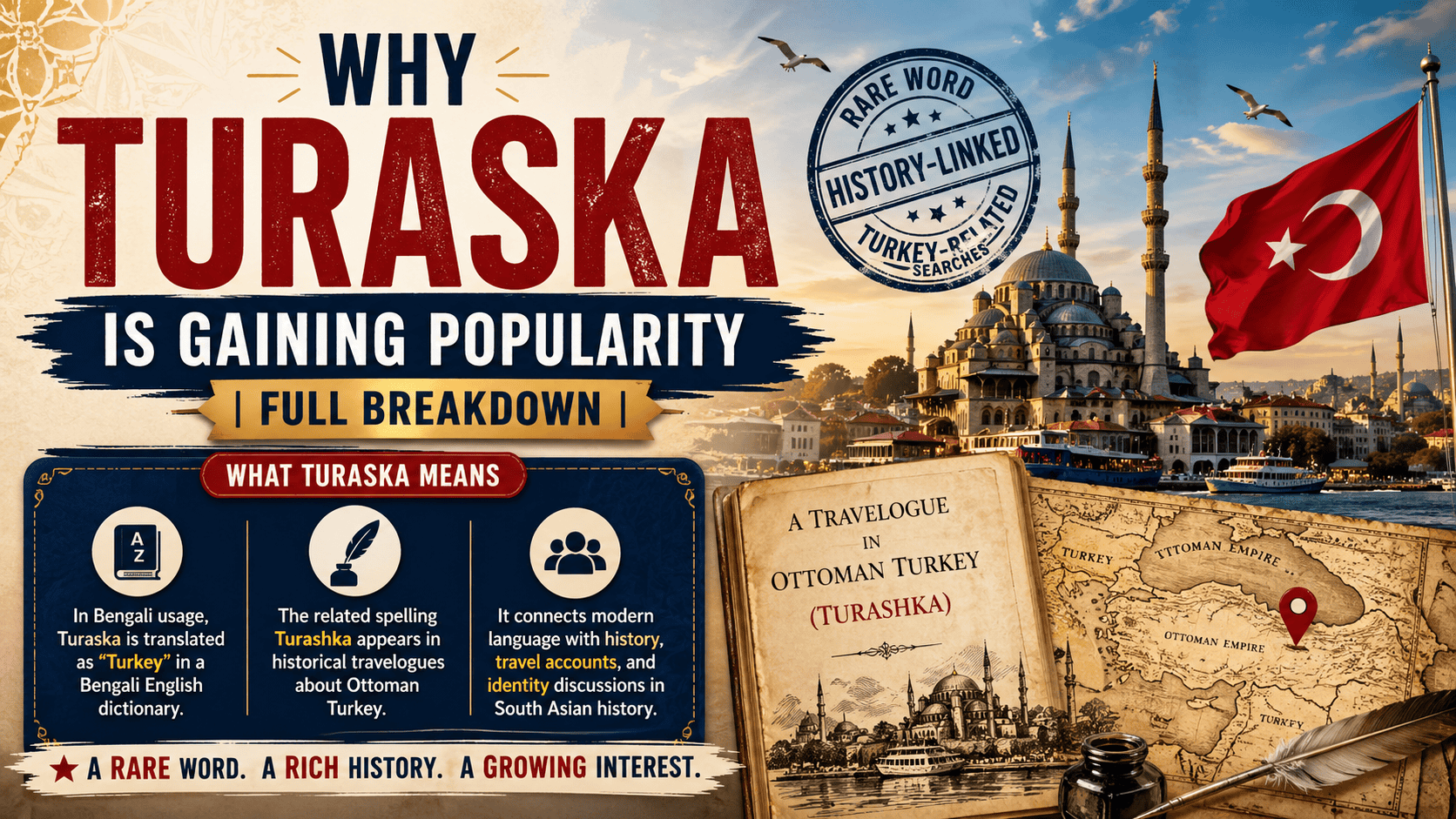

Turaska is getting more attention because people want to know what it means and where it comes from. It stands out because the word is rare, history-linked, and tied to Turkey-related searches.
What Turaska Means
Turaska is best understood as a word with a strong link to Turkey in Bengali usage. A Bengali English dictionary entry translates it as “Turkey,” which gives the term a clear modern language connection. At the same time, academic writing on Bengali Muslim history uses the related spelling Turashka in a travelogue about Ottoman Turkey, which shows that the word also has a literary and historical side.
That double use matters. For many readers, Turaska is not just a translation word. It also points to older writing, travel accounts, and identity discussions in South Asian history. That is one reason the term keeps drawing interest from readers who like words with a deeper background.
Why People Are Searching For It
People usually search for Turaska because it is not a common everyday word. When a term is unusual, readers want a fast answer. They want to know its meaning, spelling, language source, and whether it connects to Turkey, Türkiye, Turashka, or Turushka. That kind of search pattern is common with rare historical words.
Recent web pages also show fresh explainers about Turaska published within the last days and weeks, which suggests growing online curiosity around the term. That does not prove a long term trend by itself, but it does show that more sites are trying to define it for readers right now.
Historical Use In Bengali Writing
One clear reason Turaska attracts attention is its appearance in Bengali literary history. Cambridge research points to Turashka Bhraman, a 1913 travelogue by Ismail Hossain Siraji, which was based on his journey to Turkey during the Balkan War. That is important because it shows the word was not invented for modern web searches. It already existed in older Bengali writing tied to Turkey and Muslim political thought.
This historical link gives the term weight. Readers who find Turaska in old books or essays often want to know whether it is a place name, a cultural label, or a historical spelling. The answer depends on the text, but the word clearly has a documented place in Bengali intellectual history.
Turaska In Older South Asian Sources
The word also connects to older South Asian usage through the related form Turushka. JSTOR records show that Turushka appears in Sanskrit inscriptions and medieval Sanskrit texts, where it could refer to Turks and, in some cases, Muslims more broadly. Another JSTOR record notes that the term could work as a general label rather than a narrow ethnic name.
That history matters because it explains why the term feels layered. It does not carry only one fixed meaning across every period. In older sources, it could describe outsiders, Turks, or Muslim groups, depending on the setting. In modern Bengali usage, it is linked to Turkey. That mix of meanings is a major reason the word continues to be discussed.
Why The Term Feels More Relevant Now
Turaska also sits near a wider public conversation about Turkey and Türkiye. In 2022, Turkey asked international organizations to use Türkiye officially, and reporting from AP confirmed that the U.S. State Department adopted the preferred spelling in official use. That broader attention to the country’s name has kept Turkey related language in view and may also make related terms more noticeable in searches.
This does not mean Turaska and Türkiye are the same word. They are not. But public interest in country names, spellings, and historical labels often increases curiosity about related terms. That is part of why a rare word like Turaska can suddenly feel more visible online.

Why The Keyword Is Growing
The keyword is growing because it fits several kinds of search intent at once. Some people want a translation. Some want the origin. Some want the historical background. Others want to know whether it is a valid term, a spelling variant, or a cultural word from older texts. A term that serves many questions usually attracts more clicks and more explainers.
It also helps that the term is short and memorable. Rare terms often grow in search because readers can type them quickly but still need a full explanation. When a word is easy to remember but hard to define, it becomes a strong search keyword. Turaska fits that pattern well.
Many rare terms follow patterns similar to Classaquitatui, which also shows how unique words gain attention through search trends and linguistic curiosity.
Common Confusion Around Turaska
| Context | What it points to | What readers should know |
|---|---|---|
| Bengali dictionary use | Turkey | This is the clearest modern meaning in a language entry. |
| Bengali historical writing | Turashka Bhraman and Turkey related travel writing | Cambridge links the term to a 1913 travelogue about Turkey. |
| Sanskrit and medieval sources | Turks or Muslims in older contexts | JSTOR shows the related Turushka form had broader historical use. |
This table shows why people get confused. Turaska is not always used in the same way. A modern reader may see it as a translation of Turkey, while a history reader may see it as a label from older South Asian texts. The meaning depends on the source.
How Writers Should Use The Term
Writers should define Turaska in the first line if they use it in an article. If they mean the Bengali word for Turkey, they should say that clearly. If they mean the historical form related to Turushka, they should explain that too. Clear context avoids confusion and makes the article easier to trust.
It also helps to use the term with one stable meaning inside one article. Mixing the Bengali meaning, the historical Sanskrit meaning, and the Turkey name change story in a single short section can confuse readers. A clean structure keeps the content strong and easy to follow.

Why Readers Keep Coming Back To Turaska
Turaska keeps drawing attention because it sits at the meeting point of language, history, and culture. It appears in dictionary style usage, in Bengali literary history, and in older South Asian sources with broader meanings. That mix makes it useful for readers who want more than a simple one word definition.
The term also benefits from current interest in Turkey and Türkiye, which keeps the surrounding topic active in search. When a word has both a historical background and a modern language use, it has a stronger chance of staying visible for a long time.
Another example is Candizi, a term that highlights how uncommon words often attract readers who want quick and clear explanations.


