



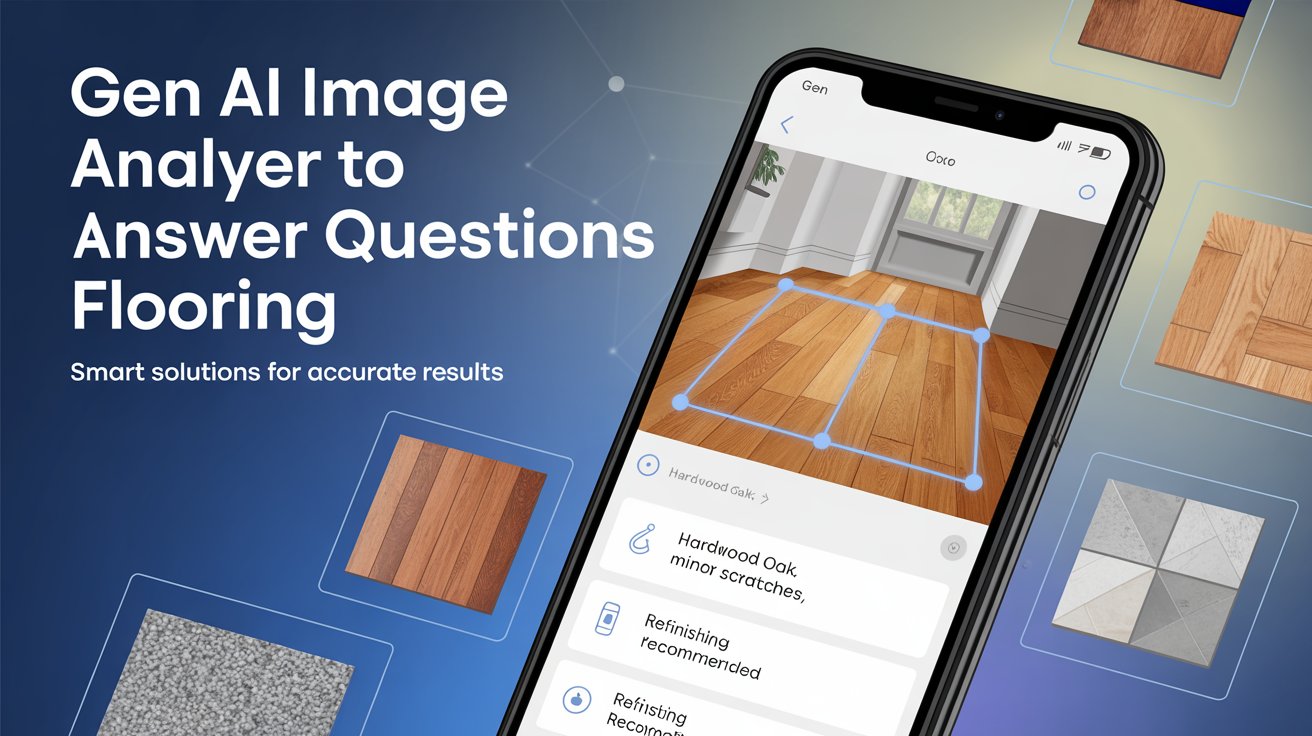
A Gen AI image analyzer helps users ask questions about flooring by reading floor photos and giving fast, accurate answers. It can identify flooring type, surface condition, color, layout, damage, and likely next steps.
What a Gen AI Image Analyzer Does for Flooring
A Gen AI image analyzer studies a flooring image and turns visual details into useful answers. It helps people understand what they are seeing without guessing. This is useful for homeowners, contractors, inspectors, designers, real estate teams, and flooring sellers.
The tool can review photos of wood, vinyl, tile, laminate, carpet, stone, and concrete. It can also spot visible issues such as scratches, stains, cracks, gaps, water marks, wear, and uneven surfaces. That makes it useful for many flooring questions that need quick and clear answers.
The main value is simple. It saves time and reduces confusion. Instead of searching through general advice, users can ask specific questions about the image in front of them.
Why Flooring Analysis Needs Accurate Image Reading
Flooring work depends on detail. A small color difference, a slight gap, or a crack line can change the next decision. Manual review can miss important signs when photos are blurry, dark, or taken from the wrong angle. A Gen AI image analyzer helps improve this process by looking at the visual details in a structured way.
Accurate image reading matters in these common cases.
A homeowner may want to know whether a floor is wood or laminate. A buyer may want to check if a property has damage before making an offer. A flooring contractor may want a quick first look before visiting the site. A store team may want to help customers choose matching products based on floor style.
In each case, the question is not only what the floor looks like. The real need is a reliable answer that supports a decision.
If you are interested in how legal issues around property and liability are handled, you can also read about the WIAA Arrowhead High School Waiver Lawsuit to understand how waivers impact responsibility in different situations.
How a Gen AI Image Analyzer Works
A Gen AI image analyzer uses computer vision and language models together. The image part studies the photo. The language part turns that visual data into plain answers.
The process usually follows these steps.
First, the user uploads a flooring image. Then the system scans the photo for patterns, textures, edges, colors, and surface marks. After that, it matches the visual features with known flooring types and common flooring conditions. Finally, it answers the user question in simple language.
This can work with questions such as:
What type of flooring is this?
Is there water damage?
Does this look like vinyl or laminate?
Are the gaps between planks normal?
Is the surface showing wear?
Can this floor be repaired or does it need replacement?
The best systems do not give random guesses. They provide a careful answer based on the visible image and, when needed, note what is not clear.
Common Flooring Questions It Can Answer
A strong Gen AI image analyzer can help with many flooring related questions. The answer quality depends on photo quality, lighting, and the clarity of the visible surface.
It can often help with identification. For example, it may point out whether a floor looks like hardwood, engineered wood, ceramic tile, porcelain tile, luxury vinyl plank, laminate, carpet, or polished concrete.
It can also help with condition checks. Users may ask whether the floor has scratches, swelling, stains, chips, cracks, faded areas, lifted edges, or signs of moisture.
It can help with style matching too. A designer may ask whether the floor color is warm, cool, dark, light, matte, or glossy. This helps with furniture and wall color planning.
It can also support repair decisions. For example, the system may help decide whether a small issue looks cosmetic or structural. That is useful before requesting a professional inspection.
Main Benefits for Flooring Teams and Homeowners
A Gen AI image analyzer offers several practical benefits in flooring work.
It gives faster answers. People do not need to wait long for a basic review of a photo.
It improves first level screening. A team can sort urgent issues from minor ones before sending a technician.
It supports better communication. A user can send a photo and ask a direct question instead of giving a long explanation.
It helps with remote support. Sales teams and service teams can guide customers even when they are not on site.
It reduces wasted effort. A clearer first answer helps avoid unnecessary visits, repeated calls, or wrong product suggestions.
It also helps non experts understand flooring problems. Many users do not know the difference between surface wear and actual damage. A good image analyzer can explain the visible signs in simple terms.
Flooring Problems It Can Detect From Images
A Gen AI image analyzer can help identify several visible flooring issues. Some are easy to spot, while others need very clear photos.
Common issues include:
Surface scratches
Stains and spills
Water marks
Cupping or warping
Cracks in tile or stone
Missing grout
Raised edges
Peeling or lifting
Color fading
Wear paths in high traffic areas
Dust buildup in joints or seams
Some of these signs may point to normal aging. Others may suggest a moisture problem or installation issue. The tool should not replace a full inspection, but it can help users know what to look at first.
Where It Adds the Most Value
The strongest use cases are the ones that need fast and consistent visual checks.
In home improvement, users can upload floor photos and ask what material they have. They can also check if the floor needs repair before planning a remodel.
In real estate, agents and buyers can review flooring condition during listing checks or property evaluation. That helps with better documentation.
In flooring sales, store teams can help customers compare surface types and finishes. They can also support product matching by analyzing room photos.
In property management, staff can review tenant reports faster and decide whether a maintenance issue needs quick attention.
In insurance and claims support, clear floor photos can help document visible damage before the next step in the process.
For a broader view of how advanced technology is shaping different industries, explore Pentagon Big Tech Tesla Cybertruck to see how innovation is driving smart solutions across sectors.

What Makes Results More Accurate
The quality of the photo affects the result more than most people expect. A Gen AI image analyzer gives better answers when the image is clear, bright, and close enough to show texture and pattern.
For better results, the photo should show the floor surface from more than one angle. It should include the problem area and nearby areas. Good natural light helps. Heavy shadows, motion blur, and strong reflections can reduce accuracy.
Clean photos also help. Dust, furniture, rugs, and mixed lighting can hide details. When the user wants an answer about flooring type or damage, a clear close up is often better than a wide room shot alone.
The user question also matters. A specific question gives a better response. For example, “Is this vinyl plank or laminate?” is more useful than “What do you think about this floor?”
Key Features to Look For in a Flooring Image Analyzer
Not every image analyzer is equally useful. A good one should handle flooring details with care and explain the result in plain English.
Important features include:
High quality image recognition
Support for many flooring types
Damage and wear detection
Simple question and answer format
Clear confidence level when the image is unclear
Ability to compare multiple photos
Fast response time
Easy use on mobile and desktop
A good tool should also avoid overclaiming. If the image is too dark or too small, it should say so. That kind of honest response builds trust and supports better decisions.
Comparison of Common Flooring Analysis Uses
| Use case | What the image analyzer helps with | Best result |
|---|---|---|
| Homeowner photo check | Flooring type, visible wear, small damage | Fast understanding of the floor |
| Contractor pre check | Surface condition, repair needs, problem areas | Better site planning |
| Real estate review | Floor condition and maintenance signs | Clear property notes |
| Sales support | Style, finish, and matching help | Better product guidance |
| Property management | Damage screening and records | Faster maintenance decisions |
Limits of AI Image Analysis for Flooring
A Gen AI image analyzer is useful, but it has limits. It cannot physically touch the floor. It cannot measure hidden moisture. It cannot check what is under the surface. It also cannot always tell two similar materials apart if the photo quality is poor.
This is why the best use is as a first step. It can guide the next question or action. It can help users decide whether to ask for a contractor visit, a repair quote, or a closer inspection.
It is also important to remember that some flooring problems look alike in photos. A stain, shadow, and water mark may look similar. A crack and a seam may also be confused if the image is too small. Honest limits are part of accurate use.
Best Questions to Ask an Image Analyzer About Flooring
Users get better results when they ask direct questions. Strong questions make the answer more useful.
Examples include:
What flooring material is shown in this image?
Does this floor show signs of water damage?
Is the surface scratched or only dirty?
Does this tile look cracked?
Is the floor color warm or cool?
Does this look like natural wood or a wood style product?
Is there visible lifting near the edge?
Would this floor likely need repair or replacement?
These questions help the system focus on the right part of the photo.
Why This Technology Matters for Flooring Work
Flooring decisions often need speed, but they also need care. A Gen AI image analyzer supports both. It can read a photo, organize the visible facts, and answer questions in a way that saves time.
For daily work, that means fewer delays and better first steps. For customers, it means less confusion. For teams, it means more consistent answers across support, sales, inspection, and planning.
As flooring products and property service needs continue to grow, image based question answering will stay useful. It fits the way people already work. They take a photo, ask a question, and expect a clear response. A smart Gen AI image analyzer gives them that in a simple and practical way.